SolarWorld to focus on monocrystalline PERC production with 400 job losses

Facebook
Twitter
LinkedIn
Reddit
Email
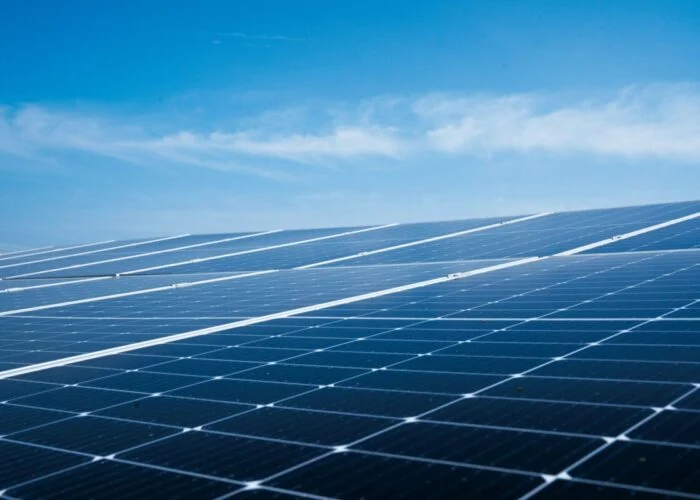
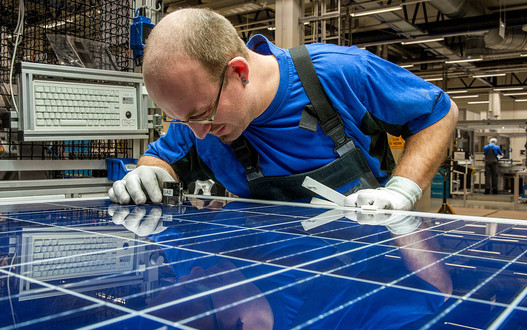
SolarWorld is to shift its production focus to monocrystalline PERC (Passivated Emitter Rear Contact) cells and modules and away from multicrystalline to build economies of scale with high-efficiency only products. Image: SolarWorld

Integrated PV manufacturer SolarWorld is to shift its production focus to monocrystalline PERC (Passivated Emitter Rear Contact) cells and modules and away from multicrystalline to build economies of scale with high-efficiency only products. With the realignment of production to mono PERC products, including bifacial modules, around 400 jobs would be lost by the end of 2019.

SolarWorld said that smaller production ‘entities’ in Arnstadt, Germany and solar cell production in Freiberg, Germany would be relocated with emphasis on production in Arnhem and Thuringia. 

This article requires Premium SubscriptionBasic (FREE) Subscription

Try Premium for just $1

  • Full premium access for the first month at only $1
  • Converts to an annual rate after 30 days unless cancelled
  • Cancel anytime during the trial period

Premium Benefits

  • Expert industry analysis and interviews
  • Digital access to PV Tech Power journal
  • Exclusive event discounts

Or get the full Premium subscription right away

Or continue reading this article for free

“In Arnstadt, we took over Europe's largest cell-making facility from Bosch three years ago and have consistently increased its output since then, with the help from Freiberg employees,” noted Frank Asbeck, CEO of SolarWorld in an online interview. “That is why only Arnstadt can be our cell site in Germany. Conversely, this applies to module production. This should be located at Germany's most modern module factory, in Freiberg. That is why we will shut down the considerably smaller module production in Arnstadt.”

Monocrystalline ingot/wafer production at its facility in Arnstadt would be expanded and diamond wire wafer saws used at the Frieburg facility. Module assembly would remain at its Freiberg facility.

The company also noted that it would invest a mid-double-digit million amount in the expansion and the improvement of its high efficiency technologies, while its R&D subsidiary, SolarWorld Innovations would focus on efficiency-enhancing PERC processes.

Overall module production would be raised to around 2GW over the next two years, up from around 1.3GW in 2016.

The company had previously announced in September, 2016 around 500 job cuts.

Financial results

In a separate statement, SolarWorld said that preliminary 2016 revenue increased by 5%, compared with the prior year, reaching €803 million. Total product shipments were 1,375MW, up from 1,159MW in 2015.

However, SolarWorld reported negative Earnings before interest, taxes, depreciation and amortization (EBITDA) of €24 million and a negative EBIT of €99 million for 2016. 

The company noted that the large EBIT loss included impairment charges related to its restructuring amounting to €25 million, which was said to not be cash relevant.
SolarWorld had cash and cash equivalents of €88 million at the end of 2016.

The company guided total product shipments in 2017 to be in the same range as 2016.
13 October 2026
San Francisco Bay Area, USA
PV Tech has been running an annual PV CellTech Conference since 2016. PV CellTech USA, on 13-14 October 2026 is our fourth PV CellTech conference dedicated to solar manufacturing in the USA. From polysilicon, wafers, ingots, cells and modules, to critical component suppliers including glass and frames, the event connects every stage of the value chain under one roof. PV CellTech USA also brings together investors, innovators, manufacturers and industry stakeholders to collaborate and strengthen domestic solar manufacturing across the United States.
20 April 2027
Istanbul, Türkiye
PV Tech has been running PV CellTech Conferences since 2016. PV CellTech Global, on 20-21 April 2027, is the meeting place for everyone invested in the growth of PV manufacturing and advancement in cell technologies, which will drive us towards the installed capacity required to power the planet by 2050. This is a gathering of key stakeholders driving capital expenditure and technologies for new PV manufacturing plants across the globe to harness the opportunities the growth of PV represents out to 2050 and beyond. The conference takes place in one conference room, where all senior peers have the same shared experience of learning and unique insight, unmatched anywhere else in the solar industry events calendar.

Read Next

September 2, 2026
In the third part of this week’s series exploring the US solar supply chain, we track how quickly announced manufacturing capacity is translating into real production.
September 1, 2026
US module production is at a near saturation point, but significant capacity gaps persist further up the supply chain, writes head of PV Tech Research, Moustafa Ramadan.
August 31, 2026
Head of PV Tech Research, Moustafa Ramadan, kicks off a five-part series tracing the evolution and future of the US solar manufacturing supply chain.
August 28, 2026
Importing solar modules to the US will “no longer make any economic sense” under new Section 232 tariffs for polysilicon-based products, according to Intertek CEA.
Premium
August 27, 2026
Domestically produced solar glass is a key gap in the US PV manufacturing ecosystem. Tom Kenning reports on efforts to kick-start local production of this vital material
Premium
August 25, 2026
PV Tech sat down with Scott Graybeal, CEO of Caelux, to discuss the company's tech, its deals in India and the impact of perovskite solar.

Upcoming Events

Solar Media Events
October 13, 2026
San Francisco Bay Area, USA
Solar Media Events
November 3, 2026
Málaga, Spain
Solar Media Events
November 24, 2026
Warsaw, Poland
Solar Media Events
February 2, 2027
London, UK