Ampt has introduced a new string optimizer, a DC power converter with multiple maximum power point tracking (MPPT) and output voltage and current limits to optimize system design and maximize performance of large-scale PV systems.
Problem
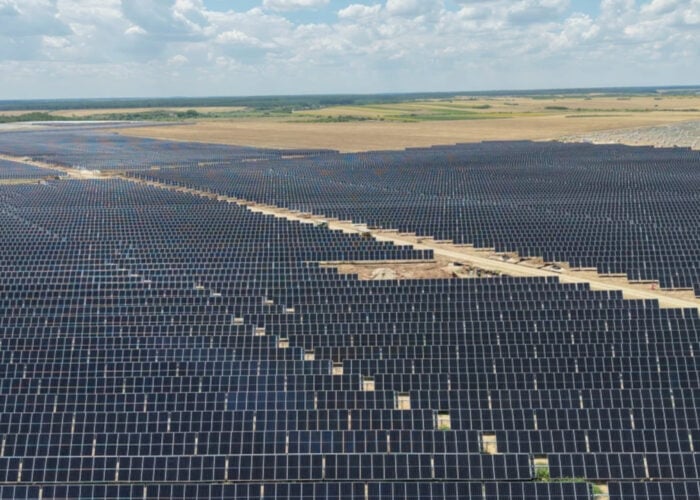
In an effort to lower the cost of electrical components, large-scale PV developers and EPCs are looking to next generation system designs. A string optimizer, allows developers to deploy PV power plants with the cost saving benefits of a 2000 volt system using only 1000 volt components while meeting all 1000 volt code requirements.
Try Premium for just $1
- Full premium access for the first month at only $1
- Converts to an annual rate after 30 days unless cancelled
- Cancel anytime during the trial period
Premium Benefits
- Expert industry analysis and interviews
- Digital access to PV Tech Power journal
- Exclusive event discounts
Or get the full Premium subscription right away
Or continue reading this article for free
Solution
Ampt String Optimizers are deployed in large-scale PV systems to lower cost and increase performance. This optimized system has twice the number of modules per string and higher resolution MPP tracking than conventional systems without Ampt. More modules per string decreases the number of combiners by 50% and reduces the amount of cabling which results in significant electrical balance of system savings. Putting MPPT on each string increases lifetime system production. Systems optimized with Ampt use inverters configured to operate in ‘Ampt Mode’. These inverters have a higher rated output power and operating efficiency compared to the same inverter operating in standard mode. Delivering more power per inverter reduces the overall cost per watt.
Applications
PV power plants.
Platform
Systems optimized with Ampt use inverters configured to operate in Ampt Mode. These inverters have a higher rated output power compared to the same inverter operating in standard mode. Delivering more power per inverter reduces the overall cost per watt. Compatible with any inverter the system has a high (99.1%/99.0% CEC/Euro) efficiency.
Availability
July 2014 onwards.