US domestic solar company SunPower has released its preliminary financial results for the second quarter of this year, which include a net loss of US$30 million and total losses before inflation, taxes, depreciation and amortisation of US$3 million.
The company’s recent struggles have caused the group to change its forecasts for the current financial year, with SunPower now expecting to post a net loss of between US$70-90 million by the end of the 2023 financial year. In the first quarter of this year, the company reported that its existing operations contributed to a net loss of US$50 million.
Try Premium for just $1
- Full premium access for the first month at only $1
- Converts to an annual rate after 30 days unless cancelled
- Cancel anytime during the trial period
Premium Benefits
- Expert industry analysis and interviews
- Digital access to PV Tech Power journal
- Exclusive event discounts
Or get the full Premium subscription right away
Or continue reading this article for free
SunPower also added 20,400 new customers in the second quarter of this year, compared to the 21,000 new customers the company added in the first quarter of the year, and the 23,700 new customers added in the fourth quarter of 2022.
This continued decline has encouraged the company to revise down its forecast of new customers for the remainder of the year, now expecting to add between 70,000-90,000 customers by the end of this year. This compares to the forecast of 90,000-110,000 new customers in 2023 made by SunPower in May this year.
SunPower’s struggles
With SunPower expected to release its full second quarter results on the first of August next week, the worsening financial future of the group will be ominous news for the company’s stakeholders.
“To quickly adapt to prevailing market conditions and help ensure SunPower maintains its competitive edge, we are reducing our cost structure,” said SunPower CEO Pater Faricy. “Although we’ve seen improvements in sales growth in June and July, we’ve made the decision to reduce our labour costs and are taking additional measures to improve operational efficiency across the board.
“We believe that these actions will position the company for success as market conditions improve,” added Faricy.
These changes will have to make a significant impact on SunPower’s performance, considering the company is dealing with the dual challenges of higher costs and lower investments than originally forecast.
The company has reduced its earnings before inflation, taxes, depreciation and amortisation for the remainder of the year to between US$1,450-1,650 per customer, down from the forecast of between US$2,450-2,900 per customer that was announced in May. SunPower also plans to reduce its investment in new platforms from between US$50-70 million
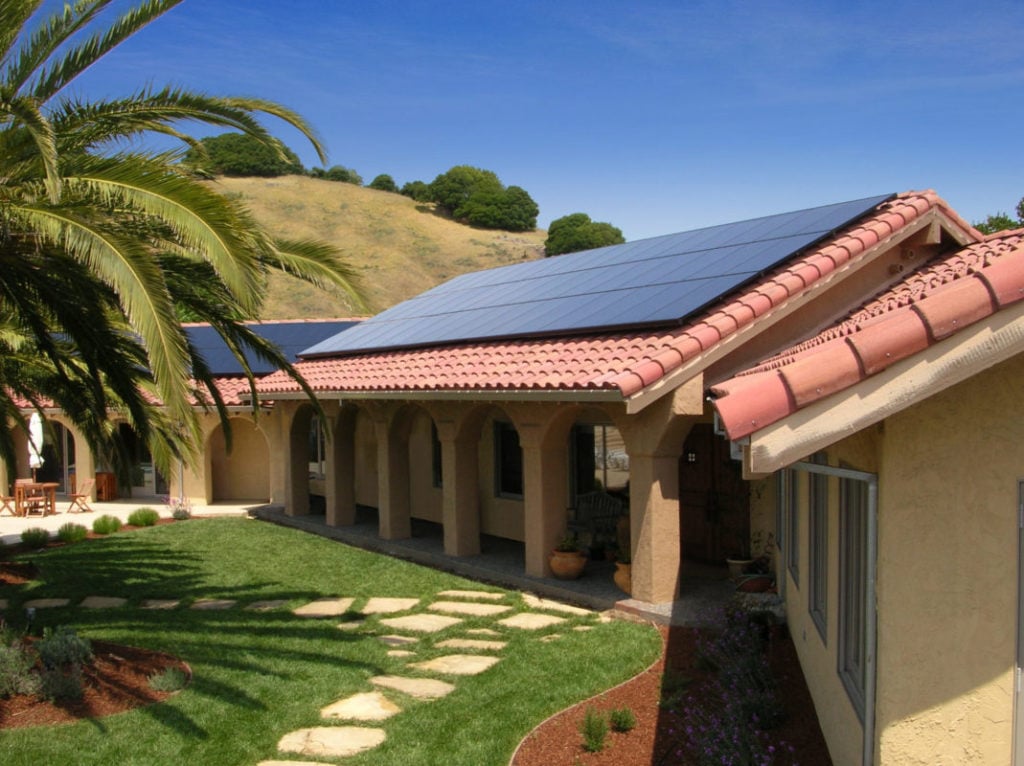
However, not all of the company’s preliminary results have been negative, with SunPower reporting a total revenue of US$464 million in the second quarter of this year, a US$24 million increase on the first quarter of this year and an 11% improvement from the second quarter of 2022. Figures such as these suggest there remains appetite for residential solar PV in the US, but that this demand is struggling to translate into new installations as economic and climatic conditions make new solar projects less viable.
Economic and climatic conditions
A report from the Solar Energy Industries Association (SEIA) and Wood Mackenzie, published in the first quarter of this year, saw new US solar installations decline 3% compared to the fourth quarter of 2022. This is the first time that the number of new PV installations in the US has fallen quarter-on-quarter in two years.
The SEIA and Wood Mackenzie report attributed the fall to seasonal fluctuations in solar power interest, with the winter months typically leading to fewer installations of new projects, and climatic conditions such as intense rainstorms in California.
In June, a report from kWh Analytics noted that power loss due to anomalies, such as extreme weather, at solar sites had increased by 94% since 2019, and continuing fluctuations in weather across the US could be discouraging new investments in residential solar.
However, Faricy attributed some of this decline to falling demand for residential solar installations in the US more broadly, with demand for new projects falling more than expected.
“Demand in the second quarter has weakened more than expected in the southeast and southwest where macroeconomic uncertainty and higher interest rates have slowed our top-of-funnel lead generation and sales bookings,” said Faricy.