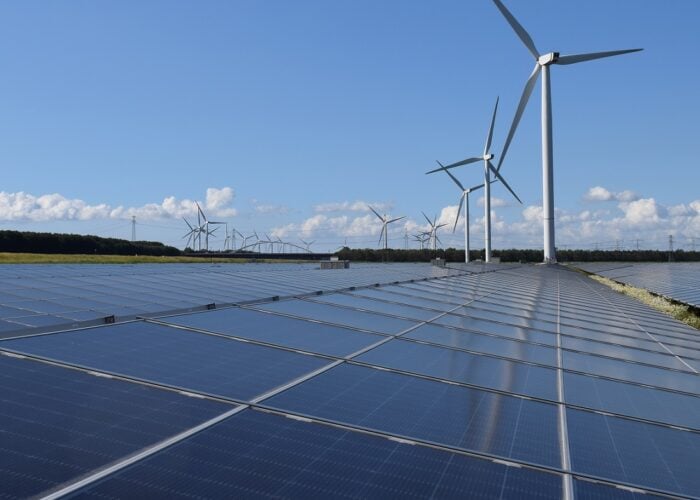
SolarPower Europe has issued a list of eight actions that will help Europe accelerate solar deployment to reach a total capacity of 1TW by 2030 and reduce its reliance on Russian fossil fuels imports.
Europe can halve the amount of gas in its energy mix and reduce energy costs by €323 billion (US$356 billion) if it rapidly accelerates renewable deployment, according to a new report from energy technology group Wärtsilä.
The war in Ukraine will “turbocharge” the global green hydrogen sector as the cost of alternatives soar by more than 70% and Europe seeks to reduce its reliance on Russian gas with a series a financial packages, according to Rystad Energy.
The European Commission (EC) will look to simplify renewables permitting as part of a new strategy aimed at increasing the EU’s energy independence while ending its reliance on Russian gas before 2030.
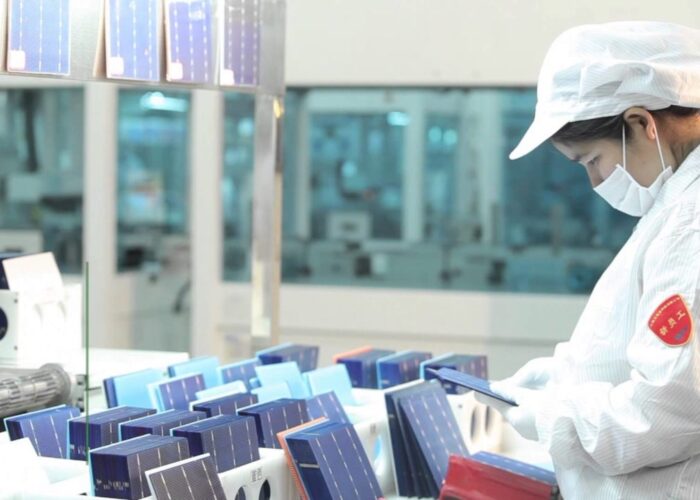
China is expected to add 83 – 99GW of PV capacity every year from 2022 to 2025, while Europe is now its largest export market for solar products, according to a China Photovoltaic Industry Association (CPIA) report on the outlook for the PV industry over the next few years.
A new policy in Italy that claws back the profits of solar PV projects will undermine investor confidence and jeopardise the European Union’s clean energy transition, a group of trade associations, including SolarPower Europe, has warned.
Major European solar developers have called on the European Union (EU) to develop a PV supply chain strategy to avoid cost increases and disruption to projects, with the group calling for 20GW of manufacturing capacity by 2030.
The European Commission (EC) has unveiled new rules to facilitate EU countries’ investments in renewables and help them reach their clean energy targets.
Trade association SolarPower Europe has welcomed a proposal from the European Union’s executive branch that would see all new buildings in the bloc be powered by renewables “as far as possible” and emit no on-site carbon emissions from fossil fuels from 2030.