Over 90% of solar industry professionals report a growing project deployment pipeline in 2026, but new projects that are abandoned before completion now account for almost half of all project pipelines.
These are some of the latest figures from PVcase’s latest ‘State of Solar Project Development’ report, the second annual analysis of solar project deployment. The report looks at the findings from surveys of 405 solar industry professionals, in Germany, Italy, Spain and the US, and some of the headline figures from the report make for encouraging reading, with 91% of professionals surveyed reporting a growing pipeline over the last 12 months.
Try Premium for just $1
- Full premium access for the first month at only $1
- Converts to an annual rate after 30 days unless cancelled
- Cancel anytime during the trial period
Premium Benefits
- Expert industry analysis and interviews
- Digital access to PV Tech Power journal
- Exclusive event discounts
Or get the full Premium subscription right away
Or continue reading this article for free
This is up from 84% in last year’s report, and 99% of respondents in 2026 said that they expect their regional market to grow in the next two years.
However, while 23% of companies expected “explosive pipeline expansion” in the 2025 edition of the report, which means pipeline expansion of more than 20%, this fell to 15% in 2026. Indeed, 46% of respondents said they expect 11-20% growth in pipeline size over the next year, the most popular response and reflecting a slight shift away from the explosive growth expectations of 2025.
This is perhaps the combination of figures that drives what PVcase calls “the optimism paradox” in solar project development, where more developers are optimistic about their growth prospects, but are less optimistic about how significant that growth will be.
The report notes that this could reflect the maturity of the global solar sector, as it moves away from an industry that “expands in bursts” and towards one where larger portfolios are expanding over time; this is certainly the case in Germany, Italy, Spain and the US, the countries where the survey respondents are based, which all have more mature solar industries.
Project attrition up to 46%
Despite these growth figures, “project attrition”—a measure of projects at which work begins but never reach commercial operations—increased notably from 32% in 2025 to 46% in 2026. PVcase notes that the number of respondents reporting project attrition of below 50% was “largely unchanged” from one year to the next, suggesting that there is a higher rate of failure across the industry as developers look to bring more projects online.
“To put this alongside the growth data: the industry is originating more projects and abandoning a larger share of them than it was a year ago,” reads the report.
The most-cited cause of project failure was project finance, with 74% of respondents attributing project failures to financial concerns. This is up from 70% last year, and reflects uncertainty with conventional financing options in some of the more mature solar markets; over the summer, PV Tech Premium learned at Solar Media’s Renewables Procurement & Revenue summit that offtakers and investors are increasingly keen to sign more flexible deals and invest in hybrid projects to overcome financing challenges in Europe.
Other highly cited causes of failure include regulation (70%) and external stakeholder management (63%), which are up five and two percentage points, respectively, since last year. The greatest year-on-year change came in community opposition as a cause of failure, which was cited by 57% of respondents, up from 43% last year. The report notes that it was the most-cited cause of failure in Germany in particular and reflects a trend of growing local opposition to new solar deployments in Europe that was identified last year.
Perhaps surprisingly, the cause that saw the greatest decrease in attribution from one year to the next is supply chain and procurement. With 54% of respondents saying this is a cause of failure in 2026 this remains the seventh-most cited cause, but this is down from 62% the previous year. Growing supply chain concerns come as US policy, in particular, has created procurement challenges through the imposition of tariffs on polysilicon imports and a plethora of antidumping and countervailing duty (AD/CVD) duties in the name of reducing US reliance on goods made overseas.

However, the PVcase report says that this trend has a strong regional split. The report says that supply chains were the “dominant concern” of the 2022-24 period, and that these fears have “retreated everywhere except the US”, creating an environment where supply chain concerns are more impactful in the US than in other markets.
Another cause of failure that saw greater attributions in 2026 is grid interconnections, with 55% of respondents citing this as a reason for failure, up from 48% last year. Much has been made of grid connectivity issues in Europe, in particular, with a report from Ember concluding that a lack of available grid capacity and punctual grid connection timelines has put 120GW of new renewable energy capacity at risk.
‘BESS is now infrastructure’
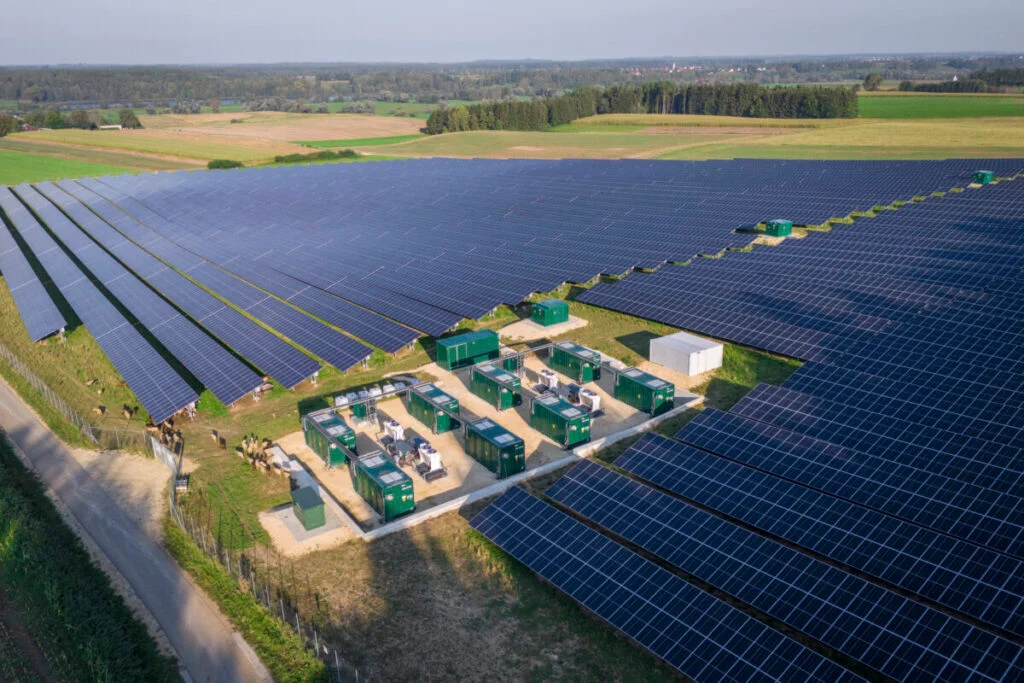
The PVcase report finds that an increasing number of companies are looking to integrate battery energy storage systems (BESS) into their project pipelines, in response to this lack of available grid connection.
Eighty-two percent of survey respondents said that BESS accounts for at least 10% of their project pipeline, including both standalone and co-located BESS, and at least 10% of respondents in all four countries covered by the report said that BESS accounts for at least 20% of their development pipeline, showing a strong appetite for new BESS deployments across the countries.
Data on challenges faced by BESS developers also reveals changing trends in risk perception. ‘Cost-benefit analysis’ was named as a challenge by 34% of developers, the most among all challenges, but down four percentage points from last year; meanwhile, 32% pointed to regulatory uncertainty as a challenge, up four percentage points from last year. This suggests that justifying a BESS deployment is less of a challenge, but finding a policy and regulatory environment to support that development is more of a challenge.
This trend is perhaps the clearest in Germany, where just 11% of respondents said BESS accounts for more than 20% of their portfolio, below the average of 14% and joint-lowest with the US, which indicates hesitancy in the industry to invest in large-scale BESS projects.
The German BESS market was hampered by fears that an exemption for BESS projects from paying charging and discharging fees could be removed earlier this year. The exemption was confirmed in May, and the fact that this triggered an immediate advancement of over 15GWh of large-scale BESS capacity in the following months demonstrates how effective the removal of regulatory uncertainty can be for BESS deployment.