The European Commission (EC) will look to simplify renewables permitting as part of a new strategy aimed at increasing the EU’s energy independence while ending its reliance on Russian gas before 2030.
Following Moscow’s invasion of Ukraine, the case for a rapid clean energy transition “has never been stronger and clearer”, the EC said as it unveiled the REPowerEU strategy, which will see the EU reduce demand for Russian gas by two-thirds before the end of the year.
Try Premium for just $1
- Full premium access for the first month at only $1
- Converts to an annual rate after 30 days unless cancelled
- Cancel anytime during the trial period
Premium Benefits
- Expert industry analysis and interviews
- Digital access to PV Tech Power journal
- Exclusive event discounts
Or get the full Premium subscription right away
Or continue reading this article for free
Alongside diversifying gas supplies, the plan will slash the use of fossil fuels in European homes, industry and power system by boosting energy efficiency, increasing renewables and electrification and addressing infrastructure bottlenecks.
“Let’s dash into renewable energy at lightning speed,” EU climate policy chief Frans Timmermans said. “Renewables are a cheap, clean and potentially endless source of energy, and instead of funding the fossil fuel industry elsewhere, they create jobs here.”
An integrated EU energy system largely based on renewables and greater energy efficiency is the most cost-effective solution to reduce the bloc’s dependence on fossil fuels at the level of homes, buildings and industry, the EC said.
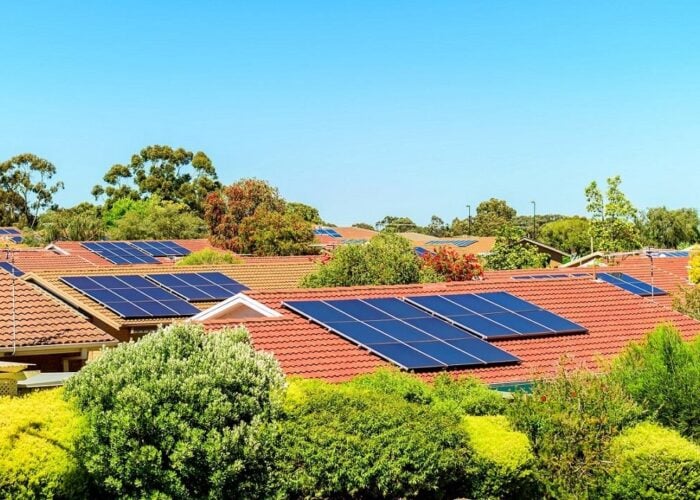
According to the Commission, accelerating the rollout of rooftop solar PV systems by up to 15TWh this year could save the EU an additional 2.5bcm of gas.
With lengthy administrative procedures identified as one of the key obstacles for investments in renewables, the REPowerEU strategy will look at how regulatory bottlenecks can be eased to speed up renewables permitting and minimise the time for rollout of projects and grid infrastructure improvements.
The EC is now calling on EU member states to ensure that the planning, construction and operation of renewables projects are considered as being “in the overriding public interest” and qualify for the most favourable planning and permitting procedures.
Member states should swiftly assess and ensure suitable land and sea areas are available for renewable energy projects, said the EC, which will publish a recommendation on fast permitting for renewable energy projects in May.
It was also revealed that the EC and the European Investment Bank will conclude the financing mechanisms that would be best suited to promote the development of power purchase agreements (PPAs) in Europe. This will facilitate better access to PPAs for offtakers such as small and medium-sized enterprises.

Understanding technology and supplier selection for Europe’s utility-scale PV market in 2027. PV ModuleTech Europe 2026 is a two-day conference that tackles these challenges directly, with an agenda that addresses all aspects of PV module, inverter and battery supplier selection; product availability, technology offerings, supply chain traceability, quality assurance, factory auditing, system reliability, and supplier bankability.
The RePowerEU strategy would see 420GW of additional solar be deployed in the EU by 2030, bringing total installed capacity up to 565GW.
However, in response to the EC proposals and in recognition of the renewed geopolitical urgency of the renewables transition, trade association SolarPower Europe is calling for the bloc to target 1TW of installed solar by the end of the decade.
“With the right frameworks in place, 1TW of solar capacity is within reach for Europe by 2030,” said Walburga Hemetsberger, CEO of SolarPower Europe. “We call on the European Commission to recognise the true power of solar, and set the ambition needed to achieve our climate and security goals.”
Among the policies that SolarPower Europe has put forward for that 1TW target to be reached include facilitating utility-scale development by freezing grid connection fees and mandating member states to identify suitable solar PV sites.
Also included in the REPowerEU strategy is guidance on tax measures that seek to capture some of the returns that certain electricity generators have gained as a result of soaring energy prices.
While the governments of Spain and Italy have introduced policies to reduce the windfall profits of some solar asset owners in recent months, EC guidance establishes that such measures should not continue after June 2022.
Naomi Chevillard, senior policy advisor at SolarPower Europe, welcomed the time limit but called on the EU to ensure increased scrutiny of the measures. “Retroactive windfall profit taxes on revenues of renewables must be handled with great care: by legitimising retroactive interventions on market mechanisms, they create a precedent that could seriously hamper investment signals in renewables.”