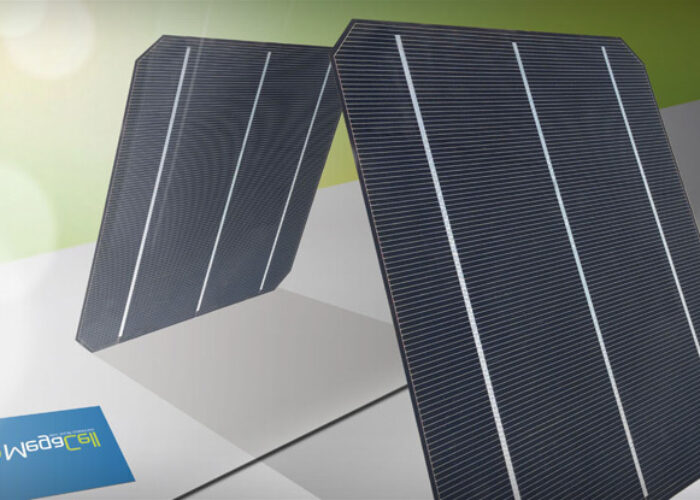
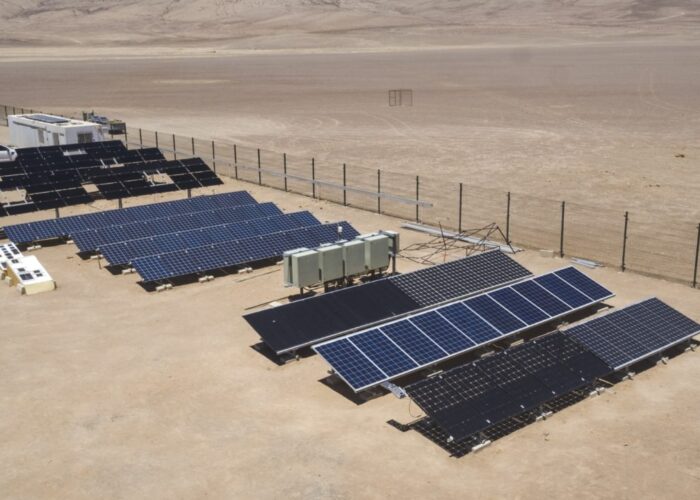
PV Tech Premium caught up with the French solar PV manufacturing startup Carbon to discuss its plans for expansion, inclusion in a European research and development (R&D) ecosystem and how to redress the balance of EU solar supply.
European solar manufacturing start-up Carbon has partnered with the International Solar Energy Research Center (ISC) Konstanz as it pursues a multi-gigawatt cell manufacturing facility in Europe.
Coming out of stealth-mode, US-based integrated PV panel manufacturing start-up, Violet Power intends to disrupt the PV industry with in-house production of high-efficiency IBC (Interdigitated Back Contact) solar cells. The company will use cell-to-module ‘flex circuit’ and thermal plastic encapsulant technology in a glass/glass configuration that will have a solar panel warranty of 50 years, more than three times the average in the industry, today.
TÜV Rheinland has awarded the first small group of PV module manufacturers with certification against LeTID (Light and elevated Temperature Induced Degradation), also known as Carrier Induced Degradation (CID).
Ahead of PV Tech launching its new PV IndiaTech conference, on 24-25 April 2019, in Delhi, I review in this blog what the event is all about, and why the timing of the event has turned out to be perfect as India debates how to create a sustainable manufacturing segment that supplies quality modules to its downstream segments.
PV is increasingly becoming the cheapest energy source and therefore has become the energy source with the highest yearly capacity additions! Even in 2018, after some scepticism right after SNEC 2018, due to the announcement of the Chinese Government to stop supporting PV as intensively as in 2017, more than 100GW (109GW) have been installed worldwide (we actually bet a crate of beer on that!) and 125GW has been forecasted to be installed in 2019.
Recently billed by solar industry experts as another degradation crisis that could be worse than the impact on PV module performance than PID (potential Induced Degradation), ‘Silicon Module Super League’ (SMSL) member, Hanwha Q CELLS has highlighted that both its mono and multicrystalline products have performed exceptionally well in LeTID (Light and elevated Temperature Induced Degradation) tests undertaken by Fraunhofer CSP.
When we visit conferences and industrial players, we are very often surprised at how many responsible scientists for PERC production have never heard about the severe degradation effects that PERC devices can show – in particular when talking about LeTID (Light and elevated Temperature Induced Degradation) alias Carrier Induced Degradation (CID).
The International Solar Energy Research Center Konstanz e.V. (ISC Konstanz) has signed a technology transfer agreement with PV module assembly equipment supplier based in Finland for R&D centre’s advanced ‘BiSoN’ (Bifacial Solar cell On N-type) and ZEBRA (diffused n-type IBC) solar cell technology.