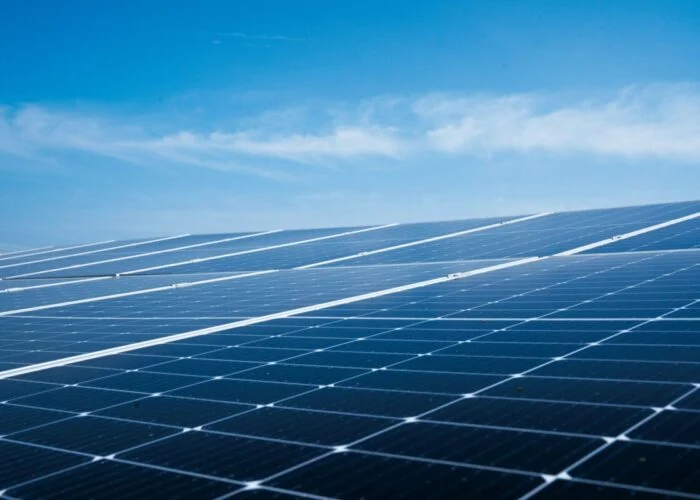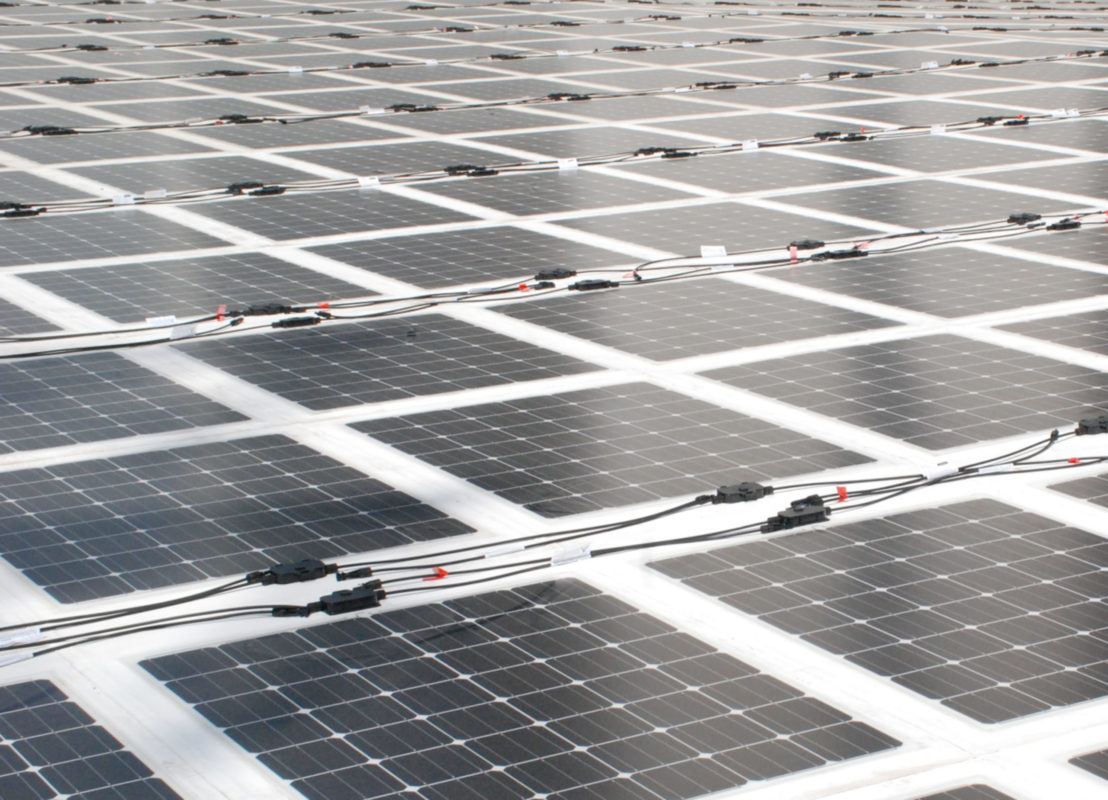
The ‘Solarion M210’ 48-cell glass-foil module used for low-load-bearing roofs

Facebook
Twitter
LinkedIn
Reddit
Email
The Solarion M210 glass-foil modules are encapsulated framelessly between a glass panel and a plastic roofing membrane, providing a low surface load that is about nine kilograms per square meter, making PV-installations on low-load-bearing flat roofs possible. Image OC3

OC3 AG, formerly Solarion is offering its new generation of solar modules specifically designed for relatively low-bearing residential, commercial and industrial rooftops. The ‘Solarion M210’ is a glass-foil module consisting of 48 monocrystalline solar cells

Problem

This article requires Premium SubscriptionBasic (FREE) Subscription

Try Premium for just $1

  • Full premium access for the first month at only $1
  • Converts to an annual rate after 30 days unless cancelled
  • Cancel anytime during the trial period

Premium Benefits

  • Expert industry analysis and interviews
  • Digital access to PV Tech Power journal
  • Exclusive event discounts

Or get the full Premium subscription right away

Or continue reading this article for free

Low-bearing residential, commercial and industrial rooftops are widely used around the world, especially in large-area flat rooftops. Conventional crystalline and thin-film modules are difficult to install in such applications, due to weight constraints.

Solution

The Solarion M210 glass-foil modules are encapsulated framelessly between a glass panel and a plastic roofing membrane, providing a low surface load that is about nine kilograms per square meter, making PV-installations on low-load-bearing flat roofs possible. The system also provided higher area utilization compared to elevated systems.

Applications

The frameless encapsulation of solar cells between TPO or PVC and glass provides mechanical stability, durability and ease of use for low-bearing roofing applications.

Platform

The modules are certified according to IEC 61215 as well as IEC 61730 and for flat roofs with an inclination between two to twelve degrees. The 2mm front glass is tempered and very resistant to hail and other mechanical impacts.

Availability

Currently available.
Read Next

June 5, 2026
The Western Australian government has allocated AU$17.8 million (US$12.7 million) in its 2026-27 State Budget to build the state's capacity to recycle solar modules and embedded batteries, under its Remade in WA programme.
Premium
June 4, 2026
Australian NEM solar generation fell 21.2% to 3,038GWh in May 2026, while a sharp mid-month pricing spike reversed April's stabilisation trend.
June 4, 2026
The opening of this week’s SNEC show in Shanghai was marked by a shared recognition of the need for China’s PV industry to move beyond unchecked capacity expansion and brutal competition, writes Carrie Xiao.
June 4, 2026
As solar imports to the US face increasing restrictions, domestic manufacturers are racing to build upstream production capability. With 66GW of module capacity chasing just 11GW of domestic cells, the supply chain crunch is reaching a critical inflection point, write Moustafa Ramadan and Joe Hennessy.
June 3, 2026
Queensland has opened a formal call for proposals under the state government’s AU$200 million North West Energy Fund in Australia.
June 3, 2026
Australia's utility-scale solar PV and wind assets generated a combined 4.6TWh in May 2026, up 10% from 4.2TWh recorded in May 2025, according to data published by Rystad Energy senior analyst David Dixon on LinkedIn.

Upcoming Events

Solar Media Events
June 16, 2026
Napa, USA
Media Partners, Solar Media Events
June 30, 2026
Sacramento, California
Media Partners, Solar Media Events
August 25, 2026
São Paulo, Brazil
Media Partners, Solar Media Events
September 1, 2026
Mexico City, Mexico
Media Partners, Solar Media Events
September 9, 2026