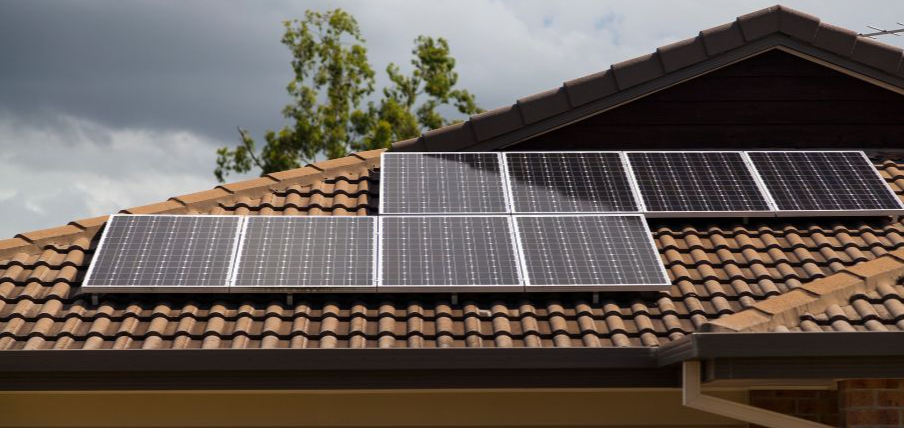
SA Power Networks will run its annual test of the state’s rooftop solar curtailment system on 25 August in South Australia.
The test will temporarily reduce generation and export from around 100,000 residential systems for less than an hour to confirm the network’s ability to respond if the Australian Energy Market Operator (AEMO) needs to protect grid stability during a system security emergency.
Try Premium for just $1
- Full premium access for the first month at only $1
- Converts to an annual rate after 30 days unless cancelled
- Cancel anytime during the trial period
Premium Benefits
- Expert industry analysis and interviews
- Digital access to PV Tech Power journal
- Exclusive event discounts
Or get the full Premium subscription right away
Or continue reading this article for free
The distribution network operator described the exercise as a “fire drill for the grid,” simulating a rare but urgent scenario in which AEMO directs SA Power Networks to reduce rooftop solar output to prevent instability.
South Australia has one of the highest concentrations of rooftop solar per capita in the world, a level of penetration that can create periods when solar exports are high, and electricity demand is low enough to threaten grid stability.
Under legislation passed by the South Australian government in 2020, all solar systems installed after September 2020 must be capable of remote disconnection during a system security emergency, a requirement built into the state’s Smarter Homes regulations.
The test checks three things: that compliant systems can be remotely curtailed, that Relevant Agents, the third parties responsible for disconnecting and reconnecting systems on SA Power Networks’ behalf, can respond quickly, and that all systems reconnect smoothly once the test concludes.
During the test, affected systems will ramp down to 0kW output before ramping back up, with the average participating household expected to miss around 1.5kWh of generation.
SA Power Networks pointed to a real-world precedent for why the capability matters. In November 2022, a severe storm disconnected South Australia from the rest of the National Electricity Market (NEM) when the Victoria interconnector failed during a period of surplus solar export, and the network operator said the Smarter Homes curtailment capability helped maintain system stability for South Australian customers during that event.
A market increasingly shaped by rooftop solar volumes
The curtailment test lands as rooftop and utility-scale solar output continues to expand across the NEM.
Combined solar generation across the NEM rebounded 37% in July as wholesale prices stabilised through the middle of the month in our recent NEM Data Spotlight article (Premium access), showcasing the scale at which solar output now moves national price and generation patterns.
Federal policy is also widening the pool of solar capacity subject to similar market and grid integration mechanisms.
Australia is set to expand its Small-scale Renewable Energy Scheme to cover solar installations up to 1MW, up from the current 100kW threshold, a change expected to bring a wider range of commercial-scale systems into the incentive scheme that has driven much of Australia’s rooftop solar uptake to date.
Despite that household and small commercial uptake, a large share of the country’s rooftop potential remains untapped in other segments.
Analysis from the Institute for Energy Economics and Financial Analysis (IEEFA) has identified a “missing middle” in Australia’s solar market, finding that Australian businesses have installed only a fraction of their available rooftop solar potential, pointing to a segment of the market that has lagged household adoption despite comparable or better economics.
As household solar penetration climbs, the relationship between generation and storage is also shifting installer conversations.
Trina Solar recently told PV Tech Premium that as home battery storage systems have become more central to residential solar sales, installers increasingly look to size systems around how much energy a home’s battery can absorb, rather than treating storage as an optional add-on to the panels themselves, a shift that also reduces the volume of exported solar available for curtailment events like the one SA Power Networks is testing.
Most customers are not expected to notice the 25 August test, which SA Power Networks said would be completed by sunset and scheduled for a day of moderate solar output to minimise its impact.
Any systems that curtail, reconnect too slowly, or fail to respond at all will be followed up with the relevant installer or manufacturer to improve performance ahead of any future emergency in which the capability is required.