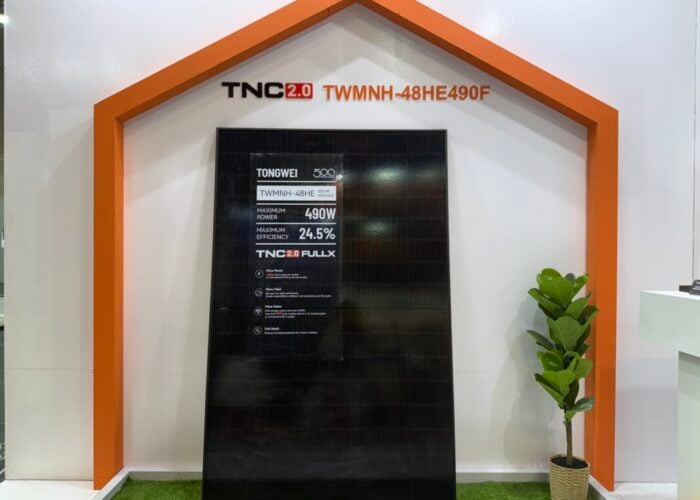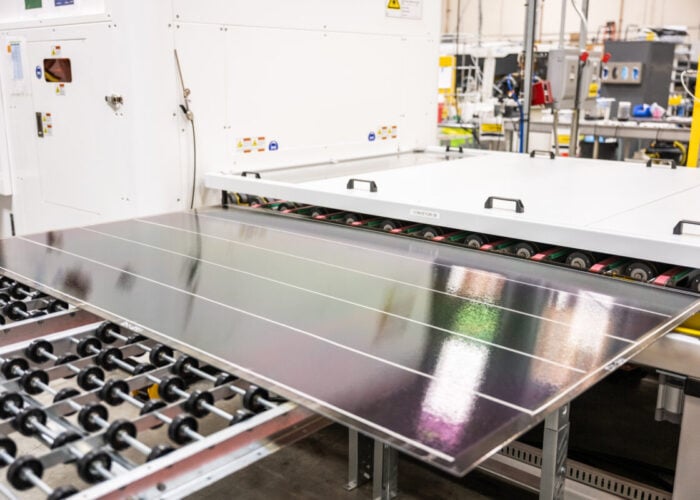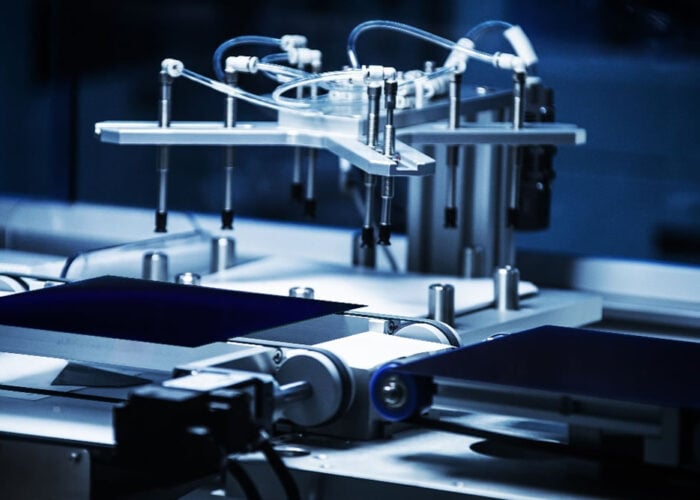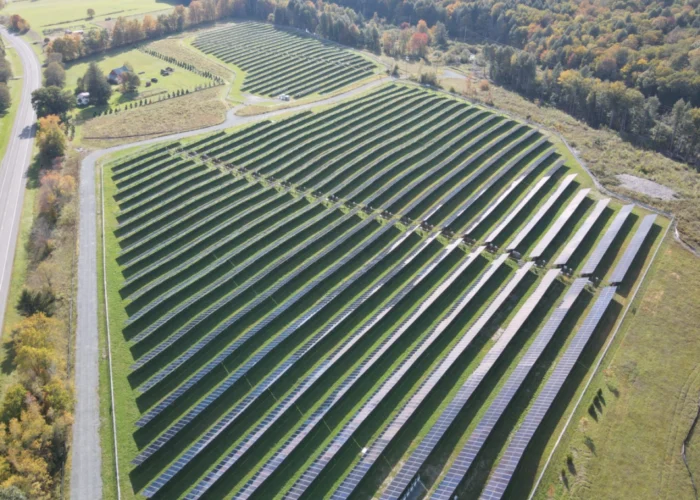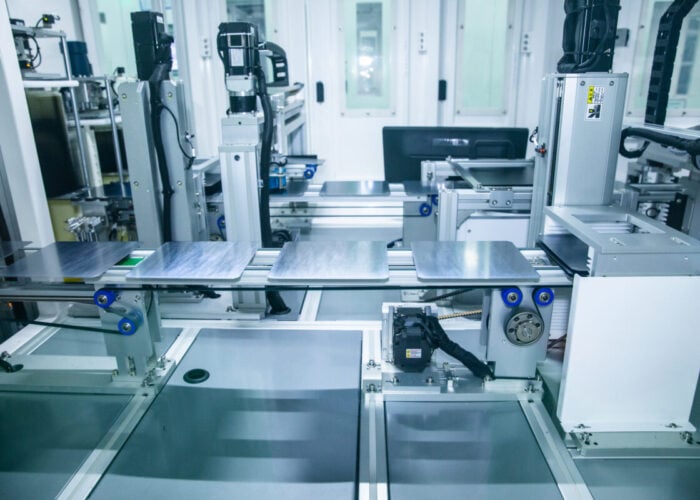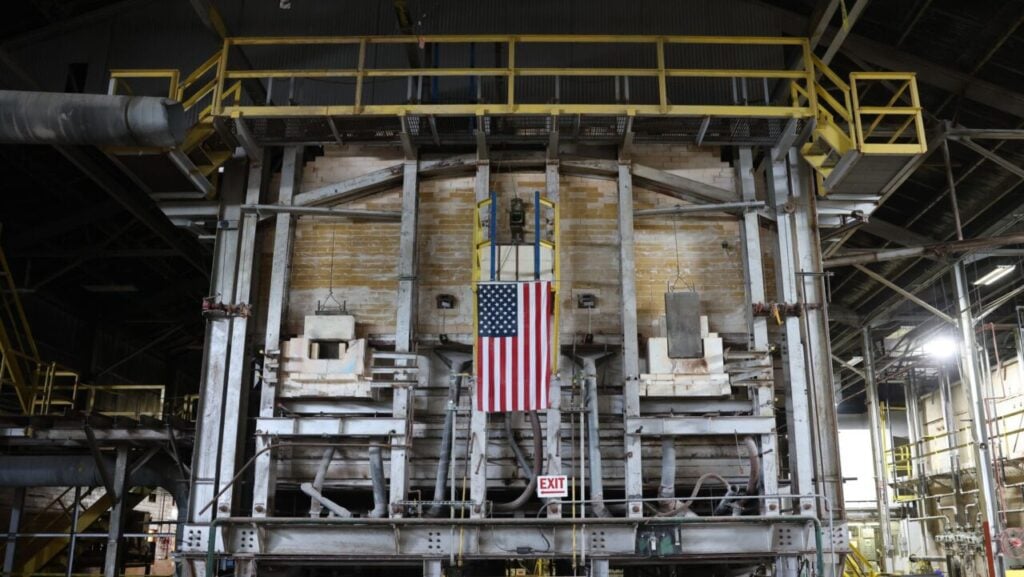
The rise of domestic PV module production in the US is gathering pace, but some parts of the local supply chain have fallen behind. Among the biggest gaps is solar glass, a market dominated globally by a handful of predominantly Chinese companies. While the US supply of float glass for First Solar’s thin-film technology is long established, American-made low-iron rolled patterned glass for crystalline silicon modules remains almost entirely unavailable.
One Ohio-based company, Stewart Glass, is due to offer trials of its solar glass to US module assemblers this summer. If the glass meets quality requirements while offering cost benefits over imports, it could establish a precedent. But its current production capacity would meet only a fraction of US demand.
Try Premium for just $1
- Full premium access for the first month at only $1
- Converts to an annual rate after 30 days unless cancelled
- Cancel anytime during the trial period
Premium Benefits
- Expert industry analysis and interviews
- Digital access to PV Tech Power journal
- Exclusive event discounts
Or get the full Premium subscription right away
Or continue reading this article for free
Meanwhile, pressure on module producers to use locally sourced components is increasing through tax incentives and domestic-content requirements (DCR). The question is whether these incentives will be sufficient to overcome the financing, expertise and grid challenges involved in building large glass furnaces.
Most glass used in buildings and automotive applications in Europe and the US is produced domestically because it is heavy and expensive to ship, explains Suvi Sharma, co-founder and CEO of Arizona-based PV recycling firm Solarcycle. Until recently, there was not enough US PV module production to create demand for domestic solar glass.
“Now that there is [local PV production], we can build a true domestic supply chain,” says Sharma. “We are going to need solar glass here.”
Domestic demand
US module manufacturing grew more than 50% last year, with 65.5GW of capacity online, up from 42.5GW at the end of 2024, according to the Solar Energy Industries Association. Although actual production has lagged well behind nameplate capacity, the potential market for locally made glass has nevertheless expanded rapidly.
One specific solar-glass requirement is already being catered for domestically. First Solar obtains the float glass required for its CdTe thin-film modules from within the US via Mexican firm Vitro Architectural Glass and Japanese glass giant NSG Group. However, the glass required for crystalline-silicon modules remains largely unavailable.
“As US module manufacturing has been growing, there has been no supply of non-iron content glass,” confirms Martin Pochtaruk, president of US and Canada-based module manufacturer Heliene, which has 1.3GW of US crystalline module capacity.
Derisking Asian imports
For Heliene, domestic glass would help complete an increasingly localised supply chain. Pochtaruk notes that Heliene will be among the companies trialling Stewart Glass’ locally made samples of ready-to-use, antireflective-coated and tempered glass this summer.
“Being able to use [locally made] glass versus importing glass is also part of de-risking the geopolitics of imports from Asia, and that’s why it’s so important,” says Pochtaruk.
The company is already making modules using US-made polysilicon, ingot, wafer, cell, frame, encapsulant and backsheet. “The only thing we don’t have today in the US is glass and the diode that goes in the junction box.”
Sharma sums up the current gap: “There’s virtually no rolled solar glass production in the US. As far as what crystalline silicon needs, which is rolled pattern glass, it doesn’t exist in the US.”
Signs of life
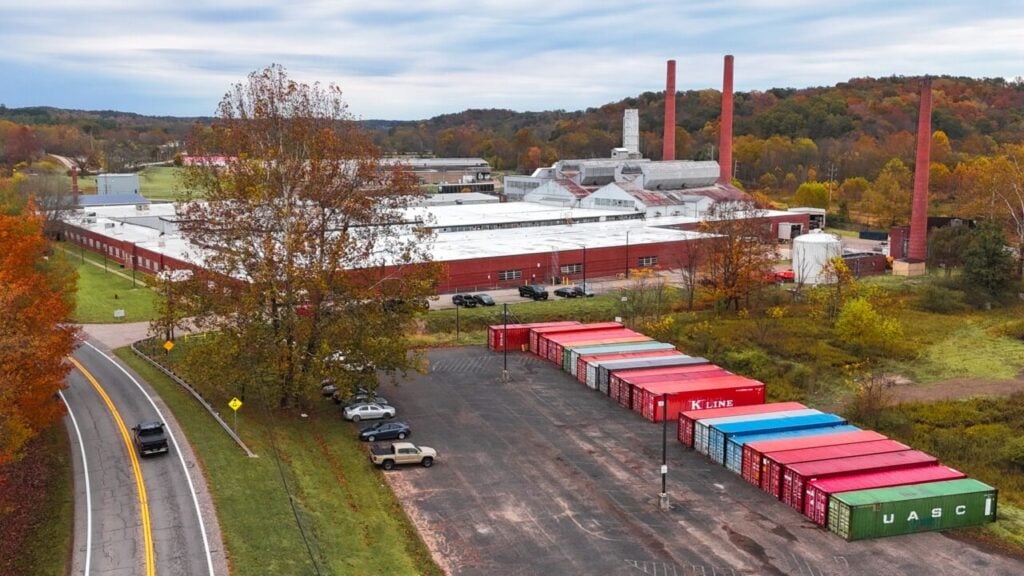
Despite the supply gap, activity is increasing. Stewart Glass is expanding its Ohio facility, with a second line expected online in June 2027. Solarcycle is planning a first-of-its-kind US facility that would use recycled materials to produce new solar glass, although it still needs additional financing before construction of its furnace can begin.
Virginia-based startup MSolar Manufacturing is planning a new facility in Virginia to manufacture heterojunction (HJT) cells and modules, as well as solar glass. Meanwhile, US solar manufacturer T1 Energy is interested in US glass production, particularly because of the logistics advantages, although CEO Dan Barcelo highlights the challenge of competing on price with Southeast Asia.
Texas-headquartered module manufacturer SEG Solar is also looking for land to potentially produce PV glass itself or through a joint venture with a glassmaker.
“I still think we’re at least two years out from seeing some of these new ideas be able to work,” says SEG Solar CEO Jim Wood. “But if someone should build a big glass manufacturing [facility] for solar glass, they need to see policy beyond 2030 to really make sense of that investment.
“You need lots of power, a big space, to keep running that facility 24/7 for a year, never shutting it down, never stopping to be able to recapture your capex, and so there needs to be policy to support glass manufacture.”
Financing and power
The scale of glass production is one of the fundamental obstacles. “Glass factories… they just come in one size, which is large,” says Sharma.
A 5-6GW glass furnace can require US$550-600 million of investment, making financing one of the biggest hurdles facing prospective US producers. Banks must also decide whether to finance a new company without a track record of producing solar glass, rather than an established overseas manufacturer.
The challenge is therefore not simply expensive equipment and infrastructure. Domestic producers also lack some of the experience and expertise needed to make a convincing case to investors.
Power is another constraint. Although non-iron silica sand is generally considered readily available as a feedstock for glassmaking, glass furnaces require enormous quantities of electricity.
In some parts of the US, grid constraints mean it can take 12-18 months for investment in grid infrastructure to bring sufficient power to a manufacturing site, according to Pochtaruk. “It becomes a two-year construction project. So, it’s not quick,” he adds. “It’s not that you say, well, somebody won the lottery and is giving me US$500 million, so I’m going to build it in my backyard now. You need a power supply that is massive, and that could also be a constraint. Because of the size of the investment, this is proving to be quite difficult because nobody has been able to pull it off so far.”
The need for policy beyond 2030
Long-term certainty over demand is critical for infrastructure projects of this scale, and volatility in US government policy has already adversely affected potential developments.
Canadian Premium Sand, for example, paused development of a planned 4GW US pattern-glass facility until there is greater stability in trade policy and the geopolitical landscape. The company had secured 30% of planned output through binding offtake agreements, but needed 80% to proceed, with progress hindered by “uncertainty surrounding US solar energy policy”.
Glass furnaces also cannot simply be switched off if demand or policy changes.
“The reason you can’t shut it down is, as you heat up the furnace, it seals itself, and then as you cool it down, you have to jackhammer the refractories out,” says Michael Pilliod, CEO of glass engineering consultancy Central Tension.
“Glass furnaces can’t turn on and turn off. They turn on and they run, and if they turn off it’s a multi-year programme to be able to decommission, break it down and then reassess it.”
Pilliod points to China’s success in connecting glass manufacturers with multiple module suppliers, backed by government incentives and protection, including tax support, and greater certainty over both supply and buyers. He argues that a similarly coherent US strategy may be needed.
Can incentives close the gap?
Under domestic-content bonuses, glass is categorised as a subcomponent that contributes to the total calculation of whether a module qualifies as US-manufactured.
Meanwhile, the recently announced 232 tariffs of 15% on imports of polysilicon and solar wafers, cells and modules to the US are yet “another move from the US administration to provide a graded playing field for domestic manufacturing versus imports”, says Pochtaruk.
However, even stronger incentives for glass specifically, or extending the length of the 45X manufacturing tax credits to help PV manufacturers, may not solve the financing problem.
“That will help to provide a context,” Pochtaruk adds. “However, even with a good context, if you and me go knock on a bank saying we’re going to build a US$600 million glass electric air furnace, but we have never done it, we have no idea how to do it, but we know we’ll do it well, people will laugh it off.”
The 45X credits also include requirements relating to non-FEOC companies. Sharma says there are currently few suppliers of solar glass that meet the requirement, creating an incentive for US module manufacturers to source from a domestic producer.
The Domestic Content adder could be less useful to glass manufacturers in the short term, however, because many eligible projects will be built before new glass furnaces could come online. Such facilities can take at least three years to establish.
The longer-term policy direction may therefore be as important as existing incentives.
“It’s an evolving area of duties and taxes, as can be seen by Section 232,” says Sharma. “That alone was a huge change and boon for domestic manufacturing. So, most of the companies here believe that there’s going to be more policies, whether it’s carrots or sticks, that are going to push them into manufacturing.”
Stewart Glass takes the first step
When Stewart Glass delivers its US-made solar glass this summer, Heliene will test it against its quality requirements before potentially adding it to its domestic-content offering to customers.
The technology itself is not groundbreaking, says Pilliod, but glass is a competitive, low-margin business. Stewart Glass’ position as a first mover in the US therefore represents a significant commercial step.
“The next question is, can you do it at a reasonable competitive price to the large manufacturer?” says Pilliod. “No one wants to pay more for glass.”
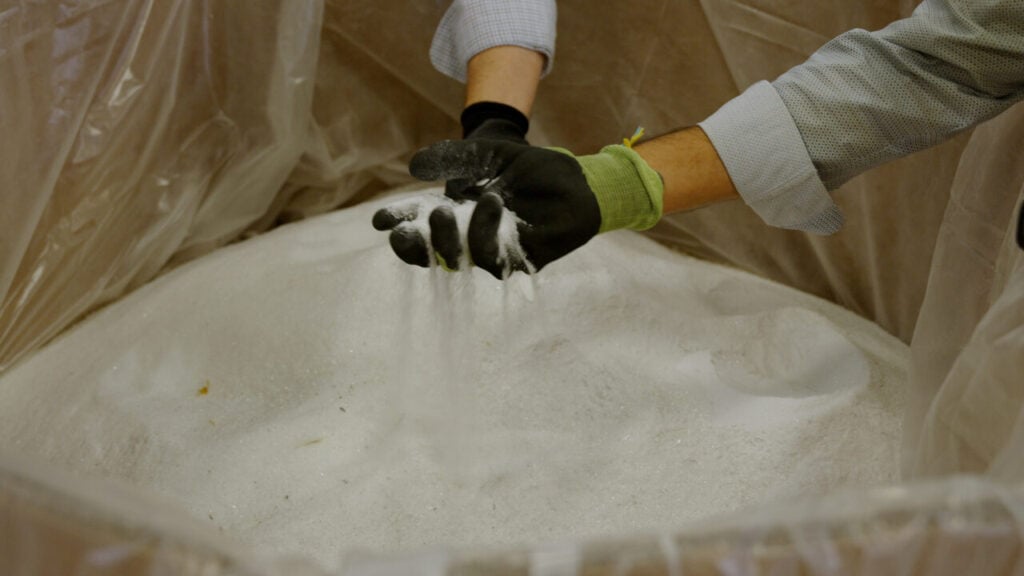
While Stewart Glass’s line 1 produces 150 tonnes per day (line 2 will produce an additional 250 tonnes in June 2027), Solarcycle is pursuing a different, larger-scale approach. Its planned facility would produce around 1,000 tonnes of glass per day, equivalent to roughly 5GW per year, although it’s notable that some individual Chinese plants are around ten times larger.
Scale matters because higher volumes reduce costs; however, US producers also have potential advantages from lower shipping costs and, in some regions, cheaper natural gas.
Solarcycle has obtained land and permits and is raising capital. Its plans include progressively increasing the proportion of recycled glass cullet used as feedstock as more US modules reach the end of their lives. With only around 1GW of modules currently coming offline annually, it could take a decade before recycled glass can fully supply the planned furnace.
The expertise gap
Even if production shifts to the US, some expertise may initially still have to come from Asia. Sharma says most of the relevant expertise currently resides in China. Solarcycle, for example, is using Chinese equipment because it is commercially viable and expects to bring engineers from China to support its facility.
“I don’t see a clear path to have competitive solar glass domestically without the engineering assistance of Chinese equipment makers or Chinese glass manufacturers,” he says. “Tariffs and duties help to raise the price [of imports], but that’s not a panacea. That’s not going to solve everything. We still are going to need the expertise coming from overseas.”
A missing link
For Solarcycle’s co-founder and CSO, Jesse Simons, the case for domestic solar glass goes beyond simply replacing imports. The founders of some of the original solar companies, including SolarCity and SunPower, invested in Solarcycle because they viewed reshoring the wider supply chain as necessary to truly domesticate US module assembly.
“When you do that, then you can start getting economies of scale, and you can start competing directly head-to-head with landed modules from Asia,” he says. “You don’t need tariffs, you don’t need all this crazy trade policy.”
Sharma also says that glass is crucial to completing the domestic supply chain, arguing that glass and solar cells are the two components most important to module performance and reliability.
“These investments take a long time,” he adds. “So, we need to start now and really work as an industry together, and we’re seeing a lot of infrastructure folks who really want to support the build-out of glass here.”
The immediate obstacles remain formidable with hundreds of millions of dollars of capital needed, enormous power requirements, a shortage of domestic expertise and uncertainty over policy beyond 2030.
But with US module manufacturing expanding rapidly, the market that domestic glass producers could serve is finally emerging. The question is whether companies such as Stewart Glass and Solarcycle can scale enough to capture it.
There will also be questions over whether to focus on float glass or rolled pattern glass in the US, but Pilliod believes solar demand will reach an inflection point where the two will become less competitors and more complementary.
The build-out of the US solar supply chain will be the focus of our PV CellTech USA event in San Francisco on 13-14 October. For full details and booking, click here.