Technical advisory TÜV Rheinland has been commissioned to study the potential for solar PV to power rail infrastructure in Germany.
The project, launched by the German Center for Rail Traffic Research at the Federal Railway Authority, will explore how certain PV applications could be used to directly feed power into the rail system’s grid.
Try Premium for just $1
- Full premium access for the first month at only $1
- Converts to an annual rate after 30 days unless cancelled
- Cancel anytime during the trial period
Premium Benefits
- Expert industry analysis and interviews
- Digital access to PV Tech Power journal
- Exclusive event discounts
Or get the full Premium subscription right away
Or continue reading this article for free
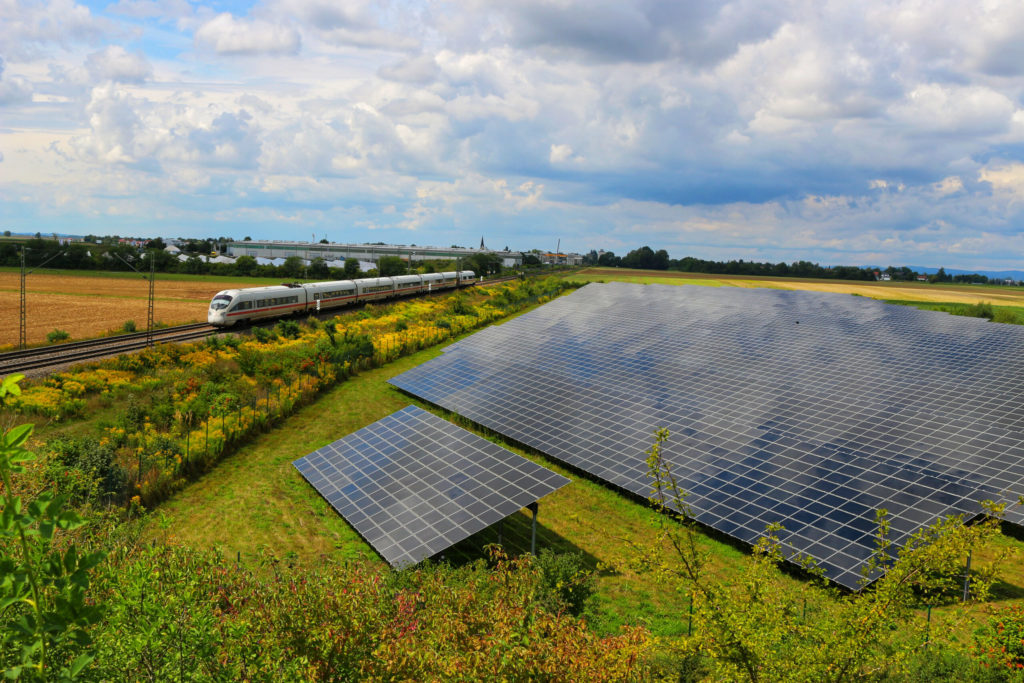
It will explore the potential for track-integrated PV modules, featuring systems installed into track beds or integrated into noise barriers alongside rails, and look to solve technical barriers such as the requirement to feed power directly into the rail system’s 15kV, single-phase overhead network.
The 14-month project will also seek to identify how much solar could increase its share of renewable energy powering the railway system.
PV experts from TÜV Rheinland will work alongside railroad technology professionals on an interdisciplinary project.
Three work packages are to be implemented, including market research into PV systems that are relevant to railroads, including work on components necessary for the direct feed-in of power.
It will progress to identify areas of Germany’s rail infrastructure that would be best suited for solar PV applications, data from which will be used to deduce expected energy yields.
Lastly, the study will assess the requirements that would be placed on installed systems from a railroad regulation perspective, as well as possible barriers and restrictions that could be placed on such systems.
“If it turns out to be possible to generate energy along the widely ramified railway electrification system and feed it in directly, thereby making better use of existing infrastructure and reducing energy losses through multiple conversion and transport, the rail mode of transport could further improve its greenhouse gas balance,” TÜV Rheinland’s rail technology expert Jürgen van der Weem, said.
Similar studies and pilot projects have been launched elsewhere. The UK government’s Department for Transport released a tranche of funding in 2019 to support trials using solar alongside transport infrastructure, building on a study launched in 2017 compiled by London’s Imperial College that found that up to 10% of the UK rail network’s entire power demand could be met by solar installed along its routes.