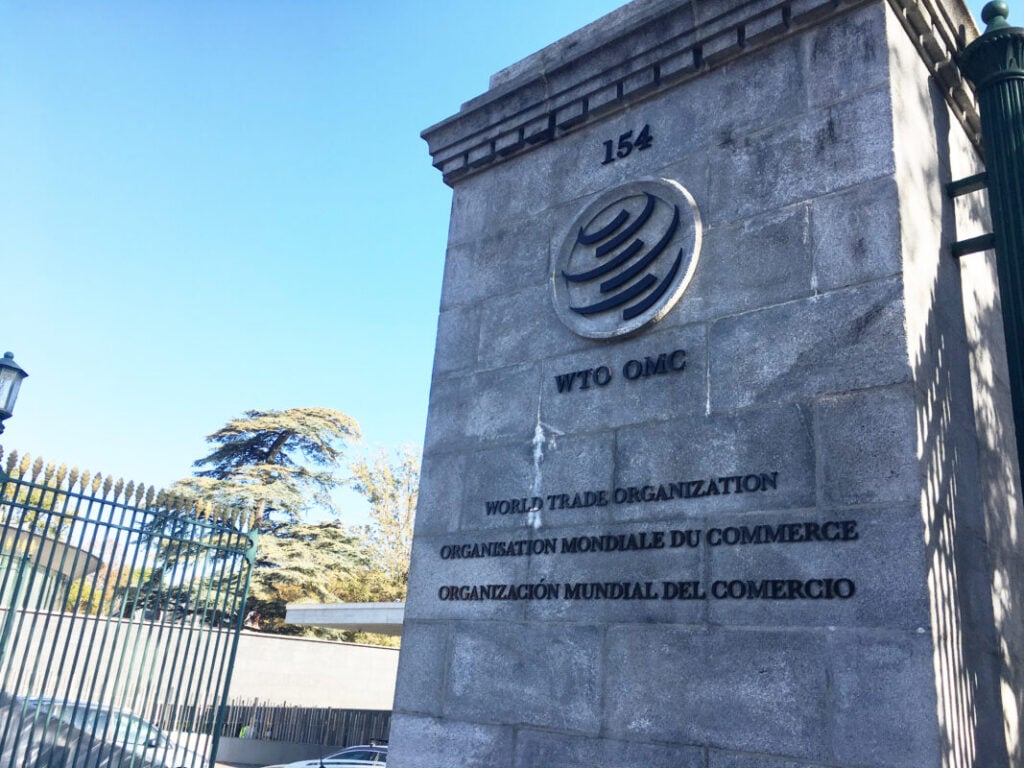
US authorities have hit back at a World Trade Organization (WTO) ruling that subsidies for domestically produced components used in solar and wind projects discriminate against Chinese firms.
A WTO panel last week recommended the US withdraw the domestic content bonus available under the investment tax credit (ITC) and production tax credit (PTC), after concluding that it allows subsidies “prohibited” under WTO rules.
Try Premium for just $1
- Full premium access for the first month at only $1
- Converts to an annual rate after 30 days unless cancelled
- Cancel anytime during the trial period
Premium Benefits
- Expert industry analysis and interviews
- Digital access to PV Tech Power journal
- Exclusive event discounts
Or get the full Premium subscription right away
Or continue reading this article for free
The domestic content bonus for the ITC and PTC was a key component of the multi-billion-dollar Inflation Reduction Act (IRA) package brought in during Joe Biden’s presidency to incentivise US production of hardware used in solar and other clean energy projects.
In March 2024, China filed a complaint with the WTO, arguing that the IRA’s domestic content provisions violated a number of international trade agreement rules by discriminating against goods of Chinese origin.
An expert panel convened by the WTO to consider the case last week upheld China’s complaint and said the domestic content bonus should be withdrawn by 1 October 2026 at the latest.
But given that the panel only has the power to recommend rather than compel action, it seems unlikely the US will comply.
Indeed, the Office of the United States Trade Representative issued a bullish response to the WTO panel’s deliberations, highlighting what it claimed were the WTO’s “inadequate” rules in areas such as energy.
“Incredibly, the WTO report finds that the United States has broken WTO rules by defending industries that China unfairly targeted for global dominance, but does not say a word about the harms caused by China’s industrial policies and massive excess capacity. It is also absurd that the WTO panel questioned whether the United States has deep and abiding concerns with ensuring that the conditions of competition within the US market are fair,” the USTR said.
“As our words and our actions have shown, the United States has long-standing and serious concerns with excess capacity and its impact on market-oriented economies. This report only underscores the serious doubts that the United States has long expressed regarding the capacity of the WTO to regulate trade in a world marked by severe and sustained trade imbalances.
“The United States remains committed to defending our companies, securing supply chains, and rebalancing trade. We will always take necessary measures to support US jobs and pursue economic and national security.”