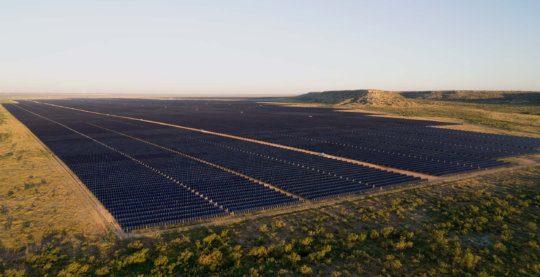
The US installed 1,877MW of utility-scale solar during Q3 2022, a 23% drop year-on-year, amidst ongoing policy issues, according to trade body the American Clean Power Association (ACP).
Total utility-scale clean energy installations fell 22% compared with Q3 last year, and there’s been an 18% year-to-date (YTD) drop off as the US clean energy sector saw its slowest quarter in three years.
Try Premium for just $1
- Full premium access for the first month at only $1
- Converts to an annual rate after 30 days unless cancelled
- Cancel anytime during the trial period
Premium Benefits
- Expert industry analysis and interviews
- Digital access to PV Tech Power journal
- Exclusive event discounts
Or get the full Premium subscription right away
Or continue reading this article for free
From July to September 2022, 3.4GW of clean energy was installed, of which 1,877MW was utility-scale solar capacity. Q1 and Q2 of this year saw 2.9GW and 2.2GW of solar capacity installed respectively. Total 2022 YTD clean energy installations now sit at 14.2GW.
Battery storage was the only segment to see an uptick this quarter, commissioning 1.2GW and continuing its best year on record in the US.
In Q3 alone, 14GW of clean power projects were delayed, bringing the total backlog of delayed projects in the US to 36GW. Solar accounts for 63% of these delays, the ACP said, though it also dominates the national project pipeline.
Delays in solar installations boil down to module procurement. “The solar market has faced repeated delays as companies struggle to obtain panels as a result of an opaque and slow-moving process at US Customs and Border Protection,” said JC Sandberg, interim CEO and chief advocacy officer at ACP. The ACP also cited issues with securing grid connections as a reason for the backlog of uninstalled projects.
The customs delays are due to the hangover effects from the Withhold Release Order that the US government placed on some Chinese-imported solar panels and the Uyghur Forced Labor Prevention Act. These delays then compound in the project pipeline, threatening to disrupt future projects.
This disheartening news arrives on top of the previous quarter’s results, described as a “step in the wrong direction” by the previous CEO of ACP, Heather Zichal.
California was the largest installer of utility-scale clean energy this quarter, adding 1.4GW, whilst Texas was the second with 1.2GW of new clean energy capacity built. Part of California’s installations this quarter was NextEra’s Arlington (Riverside County Solar) hybrid solar-plus-storage project – the largest hybrid project of the quarter – with 231MW of solar capacity and 242MW of battery storage capacity.
There is currently 132GW of clean power capacity in the pipeline, almost 60% (78GW) of which is solar, according to the ACP.
Despite the backlogs and the falling installations over 2022, the suggestion is that the IRA, which, amongst other things, incentivises US-manufactured clean energy with tax credits, will begin to catalyse the market by 2024, according to Wood Mackenzie.
Sandberg added: “We expect the IRA to deliver 550GW of new [clean energy] capacity by 2030, representing US$600 billion in capital investment and growing the clean power workforce to nearly a million strong by 2030.”