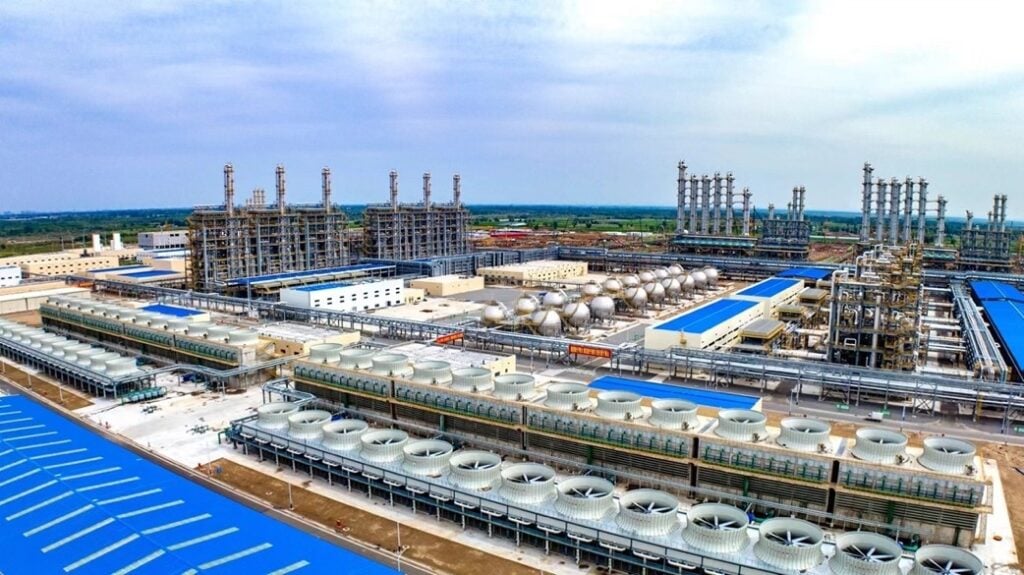
In its Q1 2026 reports last week, Chinese polysilicon producer Daqo New Energy revealed an 88.3% decline in its sales. The drop is remarkable, especially considering that Daqo’s polysilicon production actually increased over the same period, albeit slightly, from 42,181MT to 43,402MT.
Last week, Johannes Bernreuter, head of polysilicon market analysis firm Bernreuter Research, told PV Tech that when he saw the results, “I first thought I had read the numbers incorrectly”. But correct they were, and they may tell us about the situation for the wider polysilicon market.
Try Premium for just $1
- Full premium access for the first month at only $1
- Converts to an annual rate after 30 days unless cancelled
- Cancel anytime during the trial period
Premium Benefits
- Expert industry analysis and interviews
- Digital access to PV Tech Power journal
- Exclusive event discounts
Or get the full Premium subscription right away
Or continue reading this article for free
In its earnings call, Daqo said that the cliff edge in its sales figures was because it was following the rules; adhering to the Chinese government’s instructions for polysilicon producers not to sell below the cost of production. Given the sustained low prices that are regularly below production costs, sales tanked. There has also been weak demand for polysilicon in the early months of 2026, exhibited in both Chinese companies’ results and those of Germany’s Wacker Chemie this week.
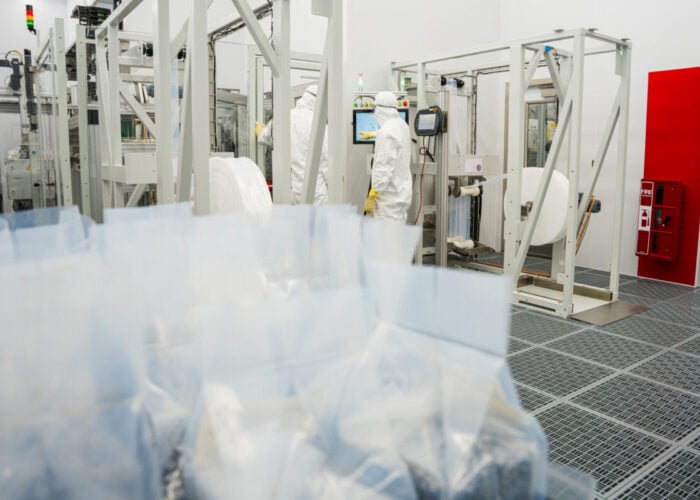
More interesting is the decision to continue increasing production. Bernreuter tells us that, in his reading of the transcript of the earnings call, Daqo wanted to maintain its utilisation rates at its facilities to “hold them at an almost optimal operating point, or condition, in terms of quality and cost.” Lowering production outputs can have adverse effects on the quality of polysilicon and the cost of its production; the process is incredibly energy-intensive and large-scale continuous production will tend to reduce costs.
“Apparently, they accept the increase of inventories and the bad quarterly results for the sake of not changing the operating conditions,” Bernreuter continues.
In its earnings call, Daqo’s chief financial officer, Ming Yang, said the company expected to maintain its 50-55% utilisation rate in Q2 and Q3 because it is “at a fairly optimal operating condition in terms of both quality and cost, and production volume,” adding: “adjustments will generally … bring short-term volatility to both quality and cost.”
“My suspicion is that this could be exemplary for other polysilicon manufacturers in China,” Bernreuter says. “They don’t want to get too low with their utilisation rate because it drives up the specific costs per kilogram and maybe other problems, as Daqo indicated with quality.”
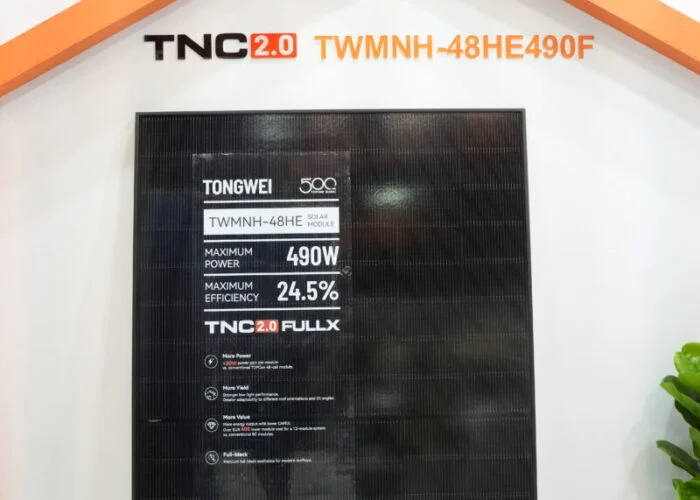
Tongwei Solar, the market leader, recorded Q1 2026 losses of around RMB 2.4 billion (US$352.3 million) and a 17.71% drop in polysilicon sales.
“And on the other hand, the mountain of inventory is growing and growing, and it’s paradoxical somehow, or even irrational,” Bernreuter says.
‘Obviously it hasn’t worked’
The Chinese industry has tried to impose measures to curb overcapacity and increase polysilicon prices. A consortium of companies, led by Tongwei and Daqo among others, had planned to buy up a large portion of Chinese polysilicon supply to curb overproduction and raise prices. They were warned off this plan by China’s State Administration for Market Regulation (SAMR) over concerns it would constitute a monopoly.
The Chinese government has also met with leading PV firms to try to address overproduction and oversupply, pushing for greater consolidation and restrictions over unnecessary expansion, as well as giving guidelines to companies not to sell polysilicon below its production cost (as Daqo claimed in its results).
Most recently, Daqo and Tongwei saw their share price jump after rumours they had sat in a “closed-door” meeting with the government to discuss mandatory polysilicon production cuts, coordinated price support and shutting down obsolete capacity. Daqo and fellow poly producer Hoshine both denied the truth of the reports.
For Bernreuter, “Obviously [the price measures] haven’t worked.” He said that the polysilicon price rises seen in Q3 and Q4 last year were “artificially high, only based on expectations” around the aforementioned capacity acquisition plans. Once that expectation was gone, “the real market fundamentals came into the fore again and drove down the price.”
As long as there is excess capacity in the market, polysilicon producers can’t increase the price using normal market conditions, he says. “They always need artificial support from the government to get a higher price, but higher prices will not solve the problem of overcapacity and oversupply, because it does not reflect the supply-demand balance.”
The situation seems a touch absurd on the surface; massive loss-making companies that continue to produce huge amounts of a product to be sold at cost price, or, in Daqo’s example, not sold at all and added to the growing mountain of surplus stock.
“It’s based on the expectation that demand will accelerate in one or two years, and so inventories will be depleted step by step,” Bernreuter says. “I think that’s the expectation of the manufacturers. And of course they are hoping for a solution to reduce capacity or eliminate overcapacity from the market.”
He suggests that the signals from Beijing have been a little confused on this matter: on one hand, SAMR thwarted plans for an industry merger over monopoly concerns, and on the other, the directive not to sell below cost price creates an artificial crutch propping up the industry. “This look to me like the government is working into two different directions,” Bernreuter says.
Is there a solution to this dynamic?
“The radical market solution would be to let the price fall until the highest cost manufacturers wave the white flag and leave the market,” he says. “But my impression is that too many of the new players have parent corporations with deep pockets that can sustain a long period of losses.”
However, the biggest kid on the block, Tongwei, could be a problem, says Bernreuter. “Tongwei…has polysilicon inventories of more than 200,000 tonnes [per its reports]. That’s 40% of the total market. As long as Tongwei is not reducing its inventories significantly, I don’t see a solution to the problem.”
Earnings transcript from Seeking Alpha.