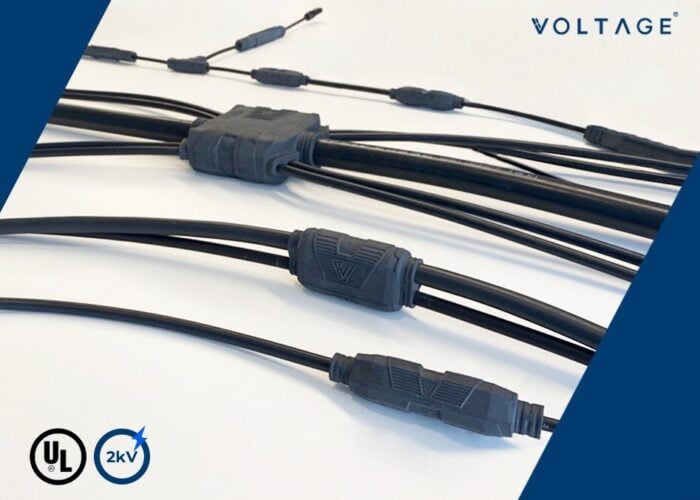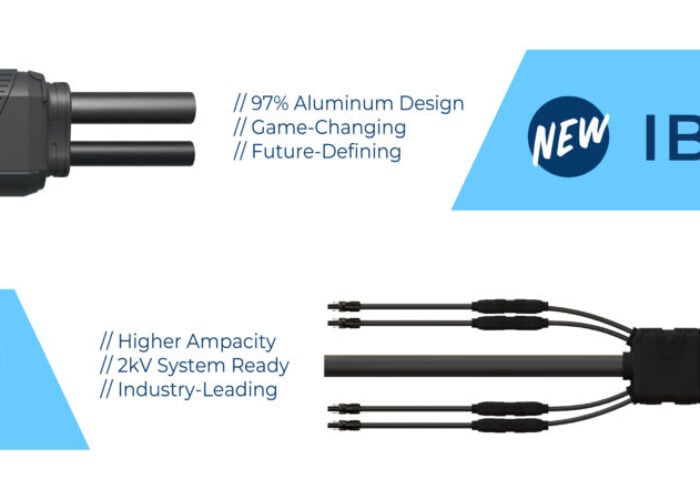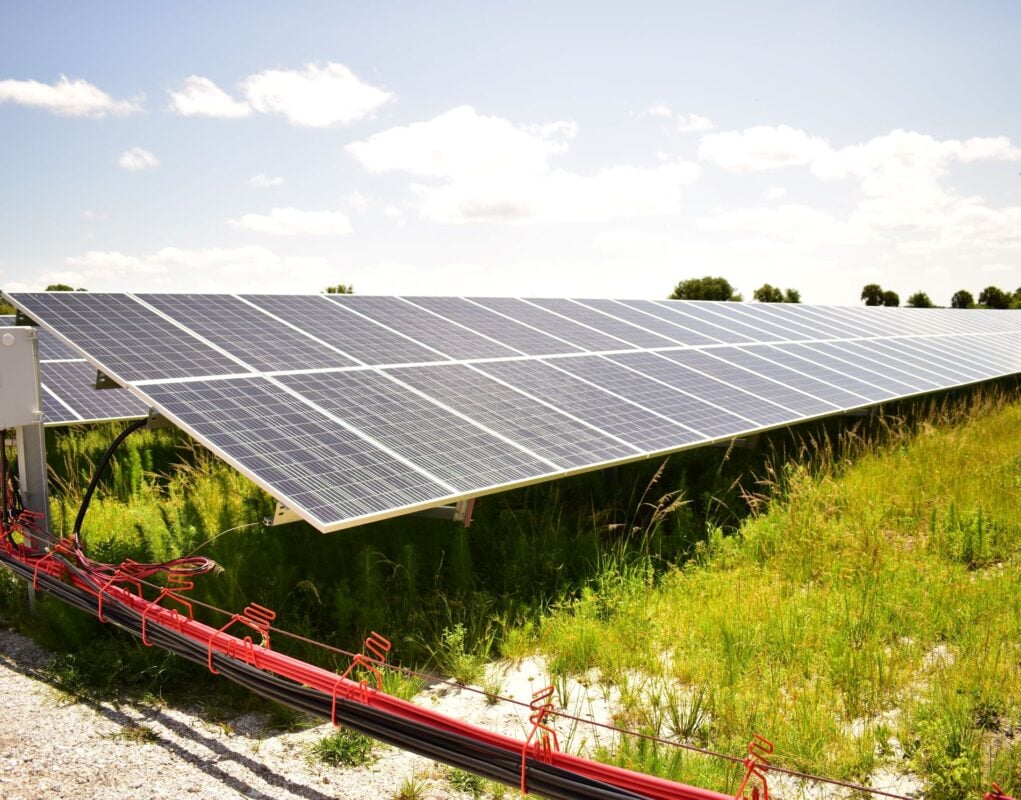
The fast pace of the solar industry means that technology is ever-evolving, with, more recently, a shift from p-type modules to n-type modules. At the electrical balance of systems (EBOS) level, another shift is currently the standard of having 2,000V systems. One of the companies jumping on this trend is Voltage Energy, which has also shifted from using copper in its wiring systems to aluminium. This helps reduce costs without compromising the performance of the EBOS products, according to the company. A company that has delivered over 45GW of solar EBOS solutions across more than 30 US states, from the Southwest to the Southeast, up to the Midwest.
PV Tech sat down with Voltage Energy’s CEO, Li Wang, and spoke about how the change from copper to aluminium helps improve efficiency while also being easier to handle, especially in larger projects, which have become more frequent. Finally, we also covered the use of virtual reality and 3D modelling tools, such as Voltage Reality and Voltage Connect, to help companies save time in the design of their projects, but also to help train their workforce.
Try Premium for just $1
- Full premium access for the first month at only $1
- Converts to an annual rate after 30 days unless cancelled
- Cancel anytime during the trial period
Premium Benefits
- Expert industry analysis and interviews
- Digital access to PV Tech Power journal
- Exclusive event discounts
Or get the full Premium subscription right away
Or continue reading this article for free
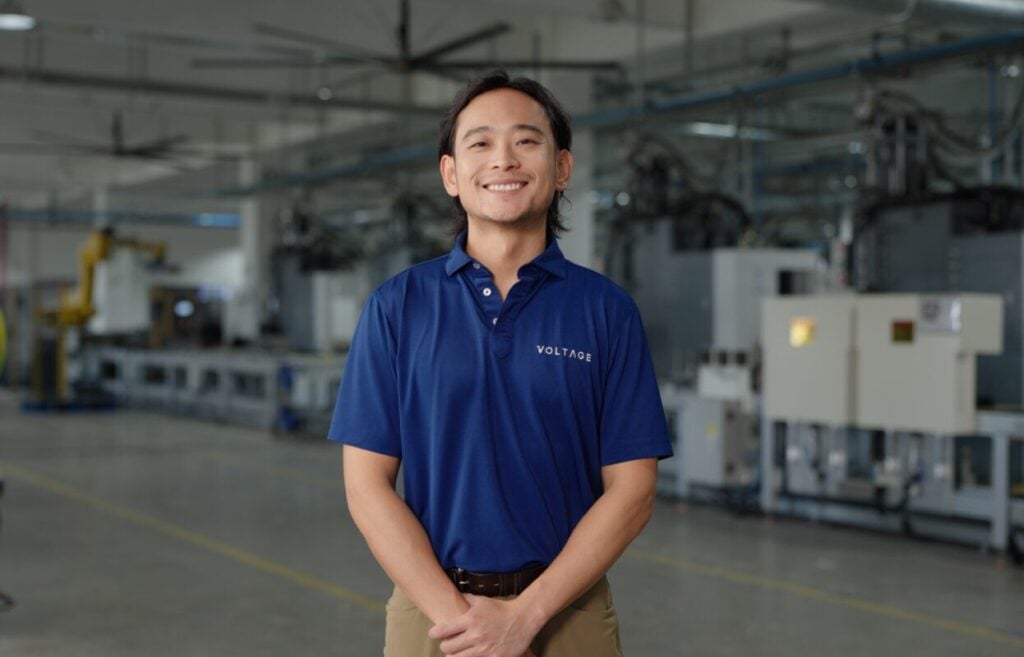
PV Tech: What have been some of the latest trends in the EBOS field for utility-scale solar projects? And how does the shift from copper to aluminium fit into these trends?
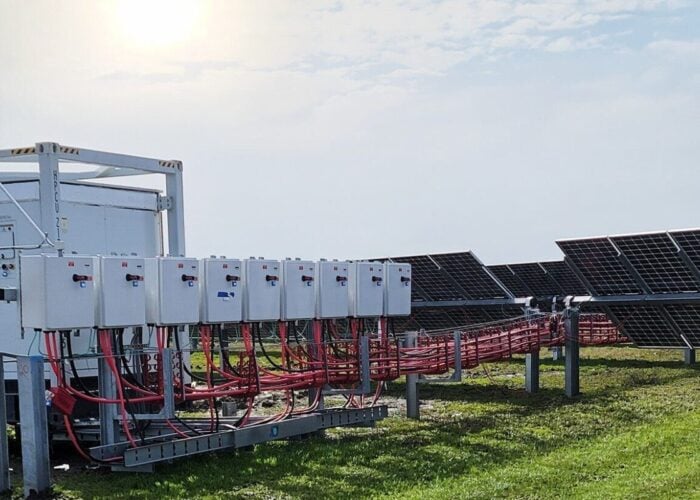
Li Wang: The latest trend would be the 2kV system. The whole industry is talking about it and, of course, that brings with it new technologies. Everybody will be happy to see that on the same size site they can generate more power and more revenue. For us, it’s always our philosophy that longer streams are preferred, and with minimal numbers of connections. I wouldn’t say this is a philosophy of the greater EBOS industry, but it is always a Voltage trend, that reliability and safety are always what we’re keen on. We developed anti-corrosion, anti-termite, and anti-rodent cables to fit different environments. We have a few projects in Hawaii where the customer feedback is that they have a terrible termite issue. And so our specific design and cables helped them to fit with that specific environment.
Regarding the comparison between aluminium and copper, there are two features worth mentioning: weight and material value. Aluminium is significantly lighter than copper, making it easier to handle, as well. In addition, aluminium is more abundant and accessible globally, making it a more practical choice for large-scale applications. Finally, utilising more aluminium makes sense as those projects can be installed more efficiently, delivering long-term economic advantages as project sizes grow exponentially.
One of the industry trends that has shaped the industry over the past few months is the increasing size of utility-scale solar projects and modules. How do Voltage Energy’s EBOS products and services help reduce effort and time in the construction of these larger projects?
Big projects always come, in my opinion, with challenges in two areas: one is the material and the other is labour. On the material side of a big project, this equates to increased amounts of materials needed for installation and at different times. To make sense of this chaos, we have developed Voltage Connect, a web-based dashboard which provides the customer with real-time visibility into our materials delivery and installation scheduling, among several other benefits. When we talk about human resources, it breaks down into two parts: one is the engineering and the other is the labour. From an engineer’s perspective, we engage with our customers in the early stages of a project. With collaboration at the design phase, we are able to turn around our drawings quickly and accurately. To take this a bit further, we developed a unique 3D modelling and VR service called Voltage Reality. Used in tandem, our customers are afforded the ability to fully visualise, not only the physical installation, but the back-end choreography as well, giving the entire team a clearer understanding of the project. Our customers even have the ability to use virtual reality to train their teams on the nuances of installing our pre-made custom solutions. Couple this installation knowledge with our Golden Row Service and our standard technical field service, and we help our clients build projects faster and with fewer errors.
This is a good segue for the next question, which focuses on the importance of offering services at the pre-construction stage. Could you explain some of the challenges an EPC faces at that stage and how Voltage Energy helps them solve these challenges?
A very common challenge is planning a project. Challenges for our customers could be something like design complexity or a need to change the design. If we look at our collaborative design process, it’s very interesting to see where we have come from with the typical back and forth of revisions, submittals and approvals to a now 3D virtual method which minimises the need for multiple revisions. The Voltage Connect service then allows project managers to track their custom solutions from the point of origin, through site delivery, and with access to all test reports and delivery method specifics along the way. Essentially, our customers gain real-time visibility into their orders, just like checking the delivery status on Amazon. They can see exactly where their products are, when they will arrive, and how the delivery is progressing. And because they have this level of visibility, they can also better anticipate manpower and cost requirements, helping them plan more wisely.
Could you expand a little bit on the importance of having a virtual reality (VR) tool for your customers?
I remember I once went to a job site, which was in its early stages of construction, and we were discussing some technical issues with the project manager, who brought a very thick book and a large drawing. Now he can accomplish everything with an iPad. Prior to our VR tool, our engineers had to call the client’s engineers and articulate the details of a change and we often found it difficult to communicate effectively. By using VR, it’s actually easier for our clients to identify areas in need of a change and translate those changes into visual reflections of the revision. Along these same lines, we are working with our customers to develop an apprentice program that helps get their installation teams up to speed quickly on the most efficient methods to install our solutions. Using our VR solution is similar to flight training: you don’t fly the plane itself; you train in a simulator first. That’s exactly how our customers use VR to prepare before going to the actual job site. They even use our VR project environments to show their customer what the completed project will look like.