Western Australia’s Lithium Universe has secured the commercial rights for a solar PV module recycling technology known as Microwave Joule Heating Technology (MJHT).
The deal was formalised by signing an exclusive licensing agreement with Macquarie University, based in Sydney, New South Wales, held through an Australian-incorporated holding company called New Age Minerals.
Try Premium for just $1
- Full premium access for the first month at only $1
- Converts to an annual rate after 30 days unless cancelled
- Cancel anytime during the trial period
Premium Benefits
- Expert industry analysis and interviews
- Digital access to PV Tech Power journal
- Exclusive event discounts
Or get the full Premium subscription right away
Or continue reading this article for free
The technology platform uses microwave technology to selectively heat silicon, which softens the ethylene-vinyl acetate (EVA) encapsulant in solar modules. This enables easy delamination and the potential recovery of valuable materials at room temperature.
This process avoids extreme heat (1400°C) to separate materials such as silicon and glass. Lithium Universe said it will conduct further investigations that could lead to the greater recovery of silver, silicon, gallium and indium.
Silver in particular could be a lucrative market should further investigations bear fruit. The organisation said that, as of May 2025, silver is priced at around US$1,099.77 per kilogram.
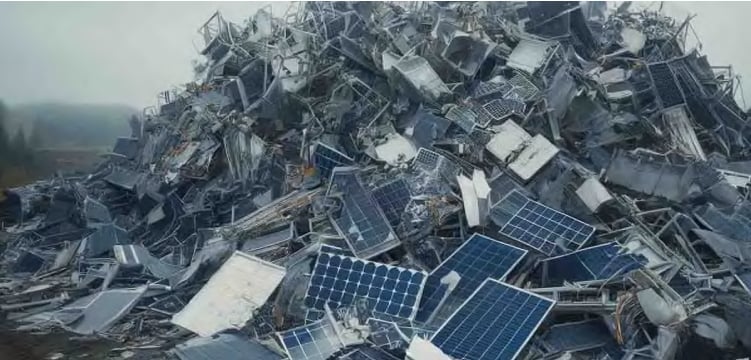
Iggy Tan, executive chairman of Lithium Universe, said the acquisition will help reduce the amount of solar module waste entering Australian landfills.
“The need for effective PV recycling has never been greater, with only 15% of panels currently being recycled. The mass accumulation of solar panel waste in landfills is a growing problem, as valuable critical metals like silver, silicon, gallium, and indium are left behind, contributing to both resource depletion and environmental harm.” Tan said.
“Microwave technology offers a promising solution to these challenges, enabling higher recovery rates and more sustainable recycling processes. We firmly believe that this technology represents the future of solar panel waste management.”
‘Australia to be hit by a Tsunami of solar waste’
Lithium Universe noted that the solar PV module recycling industry is set to experience rapid growth driven by the increasing economic value of recoverable critical metals like silicon, silver, and indium from end-of-life solar modules.
Indeed, highlighting the extent of the issue, Potentia Energy, a joint venture co-owned by Enel Green Power and INPEX Renewable Energy Australia, revealed that around 1.4 million solar PV modules will reach their end-of-life in 2025 across Australia, highlighting the urgency for recycling initiatives. It is worth noting that Potentia Energy is the new name of Enel Green Power Australia, following a rebrand at the end of 2024.
These issues were further highlighted by Australian module manufacturer Tindo Solar’s CEO, Richard Petterson, who exclusively told PV Tech Premium last year that if Australia installed around 1TW of solar modules in around 25 years, to keep the assets running, the nation would need to recycle around 40GW of modules each year.
The International Energy Agency (IEA) likened the amount of solar waste likely to hit Australia in the future to a “tsunami”.
This also presents a potentially lucrative market for module recycling innovators. According to Rystad Energy, the market for recyclable materials from end-of-life modules is projected to reach over US$2.7 billion by 2030 and could approach US$80 billion by 2050.
Lithium Universe added that this growth is supported by both economic opportunities and environmental necessities. Recovering materials from used modules reduces the need for environmentally damaging virgin material extraction while securing domestic supplies of critical metals.