Current solar PV module price increases are largely dictated by five major components, according to data from Intertek CEA: silver, polysilicon, glass, water and energy, and aluminium.
Silver paste
The latest PV Price Forecasting report from Intertek CEA provides a cost breakdown of the standard materials and manufacturing inputs used in a Chinese-made 210R bifacial tunnel oxide passivated contact (TOPCon) module, which represents the current industry standard.
Try Premium for just $1
- Full premium access for the first month at only $1
- Converts to an annual rate after 30 days unless cancelled
- Cancel anytime during the trial period
Premium Benefits
- Expert industry analysis and interviews
- Digital access to PV Tech Power journal
- Exclusive event discounts
Or get the full Premium subscription right away
Or continue reading this article for free
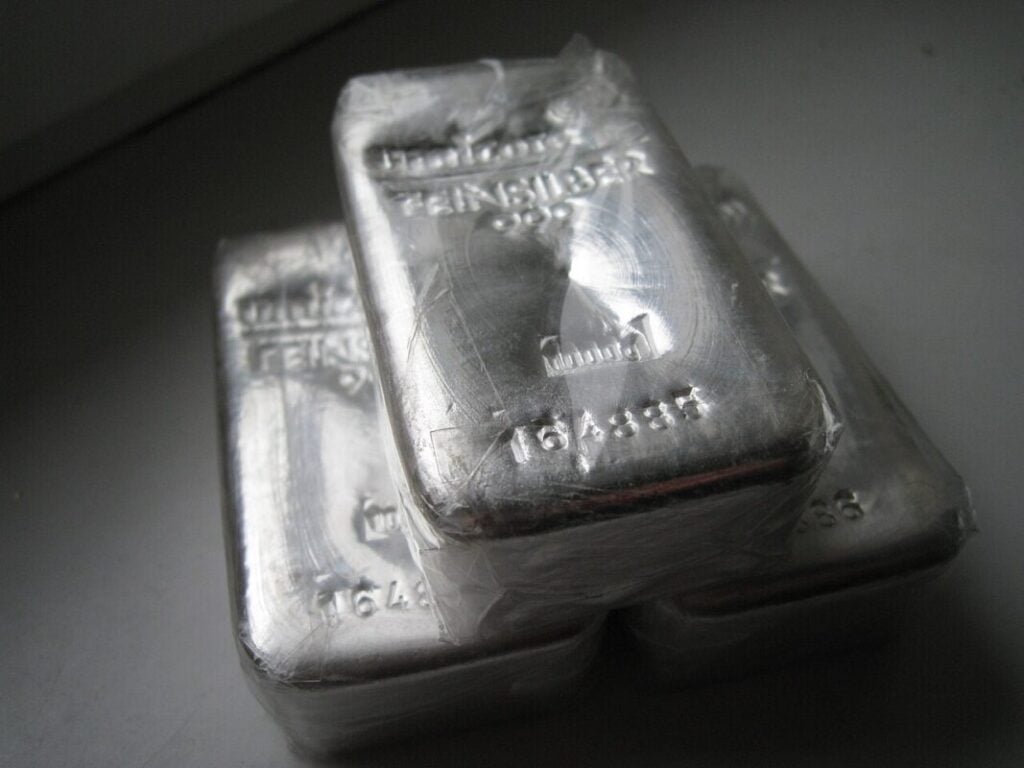
It shows that silver paste is the “largest single cost component in PV modules”. Global silver prices reached “record highs” in January 2026 thanks to increased investor and industrial demand, according to analysis from global asset owning giant BlackRock. Geopolitical and economic uncertainty has caused a rush towards traditional “safe haven” investments like silver and gold, and the metal is a key part of the global solar PV and semiconductor industries.
In January, Rystad Energy said that “vertical” price rises for silver in 2026 would push up solar cell production costs, which would ultimately ripple down into module prices.
Efforts to reduce reliance on silver are ongoing in the solar industry. In comments accompanying the report, associate director for market intelligence at Intertek CEA, Justin Johnson, said: “The primary strategy in the PV industry is still to slowly reduce the amount of silver per cell while maintaining production yield and cell performance.
“At this time, several replacement or significant substitution strategies are underway, but most are not currently employed in mass production as manufacturers must tread a careful line between reducing costs and maintaining product reliability to have confidence in their warranty offerings.”
The primary replacement for silver is copper, a cheaper and more abundant metal. But copper could introduce technical challenges for solar cell production. Johnson said: “The concern when introducing a new material like copper is that sensitive cell components could corrode and degrade quickly if the added copper oxidizes and/or comes into contact with parts of the cell it shouldn’t.”
Back in January, Marius Mordal Bakke, vice president of solar research at Rystad Energy, said similarly: “Degradation increases when using copper instead of silver, especially in humid conditions. Copper is also a worse conductor than silver.”
Polysilicon
Polysilicon currently accounts for around 10% of a module’s total cost, Intertek CEA said, and, crucially, is an unavoidable part of the supply chain for almost all global solar products.
Polysilicon “is a critical input with no viable substitutes in crystalline silicon modules,” the report said. “Any supply bottlenecks would directly constrain module production, and suppliers are likely to pass cost increases through to buyers rapidly.”
The Chinese polysilicon sector is actively trying to curb overcapacity and increase prices. In late 2025 the leading players, led by Tongwei, formed a new entity designed to acquire and retire excess polysilicon capacity, which has been a leading cause of the ongoing low prices in the sector. According to Intertek CEA, the Chinese Photovoltaic Industry Association (CPIA) has said the Chinese government will provide “specific guidance to this company to facilitate industry coordination and market-orientated mergers and acquisitions.”
Early this year, polysilicon industry leaders were warned against their collaboration plans by the national market supervision body over concerns that it would create an unfair monopoly.
There is some tension between efforts to increase polysilicon prices and apparently low demand for the material. On Monday, PV Tech reported that polysilicon prices had plunged by 12% last week, which market experts said it was due to “lingering pressure from weak end-user demand and high inventory levels.”
German polysilicon market expert Johannes Bernreuter has previously been critical of efforts to enforce price changes in China. In January, he wrote: “Polysilicon manufacturers in China seem to believe they can turn market laws upside down: raising prices when demand is low and inventories are rising.”
Glass and aluminium
Glass and aluminium are the two most significant price components in the module assembly process, Intertek CEA’s data shows. While they comprise notable portions of module cost, pricing for both is more stable than for silver or polysilicon, with more viable alternatives.
Alternative frame designs to aluminium, including steel and other composite metals, are already available for specific applications, and could help to “mitigate commodity price volatility”, Intertek CEA said. Aluminium has come under political scrutiny, most notably when the US announced blanket tariffs on steel and aluminium imports.
Glass is also a relatively stable and low-cost component for solar modules, though the volume of the material required per module means it forms a significant portion of cost.
Energy & Water
Solar cell and other upstream production stages are high-intensity processes, particularly hungry for power and water. While Intertek CEA said that many solar cell suppliers can secure utility rates below national averages, small increases in power or water costs can have noticeable impacts on production costs.
Taking a broad look, as solar supply chains diversify away from China and across the world, energy and water prices could have a growing influence.
Geopolitical conflicts like the current situation in Iran and the broader Middle East, or the 2022 invasion of Ukraine, can have massive knock-on effects for energy prices. These are costs which will likely be passed on to solar buyers, as in other industries.
Polysilicon and ingot production is particularly energy intensive, and there are increasingly “notable” efforts to establish polysilicon capacity in other parts of the world, Johnson said. The most advanced of these are in the Middle East and the US, while India has built massive solar module and cell production capacity and the EU is looking to begin doing the same, all of which require readily available energy.