Skip to content
Solar Media
Solar Power Portal
Energy Storage News
EV Infrastructure News
Events
Advertising
Contact
Solar Media
Solar Power Portal
Energy Storage News
EV Infrastructure News
Events
Advertising
Contact
Newsletter
Twitter
LinkedIn
YouTube
Subscribe To Premium
Premium Subscription
Sign In
My Account
Search ...
Results
News
Industry Updates
Premium
Photovoltaics International
PV Tech Power
Technical Papers
Market Watch
Cell Processing
PV Modules
Fab & Facilities
Materials
Thin Film
Plant Performance
Financial, Legal, Professional
Manufacturing
Markets & Finance
Power Plants
Features
Editors’ Blog
Guest Blog
Product Reviews
Interviews
Featured Articles
Long Reads
Special Reports
Sponsored Papers
Market Research
Events & Webinars
Solar Media Events
Upcoming Webinars
On-Demand Webinars
News
JA Solar rebrands to JA in evolution to ‘green energy partner’
June 10, 2026
JA has dropped ‘solar’ from its name to reflect its shift from PV manufacturing to a wider clean energy technology and services brief.
Trinasolar tandem module reaches record 907W power output
June 10, 2026
Solar manufacturer Trinasolar has reached a record peak power output of 907W and a full-area efficiency of 29.2% for a perovskite/crystalline silicon tandem module.
US solar and storage defy political hostility to dominate Q1 power installations
June 10, 2026
New figures from SEIA and Wood Mackenzie reveal that solar and storage accounted for 91% of new additions to the US grid in Q1 2026.
EC clears €23 billion Italian state aid package for 37GW renewable energy buildout
June 10, 2026
The EC has approved a €23 billion (US$26.5 billion) support scheme to deploy more than 37.15GW of renewable energy capacity in Italy.
Brookfield, Mitsubishi launch US$462 million European renewables platform
June 10, 2026
Brookfield and Mitsubishi HC Capital have formed a JV anchored by a 570MW European portfolio valued at approximately US$462 million.
Qcells begins solar cell production at 3.3GW vertically integrated US facility
June 10, 2026
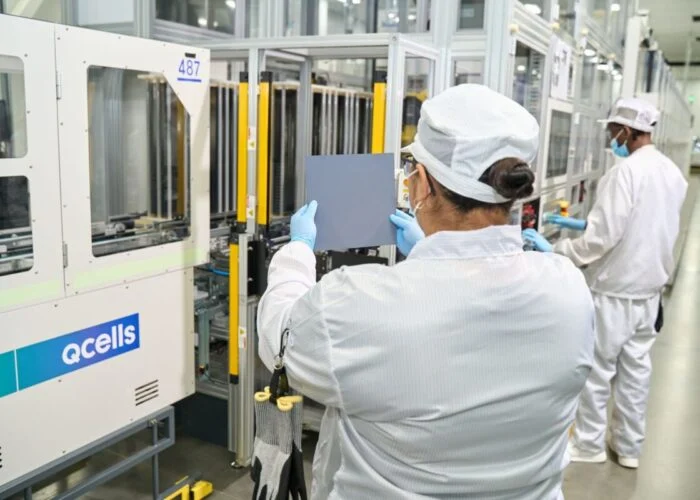
Solar manufacturer Qcells has started producing solar cells at its vertically integrated manufacturing facility in Cartersville, Georgia.
IEEFA identifies ‘missing middle’ as Australian businesses install fraction of rooftop solar potential
June 10, 2026
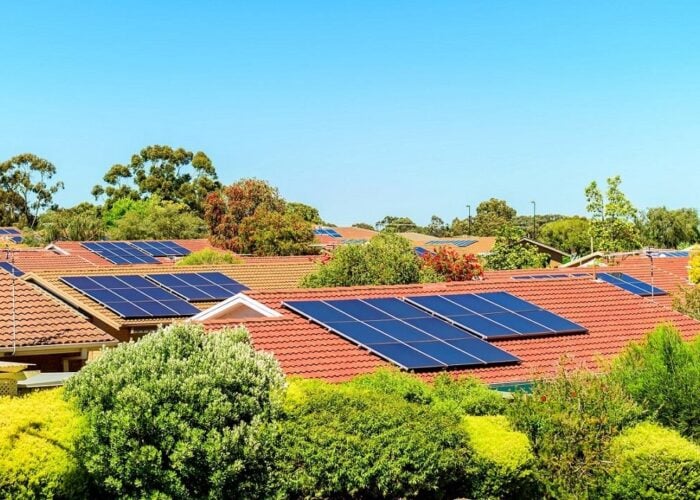
Australia leads the world in residential rooftop solar, but its commercial and industrial sector has deployed only 5.6GW.
Ark Energy bags grid connection for 435MW solar-plus-storage site in New South Wales, Australia
June 9, 2026
Ark Energy has been granted approval by AEMO and Transgrid to connect its 435MW Richmond Valley solar-plus-storage project to the NEM.
Revolve acquires 125MW US solar development portfolio
June 9, 2026
Revolve Renewable Power is acquiring a 125MW portfolio of utility-scale solar development projects in the US.
Zelestra expands Meta partnership with 180MW Texas solar PPA
June 9, 2026
Zelestra has signed a long-term power purchase agreement (PPA) with Meta for the 180MWdc Palmera Solar Plant in Freestone County, Texas.
Posts pagination
1
2
…
2,382
Next
Newsletter
Most Read
TOYO announces 1.5GW US HJT cell line weeks after AD/CVD hits Ethiopia factory
News
Revolve acquires 125MW US solar development portfolio
News
INDIA ROUND-UP: Waaree wins 300MW EPC contract, Gujarat Inject bags module order, Vikram Solar eyes US$2.8 billion manufacturing hub
News
IEEFA identifies ‘missing middle’ as Australian businesses install fraction of rooftop solar potential
News
Meeting America’s energy challenge: PV module supply, quality and reliability in focus at PV ModuleTech USA 2026
Editors' Blog
,
Features
European solar module prices climb as buyer confidence rebounds
News
Upcoming Events
PV ModuleTech USA 2026
Solar Media Events
June 16, 2026
Napa, USA
RE+ Storage
Media Partners
,
Solar Media Events
June 30, 2026
Sacramento, California
The smarter E South America – LATAM’s Largest Alliance of Events for the Energy Industry
Media Partners
,
Solar Media Events
August 25, 2026
São Paulo, Brazil
Intersolar Mexico
Media Partners
,
Solar Media Events
September 1, 2026
Mexico City, Mexico
RE+ Centroamérica
Media Partners
,
Solar Media Events
September 9, 2026