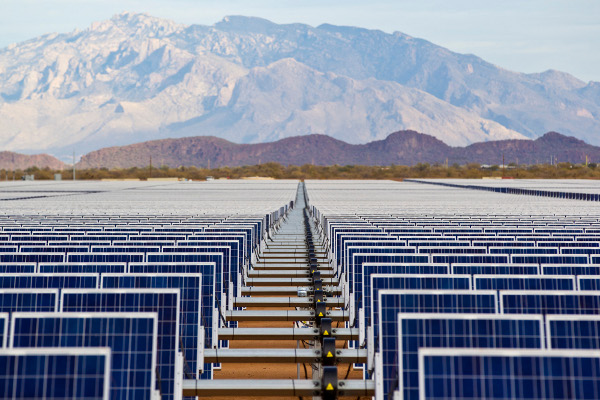
Arizona regulators have approved a plan that will require utilities in the state to receive all their power from carbon-free sources such as solar and wind by 2050.
The Arizona Corporation Commission last week passed the measures, which also include interim carbon reduction targets for regulated utilities of 50% by 2032 and 75% by 2040.
Try Premium for just $1
- Full premium access for the first month at only $1
- Converts to an annual rate after 30 days unless cancelled
- Cancel anytime during the trial period
Premium Benefits
- Expert industry analysis and interviews
- Digital access to PV Tech Power journal
- Exclusive event discounts
Or get the full Premium subscription right away
Or continue reading this article for free
The rules update the state’s 2006 renewable energy standard that requires utilities to source 15% of their power from renewables by 2025.
Arizona Corporation Commissioner Sandra Kennedy said the move represents the beginning of the work the commission needs to do to address the impacts of climate change on public health in the state. “The climate crisis is impacting Arizonans right now. I am glad the commission was finally able to look past partisan politics to support science and economics-based policy that stakeholders, utilities and ratepayers could all agree upon and benefit from,” she added.
While the vote brings Arizona more in line with other western US states – Nevada is also targeting electricity from carbon-free resources by 2050, while is California is mandated to receive all its power from renewable sources by 2045 – electricity providers have already forged ahead with their own goals.
The state’s largest utility, Arizona Public Service, announced plans earlier this year to achieve carbon-free energy by 2050, while Tucson Electric Power is looking to provide 70% of its power from solar and wind by 2035 and reduce carbon emissions across its portfolio by 80% by 2035.
According to the Solar Energy Industries Association, while Arizona’s solar industry has “tremendous growth opportunity”, public debates surrounding the benefits of the technology and the imposition of a net metering charge in 2014 mean the market “has been turbulent”.