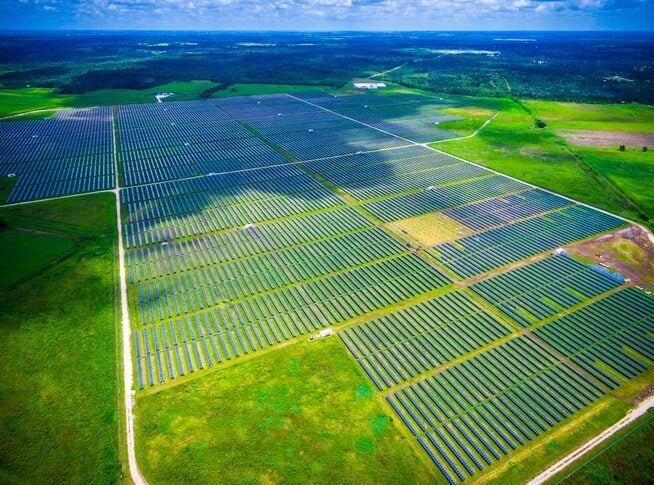
The Queensland government has launched the Social Licence in Renewable Energy Toolkit, providing local councils in the Australian state with resources to navigate renewable energy project engagement and community consultation processes.
The toolkit, developed by the Department of State Development Infrastructure and Planning in partnership with the Local Government Association of Queensland, addresses growing demand for structured guidance as large-scale solar and wind developments expand across regional Queensland.
Try Premium for just $1
- Full premium access for the first month at only $1
- Converts to an annual rate after 30 days unless cancelled
- Cancel anytime during the trial period
Premium Benefits
- Expert industry analysis and interviews
- Digital access to PV Tech Power journal
- Exclusive event discounts
Or get the full Premium subscription right away
Or continue reading this article for free
The new resource package includes tools, templates, and checklists designed to help councils engage effectively with renewable energy developers while ensuring community interests receive appropriate consideration throughout project development phases.
The toolkit launch follows the commencement of Queensland’s Planning (Social Impact and Community Benefit) and Other Legislation Amendment Act 2025 on 18 July, which introduced strict planning rules for solar PV projects and established new community benefit requirements for renewable energy developments.
Deputy Premier Jarrod Bleijie emphasised the toolkit’s role in empowering councils to deliver for their communities while responding to challenges that major renewable energy projects bring to regional areas, which helps deliver on one of the government’s election pledges.
The resource package provides councils with structured approaches to evaluating project proposals, engaging with industry stakeholders, and ensuring lasting benefits remain within their regions.
In addition, the government said the toolkit addresses practical challenges councils face when assessing renewable energy proposals, including technical evaluation criteria, community consultation frameworks, and benefit-sharing mechanisms.
The government said that local government authorities have supported the structured guidance, noting the complexity of evaluating large-scale renewable energy proposals without specialised technical expertise.
The toolkit provides standardised evaluation frameworks that enable consistent assessment approaches across different council jurisdictions while maintaining flexibility for local circumstances and community priorities.
Policy uncertainty leads to Queensland slipping in investor attractiveness
The Liberal National Party (LNP) of Queensland, under the leadership of David Crisafulli, won the state election in October 2024, and has since repeatedly made it harder to pursue utility-scale projects in the state.
Because of this, it was perhaps no surprise that Queensland slipped in investor attractiveness due to its policy uncertainty surrounding utility-scale renewables.
However, since taking office, the LNP of Queensland government has repeatedly reaffirmed that it is pursuing renewable energy projects that it deems “reasonable and realistic.”
The government’s new renewables stance has culminated in its newly released Energy Roadmap 2025. Although installed renewable energy capacity is set to increase by 2030, with an additional 6.8GW of wind and solar PV, coal-fired power plants have been granted a new lease of life.
Operating timeframes for state-owned coal assets have been reset to at least their technical lives, with options for further extension.
The state currently operates around 8GW of coal-fired generation capacity owned by government-owned corporations and private sector entities, supplying more than 60% of total output. This decision contrasts sharply with accelerated closure schedules pursued in other jurisdictions, such as New South Wales, which expects to close its last coal plant in 2038.
The energy market outlook confirms that state-owned coal assets will continue playing an important role in balancing supply and demand and stabilising the system. The government has committed to a clear framework for decisions on operating timeframes for state-owned coal assets through a decision matrix that triangulates system need, asset integrity and economic viability of state-owned coal units.
This approach contrasts with an accelerated closure pathway that would have withdrawn all state-owned coal by 2035 and all remaining coal before 2038. This pathway could have culminated in further investment in renewables and energy storage to fill the gap.