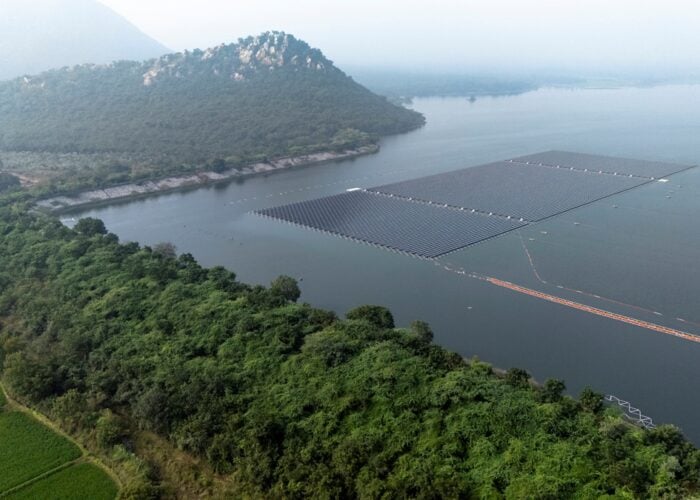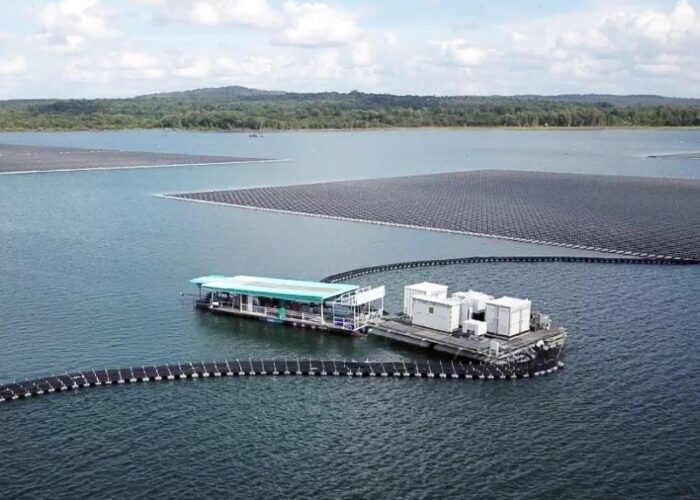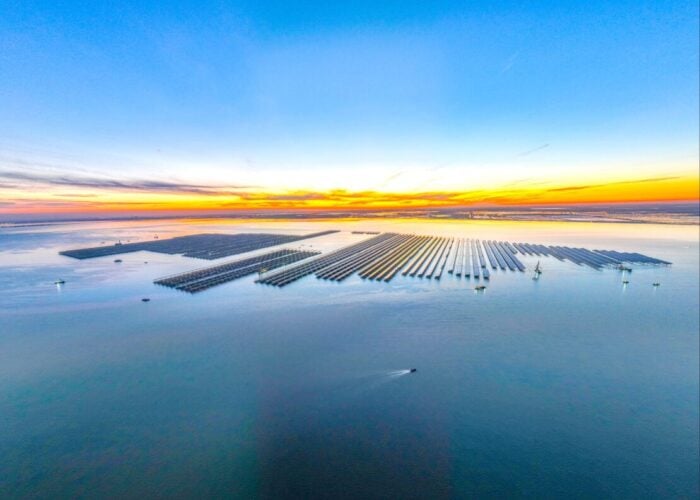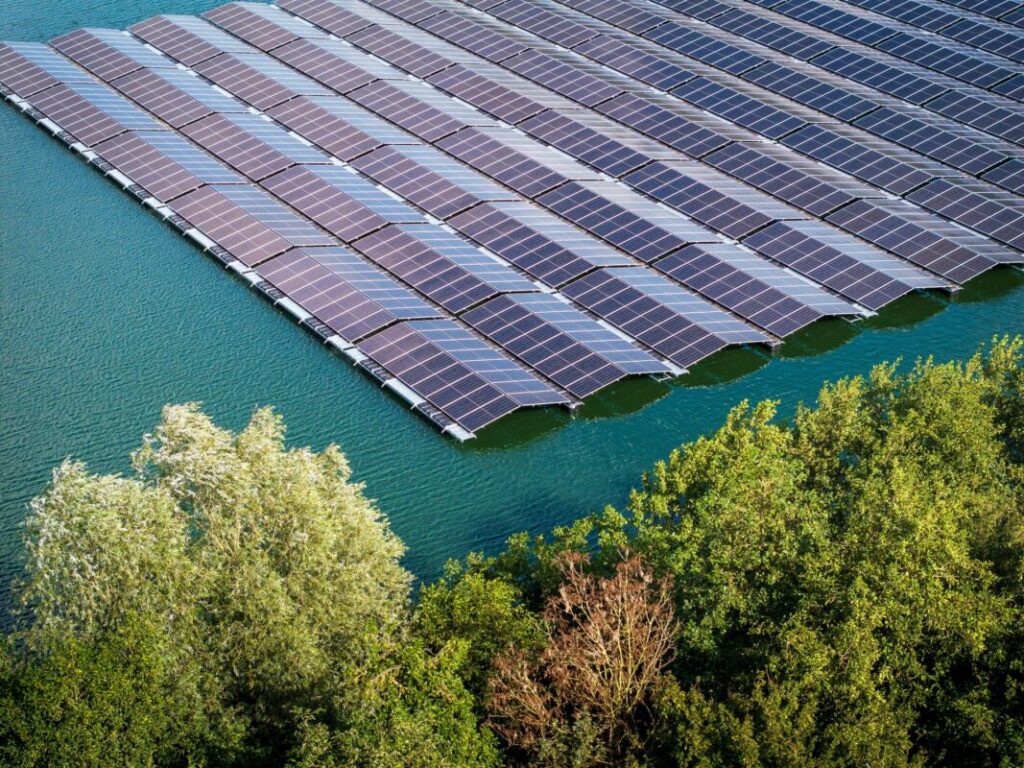
German renewable energy developer BayWa r.e., along with its Dutch subsidiary GroenLeven, has sold a 46MW floating solar PV (FPV) project in the northern province of Friesland, the Netherlands.
According to the companies, once operational, the Skûlenboarch project will be the largest FPV plant in the country.
Try Premium for just $1
- Full premium access for the first month at only $1
- Converts to an annual rate after 30 days unless cancelled
- Cancel anytime during the trial period
Premium Benefits
- Expert industry analysis and interviews
- Digital access to PV Tech Power journal
- Exclusive event discounts
Or get the full Premium subscription right away
Or continue reading this article for free
The project’s rights have been transferred to the local energy cooperative Enerzjyk Skûlenboarch, the municipality Tytsjerksteradiel and the Friesland Clean Energy Fund.
“This successful transaction reaffirms our commitment to the expansion of solar in the Netherlands. Deploying floating solar is an important step in further increasing the share of renewable energy in the system. This project marks a significant milestone in our ambition to deliver large-scale energy solutions,” said Maura van de Meent, managing director of GroenLeven.
BayWa r.e. was an early adopter of FPV technology and has been developing projects in Europe for several years now. Back in 2021, the company commissioned two FPV projects in the Netherlands, which were the largest FPV plants outside of Asia at the time. The projects had a combined capacity of 71MW, with the largest at 41.1MW, nearly 5MW less than the project it sold this week.
Outside of the Netherlands, the company also commissioned a 24.5MW FPV plant in Austria back in 2023. At the time, this project was the 15th FPV project the company built globally for a combined 230MW.
More recently, head of product management for FPV at BayWa r.e., Michele Tagliapietra, said at Intersolar Europe 2025, during a panel on FPV, that finding the right offtaker for an FPV plant was more complex than financing the project.
Moreover, a report published last year on FPV systems in Europe highlighted the lower carbon footprint produced by operational FPV plants compared to ground-mounted solar systems, making the technology a “valuable complement” to utility-scale solar deployments.
Projects like this one from BayWa r.e. are not the only applications for FPV systems to be installed in the Netherlands. Two years ago, the country held offshore tenders seeking to co-locate solar capacity with offshore wind plants.