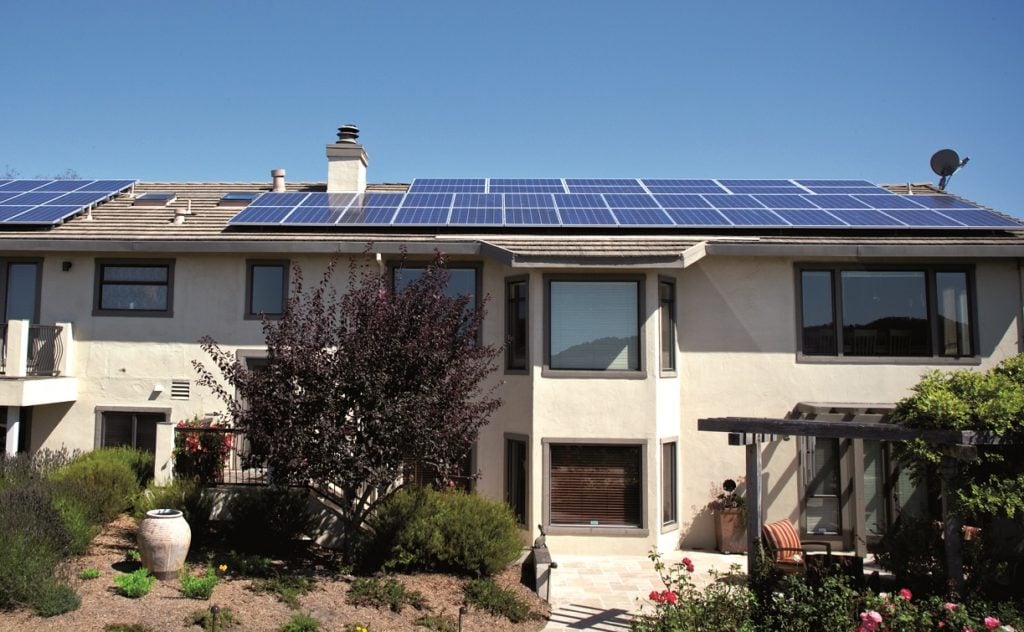
A member of the California State Assembly has introduced new legislation to restore incentives to California households after the California Public Utilities Commission (CPUC) decided to cut incentives that utilities were required to pay homeowners with new solar panels when they sold surplus power to the grid.
The legislation Assembly Bill (AB) 2619 aims to repeal the NEM 3.0 decision and require the CPUC to create a new rule structure based on the landmark clean energy goals set by Senate Bill (SB) 100, which commits California to achieving 100% clean carbon-free energy by 2045.
Try Premium for just $1
- Full premium access for the first month at only $1
- Converts to an annual rate after 30 days unless cancelled
- Cancel anytime during the trial period
Premium Benefits
- Expert industry analysis and interviews
- Digital access to PV Tech Power journal
- Exclusive event discounts
Or get the full Premium subscription right away
Or continue reading this article for free
The bill also aims to restore incentives for residents who generate clean power for the grid and restrict the imposition of new charges, taxes, fees, or rates on community solar customers that are different from what is assessed on all other ratepayers for electricity, or any other service including energy transmission.
“It’s clear that additional taxes on solar and the removal of incentives that have helped offset the cost of solar installation has had severe consequences on our ability to generate clean energy,” said Damon Connolly, member of the California State Assembly from the 12th district.
He added that the NEM 3.0 decision has clearly disincentivised clean energy adoption with rooftop solar sales down between 66% and 83%.
Stephanie Doyle, California state affairs director at the Solar Energy Industries Association (SEIA), commented: “Over the last year, the California rooftop solar and storage industry has struggled to adjust to the abrupt changes to California’s net metering programme. The new bill would require the CPUC to develop a new solar tariff by 2027 and prohibit new fees on solar customers, helping to ensure that the solar market in California continues to grow.”
PV Tech Premium previously talked to the California Solar & Storage Association (CALSSA) executive director Bernadette Del Chiaro about the Californian solar market, when she said the industry will experience a strong headwind.
“Without government intervention, a downward trend will be the best description of the California market this year,” Del Chiaro said, adding that the state will install a lot less solar in 2024 — probably the lowest levels in five years.
Additionally, adjusting to the NEM 3.0 is the biggest issue now among stakeholders of the solar industry in California in 2024.
PV Tech reported in December 2023 that after the implementation of the NEM 3.0 in April 2023, year-on-year solar sales were down between 57% and 85%. Utility interconnection data from CALSSA also shows solar sales were down between 66% and 83% last year due to the tariffs. Lastly, the Californian solar industry could lose 17,000 jobs by the end of 2023, representing 22% of all solar jobs in the state, after the implementation of NEM 3.0.