China is expected to add 83 – 99GW of PV capacity every year from 2022 to 2025, while Europe is now its largest export market for solar products, according to a China Photovoltaic Industry Association (CPIA) report on the outlook for the PV industry over the next few years.
China’s PV industry continued to surge in 2021 despite COVID-19 complications, with exports reaching a record high, according to the CPIA report. For the first time, Europe represented China’s largest PV export market, although precise export figures were not provided.
Try Premium for just $1
- Full premium access for the first month at only $1
- Converts to an annual rate after 30 days unless cancelled
- Cancel anytime during the trial period
Premium Benefits
- Expert industry analysis and interviews
- Digital access to PV Tech Power journal
- Exclusive event discounts
Or get the full Premium subscription right away
Or continue reading this article for free
The CPIA predicts that China will add between 232GW and 286GW of solar up to 2025, with 83 – 99GW set to be deployed in 2022. This is an upgrade on previous predictions made in the middle of last year.
While new installed capacity in China during 2021 was below expectations at the beginning of the year, it still reached a record high, with distributed solar accounting for more than 50% of total installs, said the report.
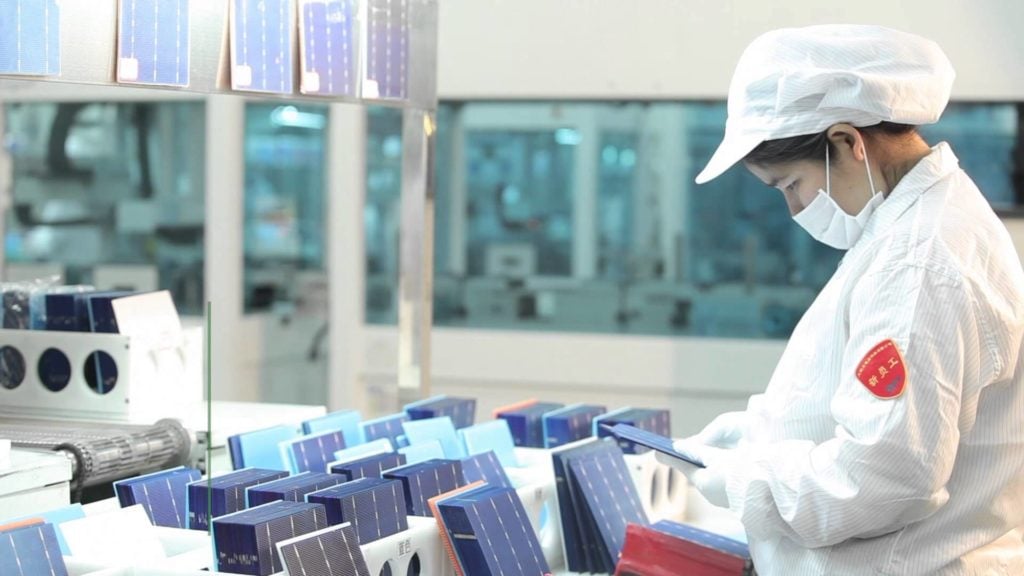
The output value of solar products from Chinese producers was RMB750 billion (US$118.7 billion) in 2021. Wafer output from China was 227GW, representing a 40.7% year-on-year growth, while solar cell output grew 47% on 2020 to reach 198GW. Module output from the country was up by 46% to 182GW.
Meanwhile, there have been new entrants to the polysilicon market in China. Baofeng Energy is planning 600,000 tons of production capacity, Qinghai Lihao is looking to develop 200,000 tons of production capacity, Jiangsu Runyang is aiming for 100,000 tons and Xinjiang Jinnuo is seeking 100,000 tons.
That said, the top five leading polysilicon, wafer and module companies’ production accounted for more than 80%, said the CPIA report.
The output of polysilicon in 2021 was 505,000 tons, up 28.8%, it added.
Additional reporting by Carrie Xiao.