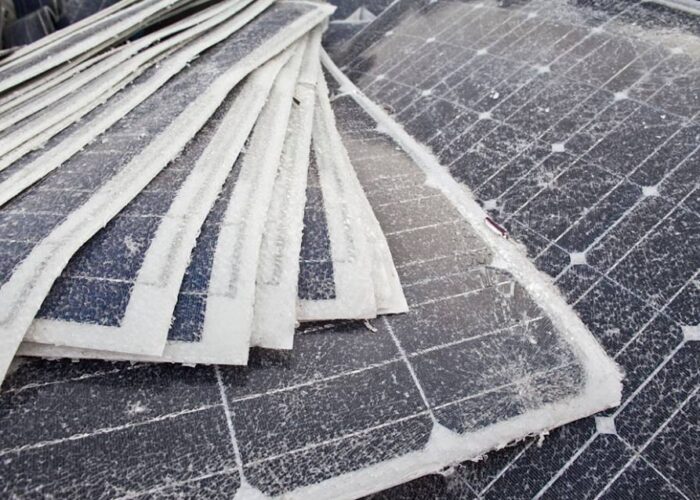
US metals firm Comstock has completed all the necessary permits to build a solar module recycling facility in Nevada.
The company said it has received its Written Determination Permit from the Nevada Division of Environmental Protection – Bureau of Sustainable Materials Management (NDEP-BSMM) on 9 January, the final certification required to move forward with its plans for the facility.
Try Premium for just $1
- Full premium access for the first month at only $1
- Converts to an annual rate after 30 days unless cancelled
- Cancel anytime during the trial period
Premium Benefits
- Expert industry analysis and interviews
- Digital access to PV Tech Power journal
- Exclusive event discounts
Or get the full Premium subscription right away
Or continue reading this article for free
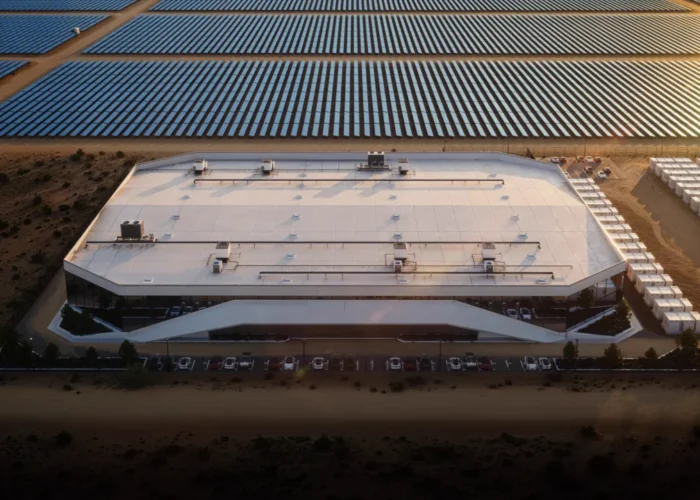
Comstock Metals signed a lease agreement for the site in Silver Springs, Nevada back in 2024, and says it is “on schedule” to commission the site during the first quarter of 2026. Once fully operational, Comstock said the facility will process up to 3 million end-of-life solar modules annually, accounting to around 100,000 tons of waste material.
The company said the site will incorporate technologies for “efficiently crushing, conditioning, extracting, and recycling metal concentrates from photovoltaics”. Silver and copper are the most valuable metals used in solar cells and modules, and recycling efforts to date have focused on recovering these higher-value components, alongside bulk recycling of glass sheets and aluminium frames.
“Comstock Metals is setting the global standard in solar panel recycling by creating a scalable, reliable, efficient, and optimised network of decommissioning, collecting, aggregating, storing and full-recovery processing (and ultimately refining) nodes designed and built for speed and scale,” said Corrado De Gasperis, executive chairman and CEO of Comstock. “Most of the industry is still getting their heads around the magnitude of the inevitable end-of-life panel dilemma, measured in the billions of panels, while we deploy and deliver a full end-of-life solution.”
There are already solar module recycling operations in the US. Arizona-based firm Solarcycle has signed a number of end-of-life deals with major US solar asset developers and owners, and has begun testing to produce new modules with recycled solar glass, which it said was a “critical step” towards a circular economy in solar manufacturing.
OnePlanet, another recycling firm, has also secured significant financing towards its US module recycling plans.
Comstock has positioned its facility in Nevada as a regional recycling hub, as the Southwestern US has seen a significant portion of the country’s solar deployments over recent years. According to Solar Energy Industries Association (SEIA) data, California, New Mexico, Arizona and Nevada have over 75GW of installed solar capacity as of Q3 2025.
Fortunato Villamagna, president of Comstock Metals, said the permit from NDEP-BSMM was “a key regulatory milestone that enables Nevada’s only zero-landfill, high-volume, end-of-life solar panel recycling solution serving the broader region”.