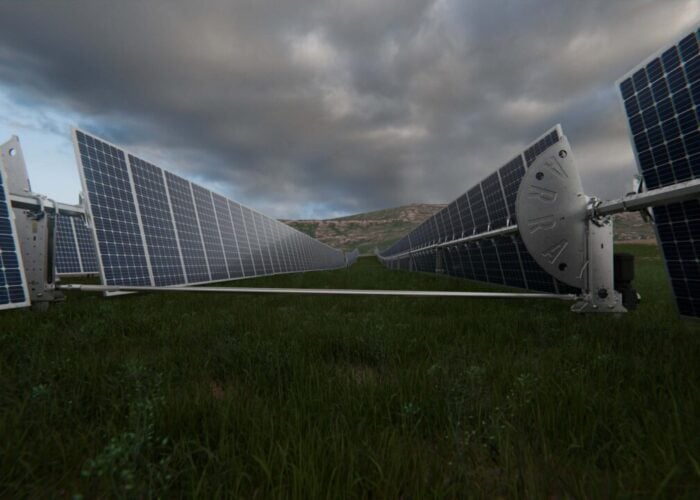
German PV project developer Conergy has built a 1MW PV system in Uckerland, Germany, in collaboration with its long-term partner SolEnergy.
As general contractor, Conergy was responsible for all stages of the project, from the engineering, planning and construction of the power plant to the supply of the components. SolEnergy, meanwhile, was responsible for developing the project.
Try Premium for just $1
- Full premium access for the first month at only $1
- Converts to an annual rate after 30 days unless cancelled
- Cancel anytime during the trial period
Premium Benefits
- Expert industry analysis and interviews
- Digital access to PV Tech Power journal
- Exclusive event discounts
Or get the full Premium subscription right away
Or continue reading this article for free
The PV system has been installed atop six newly-built barn roofs in the Uckerland district. It is equipped with more than 4,000 Conergy P series modules which cover a total roof area of more than 8,000 square meters.
The system will generate an estimated 950,000 kWh of electricity annually for on-site consumption as well as for some 240 households in the surrounding area. The amount generated is said to be enough to meet around one-third of the farm’s total annual power needs.
According to Philip Zidowitz, Managing Director of SolEnergy, SolEnergy is one of the first project developers to “react” to the new German Renewable Energy Sources Act (EEG) requirements. Under the EEG law, 90% of annual energy production generated from roof-mounted solar power plants between the sizes of 10 and 1,000kWp will be remunerated starting in 2014. For the remaining 10%, the power plant operator must either market the energy themselves or opt to receive the “solar market value” payment which currently stands at around €0.05 (US$0.06) per kWh.
Zidowitz added: “It’s a classic win-win situation: the roof-mounted solar installation supplies the barns with green electricity at a stable price, thus providing the operator long-term planning reliability for a good proportion of his energy costs. At the same time, the investor profits from a guaranteed return through the fixed power purchase agreement with the operator and the EEG remuneration of the remaining energy that the power plant is producing and feeding into the local grid in excess of what the barns consume.”
Commenting on the new EEG regulation and the opportunities it opens, Stefan Balbierz, Managing Director of Conergy Germany, said: “With the changes in the market many new opportunities and business models are emerging in the solar sector. Direct marketing will play an ever greater role in the future, for investors, as well as for power suppliers and public utilities. But the big beneficiaries are end users, because decentrally generated solar power is well on its way to achieve grid parity. Renewable solar energy from the roof is already cheaper than conventionally generated grey power from the grid for domestic and first commercial customers.”
Balbierz added: “For companies that need a lot of electricity during the day this opens up many new possibilities to reduce their energy costs and make themselves independent from further price increases. The 10% own consumption or direct marketing rate set down in the market integration model is just the beginning.”