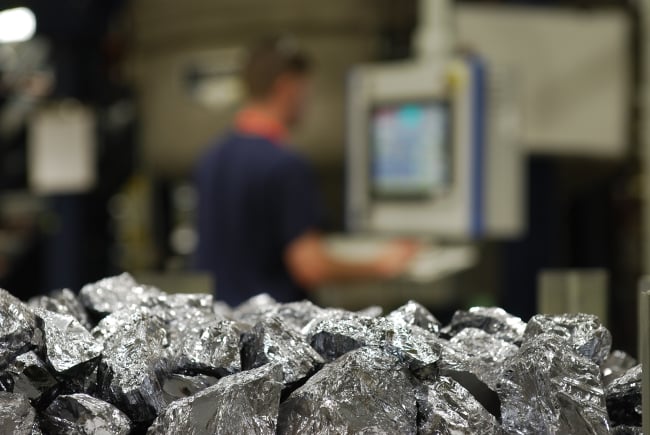
“Cut-throat” competition in the polysilicon production industry in 2024 could push many Chinese producers out of business, according to analysis from industry research firm Bernreuter Research.
A ‘shakeout’ wave – where an industry consolidates and some businesses are pushed out or acquired by competitors – could be triggered by massive capacity expansion by the largest producers next year, most notably Chinese producer Tongwei.
Try Premium for just $1
- Full premium access for the first month at only $1
- Converts to an annual rate after 30 days unless cancelled
- Cancel anytime during the trial period
Premium Benefits
- Expert industry analysis and interviews
- Digital access to PV Tech Power journal
- Exclusive event discounts
Or get the full Premium subscription right away
Or continue reading this article for free
Johannes Bernreuter, head of Bernreuter Research said: “Tongwei is planning to bring 575,000 tonnes of new production capacity on stream next year, whereas we expect a market growth of 200,000 tonnes at most.” Along with other capacity expansions from big companies, Bernreuter said that “If all new capacities were ramped up in 2024, oversupply would swell to 1.4 million tonnes. With its low manufacturing costs and proven product quality, Tongwei will push most, if not all, new entrants out of the market.”
Polysilicon prices have plummeted this year, which Bernteuter predicts will continue into next year as supply outstrips demand significantly and Chinese players who entered the market when prices were high in 2020-21 will be unable to compete. Of the 36 companies that Bernreuter’s research screened, 14 are in the process of building or ramping up a polysilicon plant. Chinese polysilicon producer Daqo New Energy announced capacity expansions of 100,000 tonnes last December, which came online earlier this year.
The shakeout will result in the elimination of around 2.4 million tonnes of polysilicon.
Notably, non-Chinese producers will be exempt from this “shakeout’, the research said. This is despite the Chinese share of global polysilicon production rising to over 90% this year.
This is because of the Uyghur Forced Labor Prevention Act (UFLPA) in the US, which bans any product from Xinjiang province which cannot prove that it did not use forced labour from entering the US. Currently around 40% of the world’s polysilicon comes from Xinjiang.
The UFLPA has been significant enough to create a higher-price market for non-Chinese polysilicon from producers like Wacker Chemie and REC Group, Bernreuter said.
However, last week REC Group announced the closure of its Norway polysilicon plant because of high electricity prices and a fiercely competitive polysilicon market.
Earlier this month, PV Tech head of research Finlay Colville published a blog that predicts a downturn in PV manufacturing across the board in 2024, in part because of falling prices and overcapacity.
As pertains to the UFLPA and the US, Colville predicts that US-based cadmium telluride (CadTel) thin film solar module manufacturer First Solar will be one of the only winners from the market downturn next year. First Solar is isolated from the polysilicon supply chain that pulls the strings for the majority of the world’s solar companies, as it uses CadTel technology.