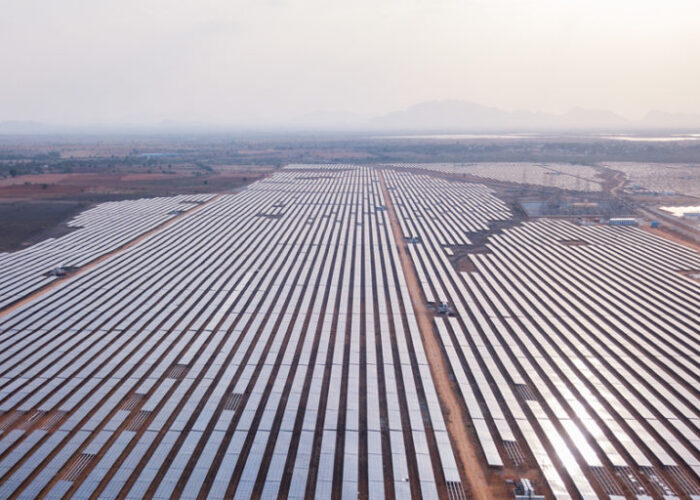
Australian mining giant Fortescue Metals has said it aims to capitalise on China’s “insatiable demand for green products” through green metals production and exports. The company also aims to fully decarbonise its operations by 2030 via 2-3GW of solar PV and wind generation.
These are the words of Dino Otranto, CEO of Fortescue Metals, who stated that “Australia is uniquely positioned for its next boom beyond commodities, but green commodities”, emphasising that this is why the organisation is putting “so much effort” into its Green Iron Plant, situated in Christmas Creek, Western Australia.
Try Premium for just $1
- Full premium access for the first month at only $1
- Converts to an annual rate after 30 days unless cancelled
- Cancel anytime during the trial period
Premium Benefits
- Expert industry analysis and interviews
- Digital access to PV Tech Power journal
- Exclusive event discounts
Or get the full Premium subscription right away
Or continue reading this article for free
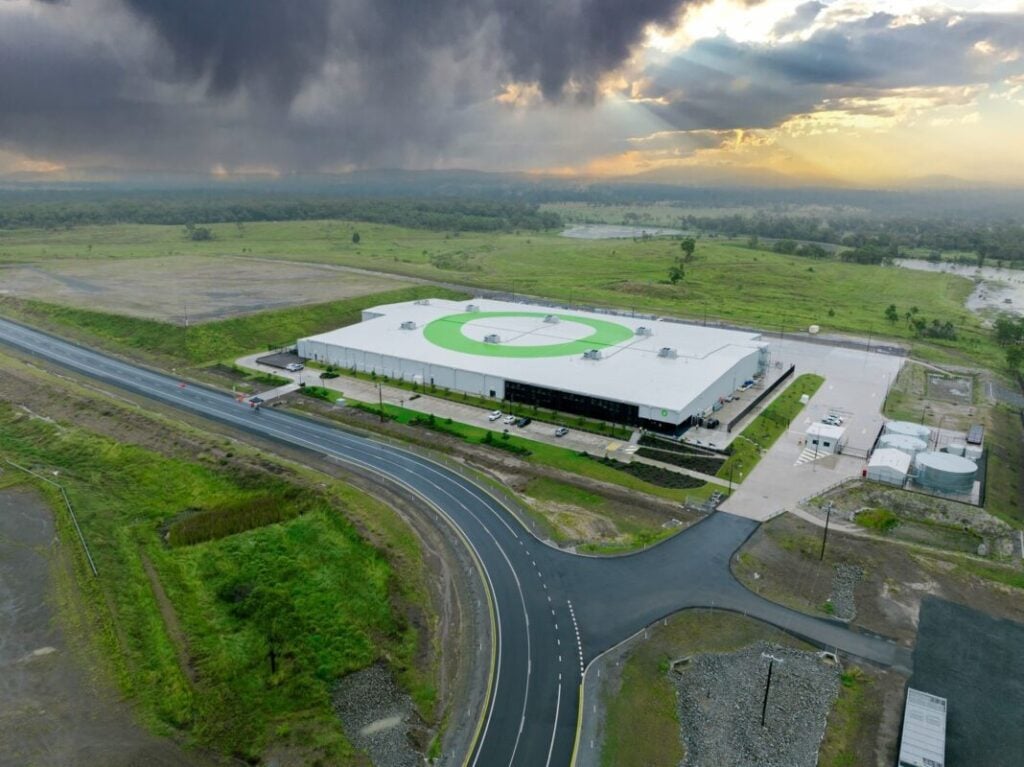
Readers of PV Tech will be aware that the Christmas Creek mining facilities are powered by green hydrogen produced from around 160,000 solar PV modules, which recently went into the construction phase of development.
Indeed, Otranto, discussing the potential of utilising green hydrogen and solar PV for green metals production in the company’s 2024 financial year results, said: “Within 12 months, we will show the world that it is possible to make green iron metal, so 95% plus pig iron that is in granules out of Pilbara-based iron ores, with hydrogen as a reducing agent derived from the sun, and in the future the wind.”
Otranto also hinted at further developments around Australia to help Fortescue capitalise on the growing demand for green metals. “Within a year, you will see us making further announcements around what the next stage of green iron development in Australia or around the world could look like,” Otranto said.
Fortescue also noted in its results that the organisation is fully committed to pursuing the opportunity to develop a fully integrated Australia-China green metal supply chain, which could bring closer ties between the nations and aid the decarbonisation of the two. As such, China has been noted as a “core market” for Fortescue’s future plans in its financial results.
The mining giant has been a staunch advocate for boosting trade relations between Australia and China, especially in terms of the energy transition. In July, upon the publication of its June Quarterly Production report, Otranto stated that “the partnership with China is absolutely critical to create a green iron future”.
Otranto highlighted that Australia should collaborate with Chinese companies that specialise in solar PV, wind, and energy storage in order to facilitate its own energy transition. This collaboration could enable Australia to leverage its strengths in commodities such as minerals in the ground and its potential in solar PV and wind energy generation for export.
It is worth noting that Darren Miller, CEO of the Australian Renewable Energy Agency (ARENA) exclusively told PV Tech that it is “hoping for and expecting that the current good trading relationship with China can continue indefinitely” in light of plans to boost domestic solar PV module manufacturing via the Solar Sunshot programme, which the Australian federal government allocated AUS$1 billion (US$660 million) in March 2024.
The role of solar PV in green metal production
Due to the abundance of solar PV generation potential in Western Australia, where much of Fortescue’s mining operations are based, the organisation has been exploring the development of large-scale projects, whilst also harnessing its power to produce green hydrogen.
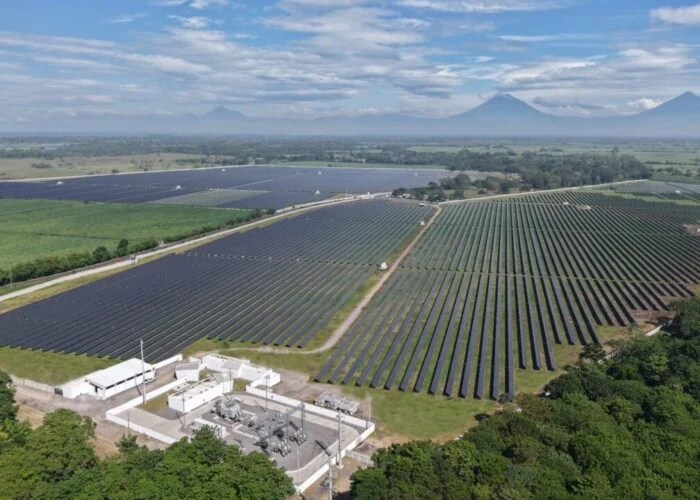
For instance, the organisation completed the construction of its 100MW solar PV project at North Star Junction, Western Australia, in the 2024 financial year.
Located in Pilbara, on the state’s northwestern coast, the solar PV power plant will be close to Fortescue Metal Groups’ Iron Bridge magnetite mine. Iron Bridge produces a wet concentrate product that is then transported to Port Hedland through a 135km specialist slurry pipeline, where dewatering and materials handling occur.
The North Star Junction project also complements the organisation’s 60MW solar PV project at the Chichester Solar Gas Hybrid Facility, commissioned in 2021. Within the recent financial year, the Fortescue Board approved investment in developing an additional 130MW solar farm and two battery energy storage systems (BESS) with a total capacity of 270MWh.
Fortescue’s financial results also outlined its plans to fully decarbonise its operations by 2030. The organisation said that, by the end of calendar year 2030, 100% of its electricity demand will be met by renewable energy sources. It added that detailed power system modelling suggests that it will need at least 2-3GW of wind and solar, supported by battery storage, to satisfy its energy needs.