Scientists at the Fraunhofer Institute for Solar Energy Systems (ISE) and weather protection provider VOEN have developed lightweight modules for applications in the agrivoltaics (agriPV) sector.
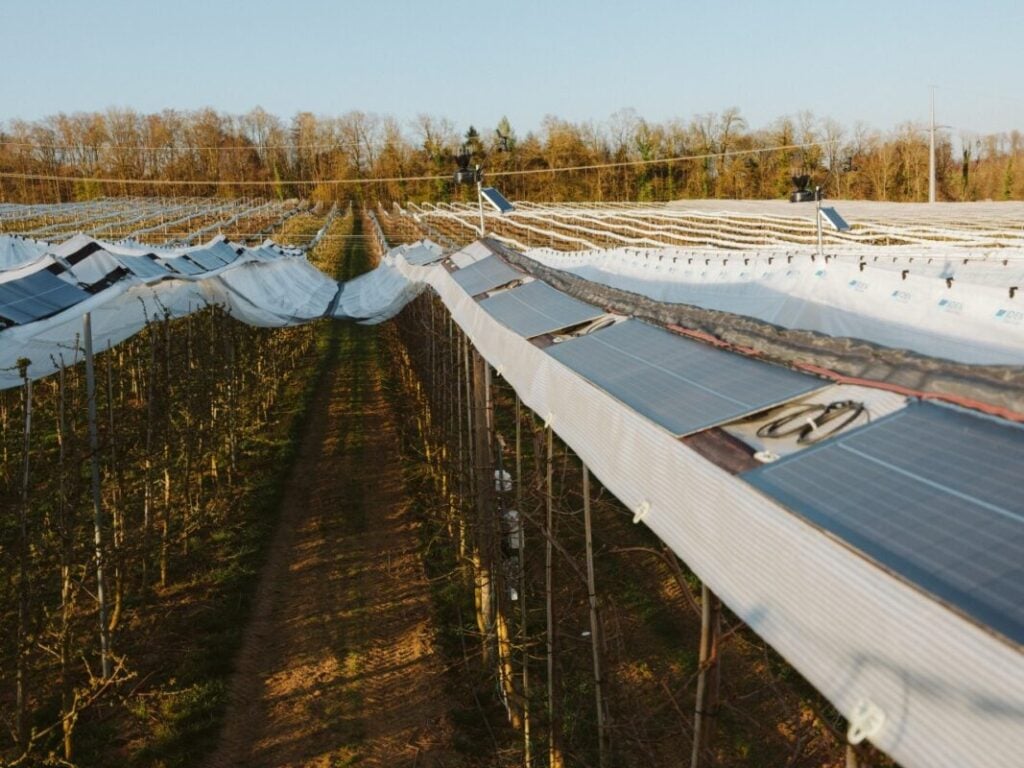
The modules are light enough to be mounted on conventional weather protection systems for certain crops, such as fruit trees. The companies are also testing various solutions for attaching the lightweight modules to existing substructures and for new weather protection systems.
Try Premium for just $1
- Full premium access for the first month at only $1
- Converts to an annual rate after 30 days unless cancelled
- Cancel anytime during the trial period
Premium Benefits
- Expert industry analysis and interviews
- Digital access to PV Tech Power journal
- Exclusive event discounts
Or get the full Premium subscription right away
Or continue reading this article for free
A first pilot system above cherry trees at a fruit farm in southern Germany was implemented last week. The system installed covers two rows of cherry trees with a length of nearly 40 metres.
“The setup is incredibly simple, whether as a new build or retrofit solution,” said Leo Vöhringer, project manager at VOEN. “It was important to us to tailor an agriPV concept to fruit-growing practices, and not the other way around. Our concept maintains the established crop protection against weather and other damaging influences.”
During the times of the year that the weather protection is not required, it can be packed away and stored under the solar modules, according to Fraunhofer ISE. The project team will monitor the system’s electricity output and the cherry trees’ harvest throughout the year and will evaluate the data collected at the end of the year.
Within the project, the research team used specially developed software to simulate the optimal module size while still ensuring that the cherry trees’ yield is not affected by shading.
“The new concept addresses two factors that make agriPV systems more expensive than ground-mounted photovoltaics: the higher costs for constructing the mounting system and for installing the PV modules,” added Felix Basler, project manager at Fraunhofer ISE.
“In addition to developing the affordable lightweight modules, we designed and tested various solutions for their uncomplicated installation on traditional weather protection systems used in speciality crop cultivation.”