From a net profit of RMB632 million (US$91.5 million) to a loss of nearly RMB10 million — what went wrong for Arctech Solar, China’s leading PV tracker manufacturer, in 2025?
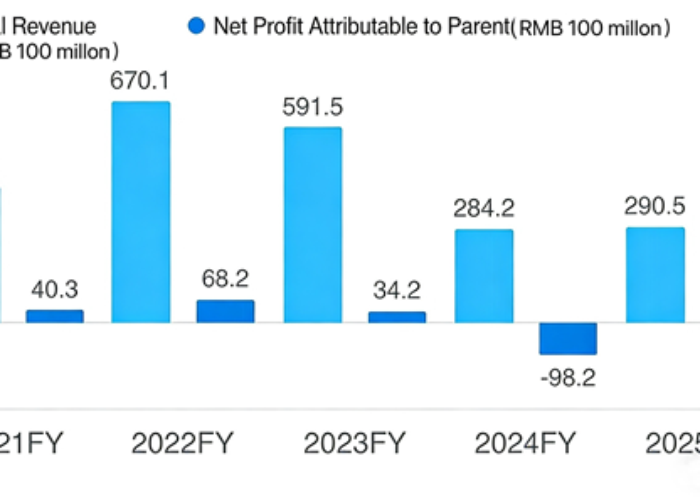
Arctech Solar released its preliminary earnings forecast, which showed that in 2025, the company posted total operating revenue of RMB6.852 billion, down 24.09% year-on-year. Net profit amounted to a loss of RMB9.8817 million, plunging 101.56% year-on-year, compared with a net profit of RMB632 million in the same period last year. Net profit attributable to the parent company, excluding non-recurring gains and losses, came to a loss of RMB43.9195 million, down 107.3% year-on-year, versus RMB601.9 million in the same period last year.
Try Premium for just $1
- Full premium access for the first month at only $1
- Converts to an annual rate after 30 days unless cancelled
- Cancel anytime during the trial period
Premium Benefits
- Expert industry analysis and interviews
- Digital access to PV Tech Power journal
- Exclusive event discounts
Or get the full Premium subscription right away
Or continue reading this article for free
Explaining the loss, Arctech Solar stated in the report that persistent fluctuations in upstream PV module prices in 2025 disrupted investment return calculations and construction planning for downstream power plant developers, causing delays in project commencement and construction progress. As a tracker supplier, the company’s product delivery, acceptance and revenue recognition were correspondingly delayed. In the near term, the conversion of backlog orders into revenue fell short of expectations, especially for overseas tracker orders, where delivery and revenue recognition were heavily affected.
The report shows that Arctech Solar’s new order intake in 2025 maintained an overall growth trend, notably for overseas tracker orders, which met initial expectations. The gross margin on recognised revenue from tracking products was largely flat year-on-year. However, given its high share of overseas business, the company mainly settles transactions in US dollars and other foreign currencies. Amid shifts in the international macroeconomic environment, foreign exchange market volatility intensified, and the USD/RMB exchange rate continued to decline.
Arctech Solar stated that exchange rate fluctuations had a significant negative impact on the conversion of foreign-currency-denominated revenue and financial expenses, eroding the company’s overall profits.
Meanwhile, the domestic PV industry remains in a capacity adjustment period, and market competition has grown increasingly intense. Arctech Solar’s gross margin on domestic fixed structure products fell year-on-year. Hit by the contraction in overall revenue and the rising sales proportion of lower-margin fixed structures, the company’s overall gross margin also declined.
In response to changes in the global trade environment and localised supply chain requirements in major PV markets, Arctech Solar stepped up investment in 2025 in key overseas market development and capacity building, including team building, market expansion and early-stage capacity investment in regions such as Saudi Arabia, Dubai and Europe — all of which represented significant spending. This drove up operating expenditure during the reporting period, weighing on current-period profits.
The Middle East market competition intensifies; transformation attempts by tracker giants
In Wood Mackenzie’s latest ranking of PV tracker enterprises, Arctech Solar ranked eighth globally. The company’s key markets lie in regions such as the Middle East and Europe. However, over the past two years, as companies including Nextpower, GameChange Solar and PV Hardware have expanded steadily—each securing GW-level orders—Arctech Solar’s advantages in the Middle East market have been eroding.
Not long ago, GameChange Solar announced that it would supply its trackers to a 1.2GW PV power plant in Saudi Arabia—a project developed by Saudi Arabia’s local energy giant ACWA Power. The company stated that its expanded capacity in Saudi Arabia, now standing at 6GW annually, strengthens its capability to support large-scale projects through reliable regional supply.
In January 2026, Nextpower, the global tracker leader, announced that it had finalised the establishment of its Saudi joint venture, “Nextpower Arabia”. The joint venture is currently constructing a manufacturing base in Saudi Arabia, slated to officially start production in Q2 2026. According to Nextpower, the base spans 42,000 square meters and upon completion, will have an annual supply chain capacity of up to 12GW for solar tracking systems.
Nextpower is speeding up its transformation from a pure tracker manufacturer to a comprehensive solution provider. Following a series of acquisitions, the company’s business scope has transcended the boundaries of traditional tracker products, expanding to other segments of the value chain—from basic components to artificial intelligence software.
Similarly, Arctech Solar has also taken a series of steps to expand its business recently. The company first adjusted its A-share fundraising projects, shifting from original focuses such as “flexible tracker R&D” to “intelligent pile-driving robot R&D”, and tweaked its internal investment structure.
Meanwhile, Arctech Solar has also signed a strategic cooperation agreement with Chinese energy storage firm EVE Battery. Under the agreement, the specific scale of the strategic cooperation encompasses 10GWh of large-scale energy storage batteries and 2GWh of energy storage systems.
Read more about the changing face of the solar industry’s leading tracker companies in our quarterly journal, PV Tech Power (subscription required).