Germany, Great Britain and Bulgaria are the most attractive European markets for co-location investments heading in to 2026, according to a new report from Aurora Energy Research.
The report, titled ‘European Co-location Markets Attractiveness Report’, highlighted that tightening grid constraints and rising power market volatility are accelerating co-location deployment across Europe. It assessed 20 markets and identified Spain, Hungary and France as key markets to watch amid ongoing regulatory reforms.
Try Premium for just $1
- Full premium access for the first month at only $1
- Converts to an annual rate after 30 days unless cancelled
- Cancel anytime during the trial period
Premium Benefits
- Expert industry analysis and interviews
- Digital access to PV Tech Power journal
- Exclusive event discounts
Or get the full Premium subscription right away
Or continue reading this article for free
Germany ranked first overall, supported by the scale of its renewables market and the potential internal rate of return (IRR) upside from co-located projects compared with standalone assets.
Great Britain and Bulgaria shared second place, with Aurora citing Britain’s large installed renewables base and contracts-for-difference (CfD)-backed pipeline, while Bulgaria benefitted from subsidy support, favourable project economics and a strong development pipeline.
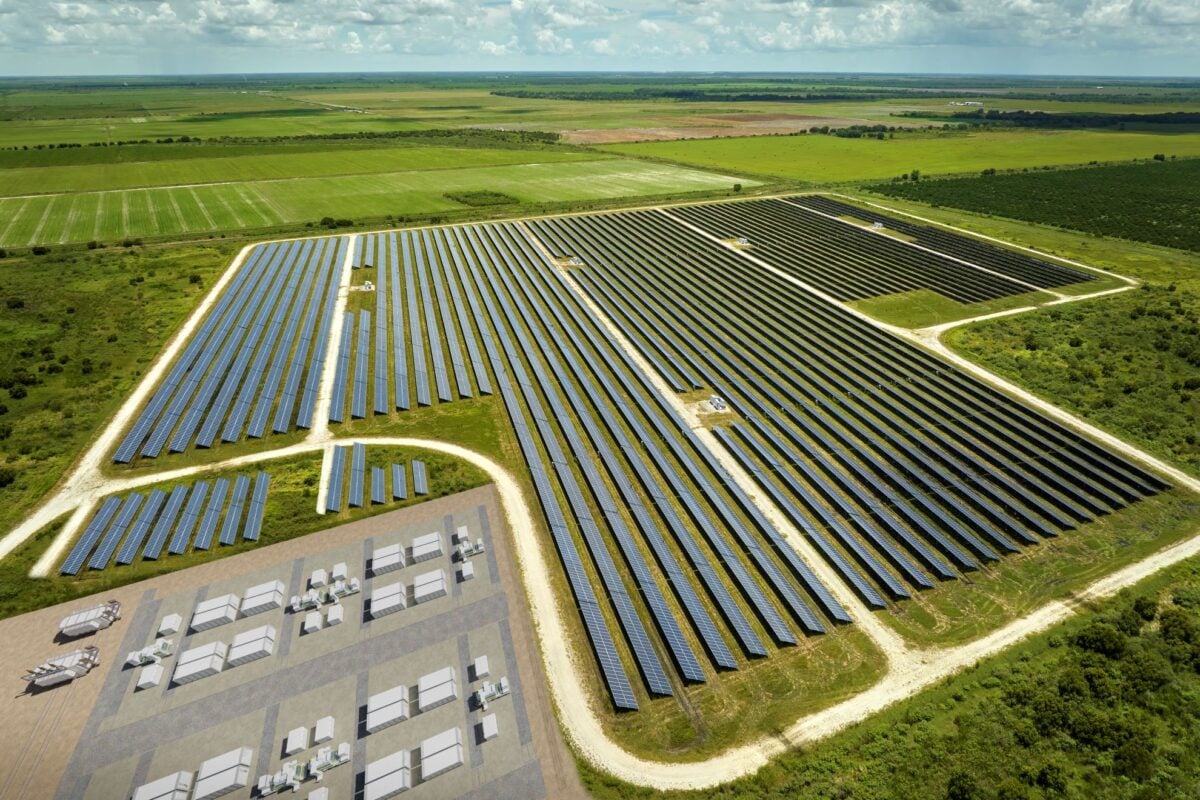
According to the report, Europe’s co-located renewable energy capacity reached 6.3GW in 2025, with solar-plus-storage accounting for more than 60% of deployments. Aurora said a substantial pipeline of projects is expected to come online within the next five years despite varying levels of market maturity across the continent.
Spain, Great Britain and Germany currently lead Europe in total co-located capacity, while Bulgaria and Romania stand out relative to market size, with co-located solar accounting for more than 40% of installed PV capacity.
Aurora said grid access challenges and market design reforms are increasingly underpinning the business case for co-location. More than 1,600GW of renewable and storage projects are currently awaiting grid connection across Europe, including around 550GW in Great Britain alone.
“Co-location is not a one-size-fits-all investment across Europe. In some markets it is driven by merchant upside, in others by subsidy-supported stability, and elsewhere by the need to overcome grid constraints and limit curtailment,” said Jörn Richstein, research lead, Pan European power markets, policies & technologies, at Aurora Energy Research.
The report noted that in markets such as the Netherlands, Greece and Hungary, co-location can improve access to grid infrastructure and lower associated costs. High grid charges in markets including the Integrated Single Electricity Market (I-SEM) and the Netherlands are also strengthening the economic case for pairing storage with renewable generation.
Aurora added that deteriorating wholesale power market conditions are further accelerating interest in co-location strategies.
Negative pricing hours increased sharply in 2025, with Spain, the Netherlands and Germany each recording more than 500 hours of negative pricing. The report forecasts deeper capture price cannibalisation by 2030, with solar discounts approaching 50% in Iberia and onshore wind discounts exceeding 25% in Germany.
Curtailment volumes across key European markets are expected to rise from more than 10TWh in 2024 to approximately 33TWh by 2030, Aurora said. Meanwhile, battery storage revenues are projected to decline by around 20% by 2040 as markets become increasingly saturated.
The report said co-located storage systems can help mitigate these risks by shifting generation output, reducing curtailment exposure and improving capture prices.
Aurora also found that subsidy-backed routes to market continue to dominate the sector, although hybrid power purchase agreements (PPAs) are beginning to gain traction.
Two-sided CfD mechanisms that support co-location remain central in markets including I-SEM, Great Britain, France, Romania and Estonia, while additional dedicated support schemes are available in Bulgaria, Greece and Germany. Aurora also highlighted growing CAPEX support for co-located battery storage projects.
Hybrid power purchase agreements (PPAs) remain at an early stage of development, but Aurora said contracted capacity is already emerging in Iberia, France, Great Britain and Bulgaria. Spain currently leads activity in the segment, although the report identified France and Portugal as markets where hybrid and peak-shaving structures could increase contracted volumes and improve PPA capture values by as much as 50% compared with pay-as-produced agreements.
Hybrid PPAs, while still nascent, gained momentum in 2025, with more than 700MW contracted, according to the report.
“This growth points to rising confidence among both corporate offtakers and generators in co-located and hybrid asset structures,” added Rebecca McManus, research lead, Aurora Energy Research.
Next week’s Renewables Procurement & Revenue Summit, to be held from 20-21 May in London, will be hosted by PV Tech publisher Solar Media and cover PPA design, tackling high energy prices and more; for more information, including the full agenda and ticket options, visit the event website.