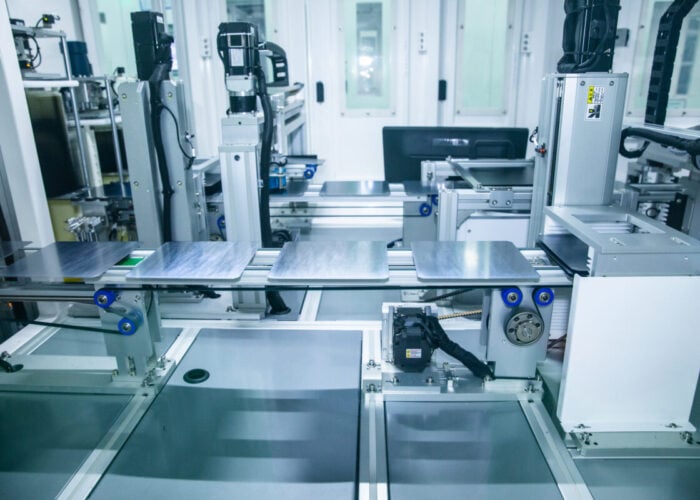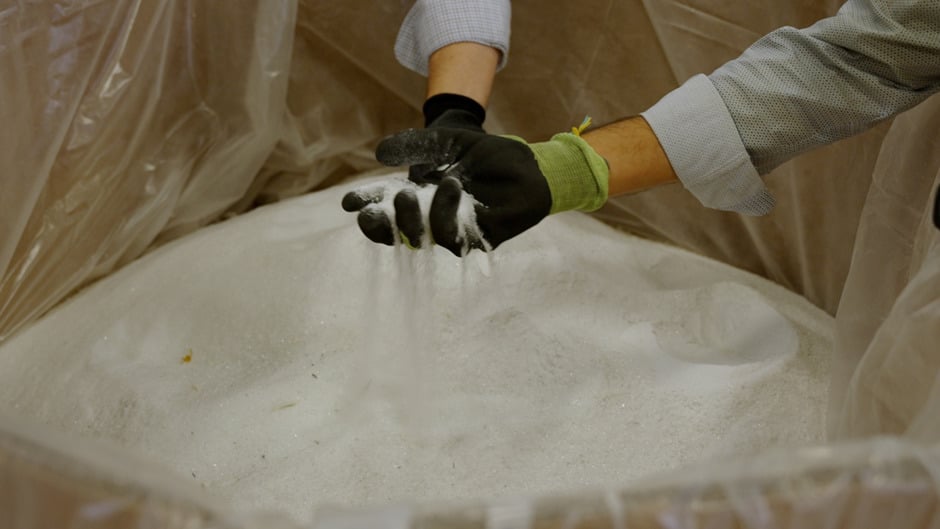
Canadian solar cell and module manufacturer Heliene will buy recycled glass from US PV recycling firm Solarcycle for use in the production of new modules.
Solarcycle will supply Heliene with 4GW of glass over the next five years. The company announced plans for a solar glass production facility in Georgia, US, earlier this year.
Try Premium for just $1
- Full premium access for the first month at only $1
- Converts to an annual rate after 30 days unless cancelled
- Cancel anytime during the trial period
Premium Benefits
- Expert industry analysis and interviews
- Digital access to PV Tech Power journal
- Exclusive event discounts
Or get the full Premium subscription right away
Or continue reading this article for free
In addition to its headquarters in Canada, Heliene operates a solar module manufacturing facility in Mountain Iron, Minnesota, and has announced plans to expand US production capacity in a joint venture (JV) with Indian cell manufacturer Premier Energies. The company currently produces tunnel oxide passivated contact (TOPCon) products in the US.
Solarcycle has signed a raft of deals with US solar manufacturers since its foundation in 2022. Most of these have been recycling deals, where the company will receive delivery of decommissioned or broken modules from a manufacturer’s operations. Most recently, it inked one with multi-national solar manufacturer Canadian Solar for modules produced at its US facility.
In March, it signed the first recycled glass deal with California-based manufacturer Silfab.
Domestic content adder
Martin Pochtaruk, CEO of Heliene said: “Partnering with Solarcycle enables us to improve our supply of domestic components, to help our clients qualify for the domestic content adder while materially reducing our carbon footprint.”
Heliene has previously inked a solar cell supply deal with US producer Suniva and, according to comments heard by PV Tech in the past, has also secured domestic module frame supply deals.
The domestic content tax adder gives project owners a 10% bonus credit on top of the Inflation Reduction Act’s (IRA) 30% Production Tax Credit (PTC). To qualify, a minimum of 40% of the components in a solar array must be US-made, rising to 55% from next year. The threshold is calculated based on the cost of components.
Most US-produced silicon solar modules will currently be unable to meet the requirements, as US domestic cell supply (which forms the majority of a module’s cost) is growing significantly slower than domestic module assembly capacity.
Solarcycle’s solar glass joins a number of other non-silicon solar products which have been announced in the US to address the IRA demands for domestic content. Solar tracker products have been announced by major US producers and a number of companies have signed inverter supply deals for US products.
In July, PV Tech published a blog examining the glass, backsheet and frame manufacturers which are supporting the domestic solar capacity boom in the US.
Last week, at the RE+ trade conference in Anaheim, California, PV Tech Premium heard a lot of discussion about the domestic content bonus from both developers and manufacturers. Arevon, a major US solar and energy storage developer, said domestic supply offers price security for developers looking to finance projects. Justin Johnson, Arevon COO, said that the policy was “awesome” for the industry and that developers could access the bonus through mixing their suppliers between US and imported products.
In contrast, we heard from upstream players saying that the domestic content adder was not significant enough to encourage developers to buy US products. Earlier this year, the Solar Energy Manufacturers for America (SEMA) coalition called on the US government to expand the scope of the domestic content adder to include solar wafers in its calculation.