The sanctioning of a tendering scheme for 2.5GW of hybrid wind and solar capacity in India, to be allocated through a transparent bidding process, has been branded as “the right step”, by consultancy firm Bridge to India.
Once the Ministry of New and Renewable Energy (MNRE) had released its finalised ‘National Wind-Solar Hybrid Policy’ earlier this month, Bridge to India had said it completely lacked a framework for converting existing wind or solar plants into hybrids and the only real opportunity would lie in new specific procurements by government agencies.
Try Premium for just $1
- Full premium access for the first month at only $1
- Converts to an annual rate after 30 days unless cancelled
- Cancel anytime during the trial period
Premium Benefits
- Expert industry analysis and interviews
- Digital access to PV Tech Power journal
- Exclusive event discounts
Or get the full Premium subscription right away
Or continue reading this article for free
Thus, the government’s subsequent appointment of Solar Energy Corporation of India (SECI) as the nodal agency to implement a 2.5GW tender scheme has been welcomed.
Vinay Rustagi, managing director of Bridge to India, told PV tech: “We don’t expect existing wind or solar projects will find a viable means of switching over to hybrid technologies because that is going to be on a very opportunistic basis. But if the government brings out these large specific hybrid tenders, that is the best way to develop this market.”
The projects are to be connected to the Interstate Transmission System (ISTS), adding to the 7GW of ISTS tenders already out from SECI and state-run utility NTPC. Moreover, SECI this week also released a 5GW PV manufacturing RfS, which also seeks to tie the factory allocations with another 10GW of solar projects connected to the ISTS.
Bids for hybrid capacity will be for a minimum of 200MW capacity and a maximum of 500MW, with each individual project at least 50MW in size, set up on a build, own and operate (BOO) basis. Meanwhile, developers will be allowed to install any energy storage facility to help power output from these hybrid projects.
However, Rustagi added a caveat to the hybrid tender plan: “The challenge in our view is again going to be, is that really going to lead to any substantial savings over solar only or wind only tenders? My personal view is that the savings which have been touted are far too high.
“I think the savings will be much less, so once a few such tenders are out and we can see some concrete evidence in terms of tariffs and interest in the market, that will give us a much better sense of the future direction of the market, but this is the right step by issuing specific hybrid tenders in our view.”
Bridge to India has also previously described the well-touted grid stability advantages offered by hybrid projects as “debatable”, noting that there are other easier and cheaper ways to achieve the same result including better forecasting techniques, ancillary services market, and demand-side management.
An RfS will be released within the next two weeks and SECI will sign PPA’s for 25 years with successful project bidders.
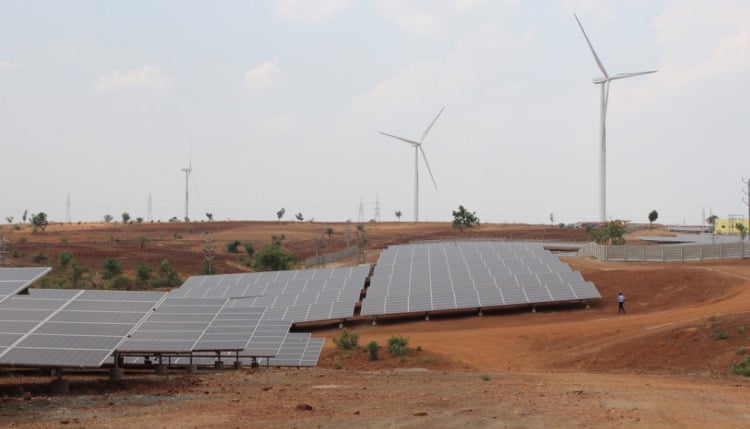
PV Tech recently attended the inauguration of Hero Future Energies major hybrid wind and solar plant in Karnataka, the first in India. All the power generated will be sold to private customers.