The US Department of Energy (DOE) has announced US$52 million in financing for research and development (R&D) into domestic solar manufacturing and recycling, including a focus on new technologies.
Testing and certifications company UL Solutions has published a new set of cyber security certification requirements for solar, wind and storage assets connected to the distribution grid, as well as other inverter-based resources (IBR).
Western US electricity utility Pacificorp has released its 2023 Integrated Resource Plan (IRP) outlining significant solar, wind and storage capacity expansions as well as investment into new transmission lines.
Nearly 1TW of solar PV capacity had interconnection queues at the end of 2022, according to a research from Lawrence Berkeley National Laboratory (LBNL).
Panellists during last month’s Large Scale Solar Europe event, hosted by PV Tech publisher Solar Media in Lisbon, discussed the issue of grid modernisation in Europe and how it affects the growth of solar PV across several European Union members.
If Portugal wants to bring forward its target to have 9GW of installed capacity by 2026 rather than the end of the decade, it will need to solve one of its main barriers it faces at the moment: permitting issues.
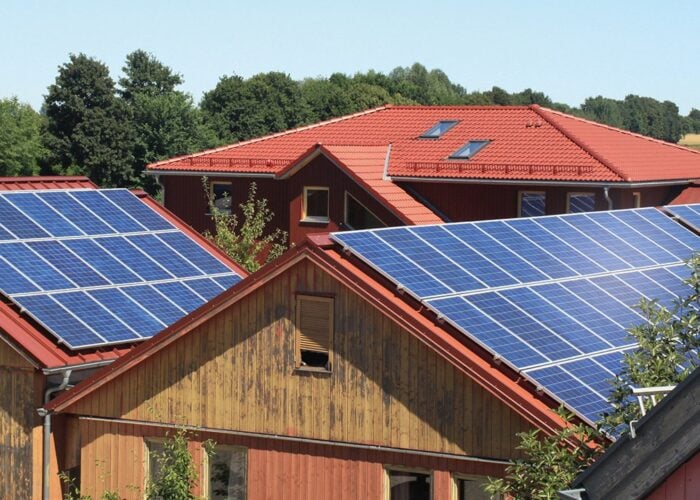
The number of residential solar and storage systems installed in Germany increased 52% in 2022 compared with the previous year, whilst three quarters of Germans would consider installing rooftop solar.
The Energy Market Authority (EMA) has granted conditional approval for the transfer of 1GW of clean energy from Cambodia to Singapore as part of the latter’s ongoing energy import strategy.