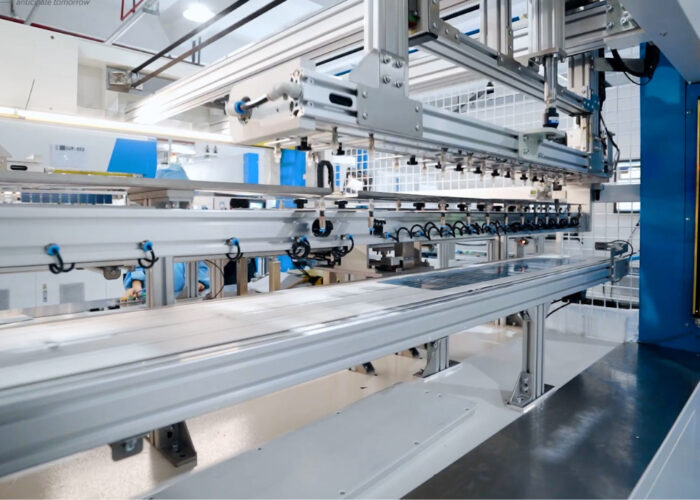
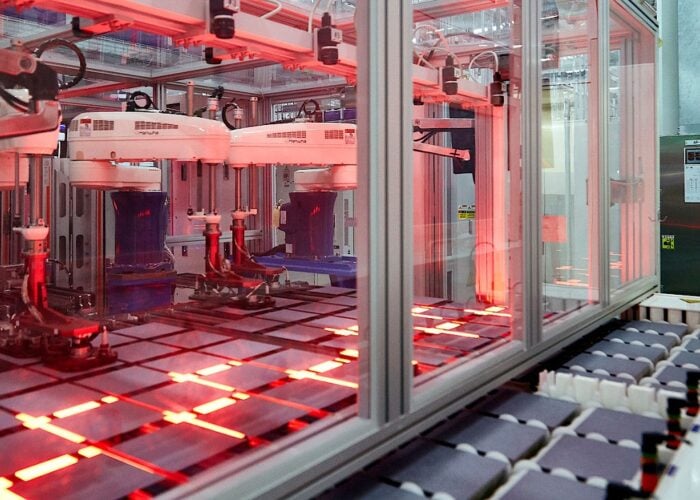
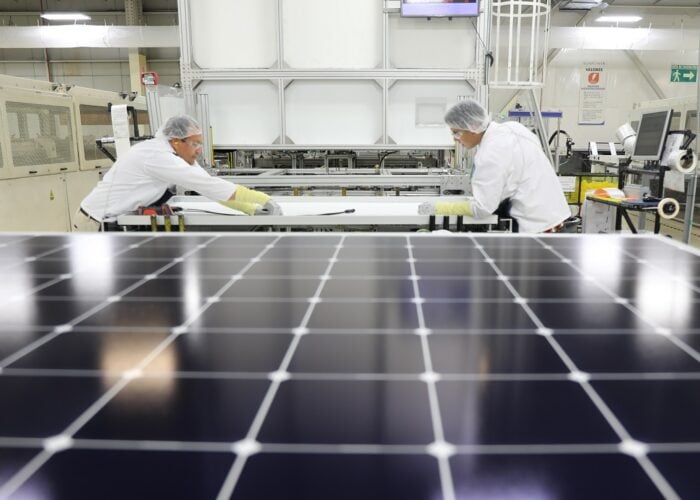
Italian PV panel manufacturer FuturaSun has acquired 24,000 square metres of land to build a factory with 2GW production capacity in a year, relaunching its PV supply chain in Europe.
After the passing of the Inflation Reduction Act (IRA) into law, solar PV and storage are expected to create up to 115,000 manufacturing workers in the US by 2030.
The combined effects of the ongoing anti-dumping and countervailing duty (AD/CVD) tariff investigation and the Uyghur Forced Labor Prevention Act (UFLPA) curbed US solar deployments in 2022, according to a joint report from the Solar Energy Industries Association (SEIA) and Wood Mackenzie.
PV modules will keep changing in the quest for higher efficiency and energy yield. However, the rapid and sometimes simultaneous introduction of new technologies increases overall quality risk, writes George Touloupas, senior director at Clean Energy Associates.
French PV manufacturing startup Carbon has chosen a location for a proposed cell and module gigafactory which it plans to bring into operation in late 2025. The plant would be Carbon’s first production facility.
JA Solar is looking to capitalise on strong demand for modules in the Middle East as developers plan ever-larger solar projects and governments encourage the deployment of distributed PV systems.
Module manufacturer Meyer Burger has introduced a new product platform for its solar modules, enabling the scalability of new manufacturing capacities and accelerating mass production.