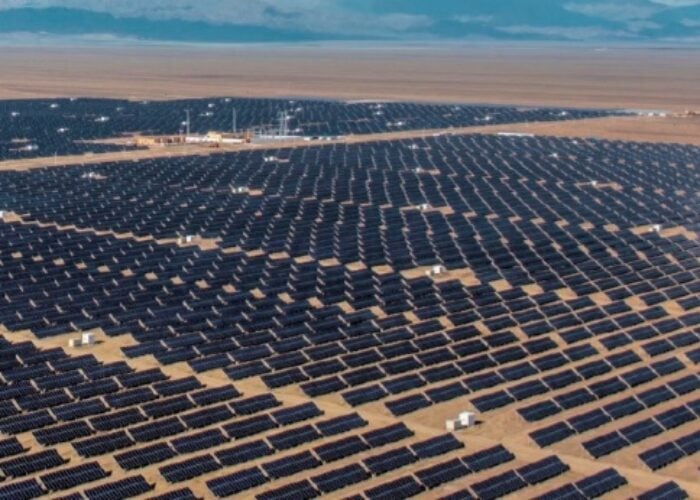
‘Silicon Module Super League’ (SMSL) member GCL System Integrated Technology (GCL-SI) has secured its first order in Australia for its recently launched ‘Super 2.5 MW Solar Block’ modular plant system from Australian-based power station developer APSU Power.
Global solar PV manufacturing capacity expansion announcements in the first half of 2017 showed a significant increase over the second half of 2016. New plans almost reached the record heights set in the first half of 2016.
TUV Rheinland India, a subsidiary of the TUV Rheinland Group has opened a new €2.5 million state-of-the-art laboratory at Electronic City in Bangalore, India to provide all testing services under one roof and dramatically reduce turnaround time and accelerate time-to-market for customers.
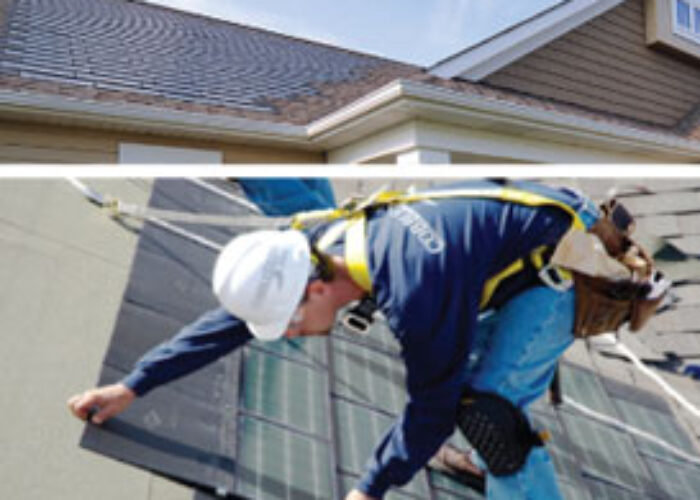
US-based PV installer RGS Energy has struck an exclusive deal with Dow Chemical to exclusively sell its third generation (3.0) solar shingles under the ‘POWERHOUSE’ brand said to use conventional crystalline silicon solar cells rather than the original CIGS (Copper, Indium, Gallium, Selenide) thin-film substrates.
With many of the top-20 module suppliers to the solar industry now having multi-GW shipment volumes, attention has turned firmly to assessing metrics that companies can use to benchmark the quality and reliability of shipped products against their competitors.
Some of the industry is at loggerheads and many feel local manufacturing must be intrinsic to the 100GW by 2022 solar target, but the value of trade duties is under dispute.
PV Tech reached its own little milestone of having reported and analysed the R&D spending habits of the same 12 key PV module manufacturers for 10 years. The results have just been published in sister technical journal Photovoltaics International as part of the annual leaders and laggards of R&D spending for 2016.
The significance of PV-Tech’s forthcoming conference in Kuala Lumpur – PV ModuleTech 2017 – has just moved to a new level, with the key company executives from all members of the Silicon Module Super League (SMSL) giving presentations on stage about the quality, reliability, and performance of their solar modules.
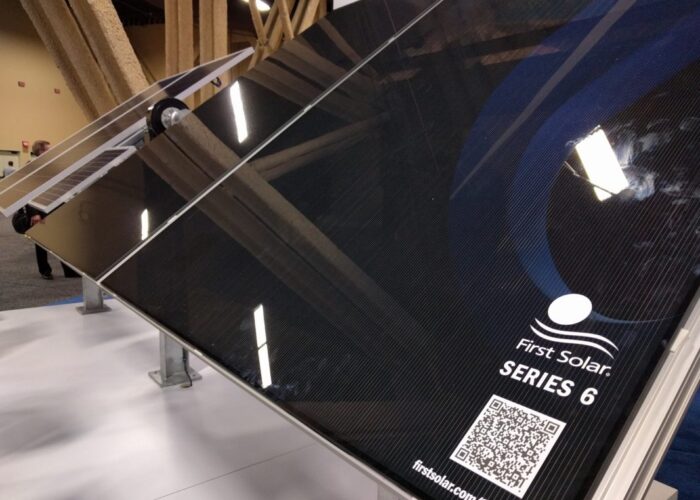
First Solar will wait for more clarity on the Section 201 case before deciding whether to extend production of its Series 4 modules, CEO Mark Widmar has told PV Tech.
Updated: With the solar industry transitioning to high-performance products backed with innovation, Solar Power International 2017 in Las Vegas is showcasing an ever increasing portfolio of solar modules exceeding 300 watts in the standard 60-cell format. However, 72-cell modules exceeding 360 watts are also entering the mainstream and 400 watts is just around the corner.
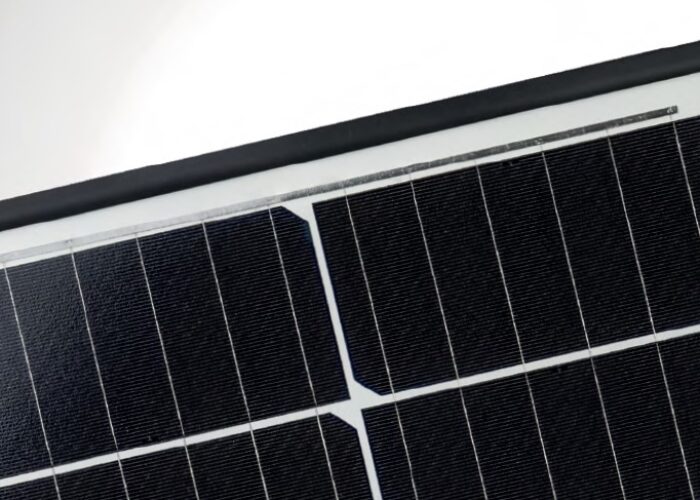
Driving the high-performance wave is PERC (Passivated Emitter Rear Cell), bifacial and the migration to 5 busbars and beyond, whether with multicrystalline or monocrystalline wafers. The growing use of half-cut and multi-cut cells that reduce cell to module losses, boosting overall performance are also becoming mainstream as well as heterojunction (HJ) modules.