German solar research centre ISC Konstanz is working with US solar cell manufacturer Suniva on its 1GW crystalline silicon solar cell production facility in the US state of Georgia.
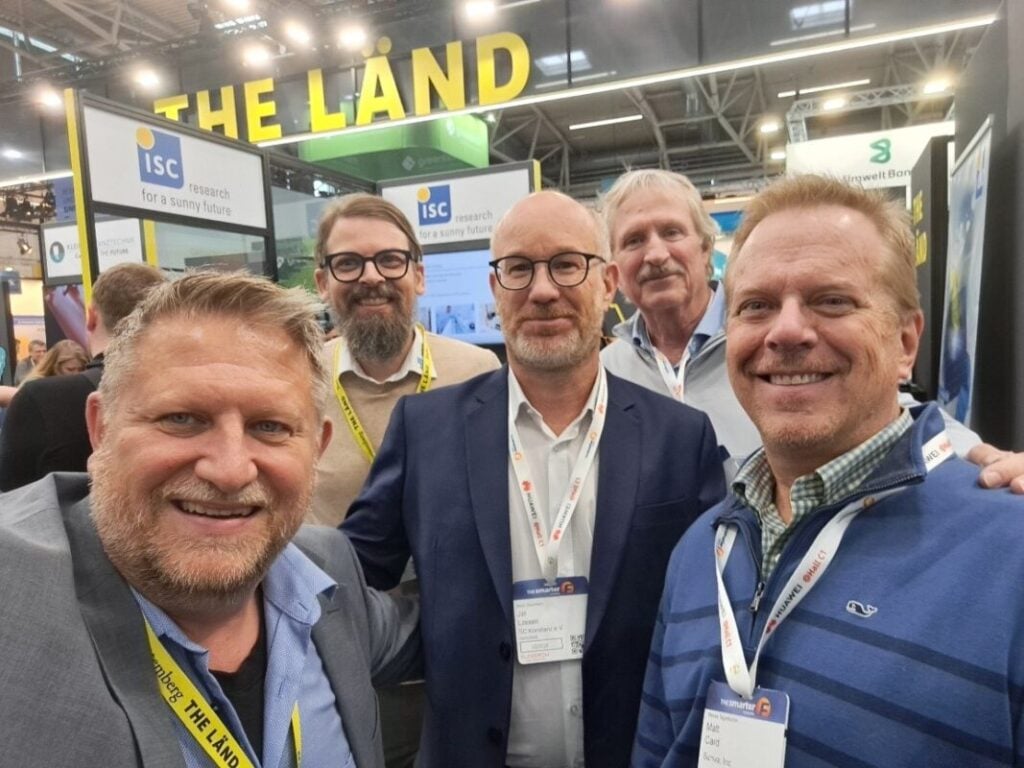
Since March, ISC Konstanz has been consulting with Suniva on optimising its passivated emitter rear contact (PERC) solar cell production lines in Norcross, Georgia. The company announced plans to restart manufacturing at the site in October 2023, aiming to reach up to 2.5GW of total capacity.
Try Premium for just $1
- Full premium access for the first month at only $1
- Converts to an annual rate after 30 days unless cancelled
- Cancel anytime during the trial period
Premium Benefits
- Expert industry analysis and interviews
- Digital access to PV Tech Power journal
- Exclusive event discounts
Or get the full Premium subscription right away
Or continue reading this article for free
In a statement, ISC Konstanz said it has “led production formula optimisation, adapting process recipes to local conditions” at Suniva, which it said had achieved “rapid growth” in product efficiency and would contribute towards the manufacturing site’s economic viability.
Moreover, ISC Konstanz head, Lejo Joseph, said that a “high percentage” of the Georgia site’s production equipment comes from German manufacturers. “We take pride in saying: A clean energy transition, made in Germany/Baden-Württemberg!”, he said.
Suniva is not alone in choosing PERC technology for its US cell production, when most of the international solar market has switched to n-type tunnel oxide passivated contact (TOPCon) technology.
ISC Konstanz said PERC was “particularly suitable” for the US, “as it relies on proven, highly efficient technology to maximise production output, which is critical in supporting the United States’ resurgent module manufacturing sector and the overwhelming demand for domestic content in the country’s home markets.”
TOPCon technology has also become the subject of a broad swathe of intellectual property (IP) litigation. PV Tech Premium spoke with emergent US cell producer ES Foundry earlier this year, which said that it opted for PERC technology because of the number of TOPCon IP cases sweeping the industry.
Domestic cell content
Matt Card, president of Suniva, said: “The evolving US regulatory landscape places extreme importance on the need for domestically-produced solar cells.”
Indeed, last week the US House of Representatives passed a bill which promised to massively cut the incentives for solar PV deployment and manufacturing under the Biden administration’s Inflation Reduction Act (IRA).
Crucially for the US solar manufacturing industry, restrictions on “Foreign Entities of Concern” (FEOC) could potentially cause huge disruption to the supply chain. Though the 45X Advanced Manufacturing credit was broadly preserved in the bill, the language around FEOC could render products from Chinese or Chinese-backed companies unusable. These products overwhelmingly dominate the global solar supply chain, and the US is still largely reliant on imports from abroad to supply its emerging solar manufacturing sector, which consists mostly of module production facilities.
“The main concern for the prohibited foreign entity provisions would be the limitation on receiving ‘material assistance’ from companies with ties to China or other ‘covered nations,'” Don Lonczak, partner at US law firm Pillsbury told PV Tech. He continued: “Basically, any component or subcomponent obtained from such a company could result in full denial of the tax credits.”
PV Tech Premium analysed the potential impact of the FEOC provisions in the draft House bill last week.
Suniva is one of the few companies producing solar cells in the US, which puts it in a strong position to weather the Trump administration’s apparent shift towards US protectionism.
The firm has also signed a deal with US chemical production firm Corning, via its majority-owned subsidiary Hemlock Semiconductor, to use Hemlock’s US-made polysilicon to produce cells at its Georgia facility. These cells will then be sold to Canada-based module producer Heliene, in what the companies called a “significant milestone” for the US solar manufacturing industry. The resulting modules will have a higher domestic content than other products currently on the US market.