After more than five years of heavy duties, protracted legal proceedings and tens of millions of dollars in tariffs, Canadian PV manufacturers look set to be able to export solar products to the US without incurring costs after a recent ruling judged the duties contravened the US-Mexico-Canada Agreement (USMCA or CUSMA) on trade.
Martin Pochtaruk, president of Canadian solar manufacturer Heliene, spoke with PV Tech Premium about the ruling and what it meant for the country’s solar industry.
Try Premium for just $1
- Full premium access for the first month at only $1
- Converts to an annual rate after 30 days unless cancelled
- Cancel anytime during the trial period
Premium Benefits
- Expert industry analysis and interviews
- Digital access to PV Tech Power journal
- Exclusive event discounts
Or get the full Premium subscription right away
Or continue reading this article for free
The ruling
Last month, a dispute resolution panel ruled that Section 201 tariffs on Canadian solar products imposed in 2018 by the US broke the terms of the USMCA on trade.
It was welcomed by Canada’s minister for International Trade and Export Promotion Mary Ng who said, “Canada will also ensure that our solar industry […] can fully benefit from USMCA”, although Pochtaruk does not anticipate any additional government support for PV manufacturing to be provided.
Following the ruling, the US has 45 days (by 21 March) to reach an agreement with Canada and resolve the dispute. Pochtaruk, who was involved in the appeal against the tariffs, said he doubted a resolution would be found given the lack of communication from the US authorities.
“It’s my understanding that the parties are negotiating when there is nothing to negotiate – the result of the arbitration is clear, Canada has to be exempted,” he said, adding that the tariffs never had any legal foundation.
Indeed, in 2018, the US International Trade Commission (USITC) found that Canada was not a major exporter of solar products to the US and did not qualify for the tariffs. But that did not stop the Trump administration imposing them anyway.
What it means for Canadian manufacturers
Pochtaruk said Heliene had paid “tens of millions of dollars” in duties since the tariffs were imposed by the Trump administration in 2018 and said their removal would “allow us to stop bleeding” after years of punitive charges.
“We’ve been paying import duties through our nose just to maintain Canadian manufacturing, when the Canadian market is really inexistant,” said Pochtaruk, lamenting that the ruling will not see any duties retrospectively repaid to Canadian manufacturers.
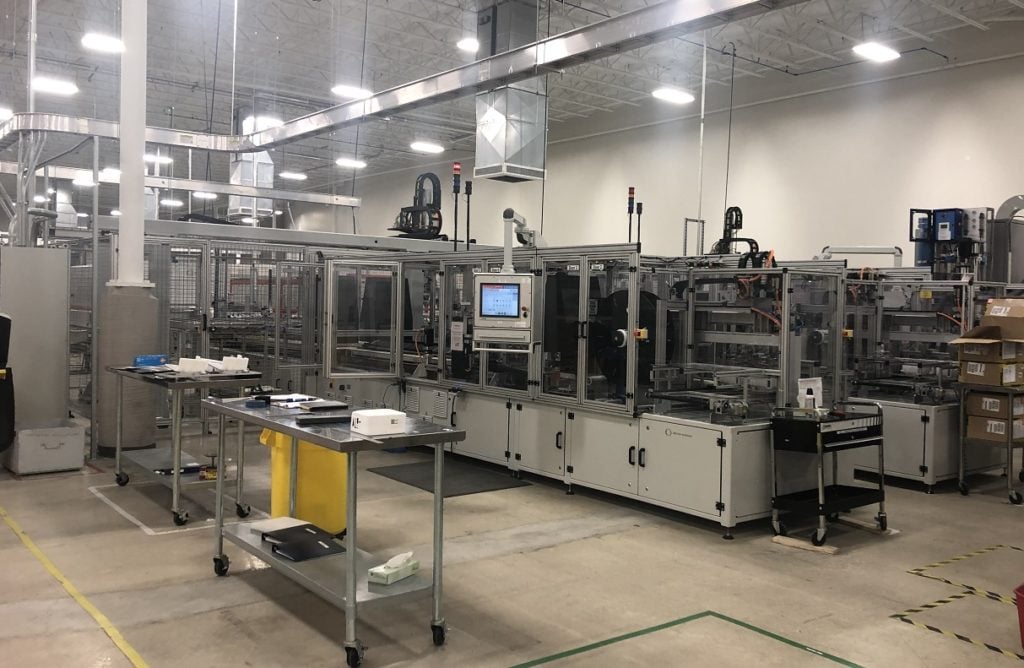
Currently, Heliene and Silfab Solar – the other large-scale PV manufacturer in Canada – have a combined production capacity of around 1GW in Canada, said Pochtaruk, with Heliene accounting for roughly 300MW of this. Neither company have been operating at full utilisation rate, he added.
Pochtaruk said demand from the Canadian market in 2021 was just 280MW – compared with 22GW from the US market – with the vast majority of the extra capacity from the two producers shipped to the US, meaning the USMCA ruling will be a significant boon for the two companies.
Crucially, the Section 201 tariffs, which have just been extended by President Joe Biden, do include an exemption for bifacial modules, which provided some respite for Heliene as most of its trade to the US was in bifacial panels for utility-scale solar projects.
As a residential and C&A solar manufacturer not focused on bifacial exports, however, Silfab had been badly affected by the policy and would see more of an immediate boost following the verdict, said Pochtaruk.
In response to the ruling, a US Trade Representative (USTR) spokesperson sought to put a positive spin on the judgement: “The US appreciates that the panel reaffirmed the President’s authority to make exclusion determinations in safeguard proceedings,” USTR spokesman Adam Hodge said in a statement.
Pochtaruk said this should be read as an attempt to save face following a very public loss. Moreover, “the US administration could always have declared a win because both Heliene and Silfab became prominent US manufacturers”.
Both companies have made major investments in US manufacturing facilities over the last year, with Silfab doubling its US module capacity to 800MW and Heliene making good progress on its 400MW module production line project in Minnesota, said Pochtaruk.
If the US’ intention was to spur manufacturing within the country, then it has succeeded and should have been more receptive to negotiations with Canada to avoid the arbitration process altogether, he said.
As previously mentioned, Pochtaruk does not foresee any additional support from the Canadian government to be made available following the ruling given the size of the country’s nascent solar manufacturing sector.
All eyes are, however, firmly on the Build Back Better legislation struggling to make its way through the Senate, which, if passed, would be a massively positive for all solar manufacturers in North America, adds Pochtaruk.
Silfab declined to comment on the ruling for the purposes of this article.