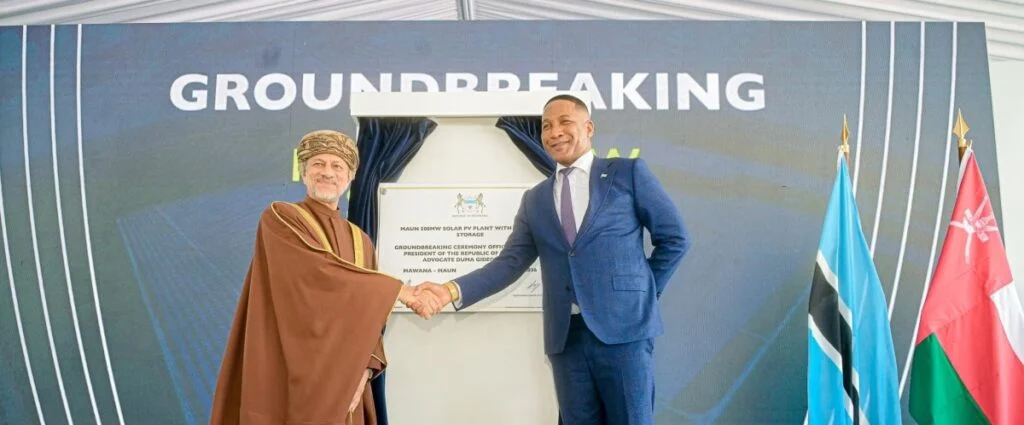
Work has begun on the 500MW Maun solar-plus-storage project in Botswana, which will be a cornerstone of the country’s plan to reach 1.5GW of operational renewable energy capacity by the end of the decade.
Project development was first announced by local media last week, and has since been confirmed by the government of Botswana. The project will include 500MW of solar PV capacity, alongside a 500MWh battery energy storage system (BESS), and the government expects the project to begin commercial operations in 2029.
Try Premium for just $1
- Full premium access for the first month at only $1
- Converts to an annual rate after 30 days unless cancelled
- Cancel anytime during the trial period
Premium Benefits
- Expert industry analysis and interviews
- Digital access to PV Tech Power journal
- Exclusive event discounts
Or get the full Premium subscription right away
Or continue reading this article for free
The start of construction at the project is a significant milestone for Botswana, which is seeking to make rapid changes to its energy mix. According to government figures, renewable energy currently accounts for 8% of the total generation mix, but the government’s latest Integrated Resource Plan aims to increase this to 50% by 2030.
“This is not merely a project, it is a clear statement that Botswana is poised to become a regional energy hub,” said Botswana president Duma Boko. “This will bring to light our broad ambitions of being a regional hub for solar energy generation.”
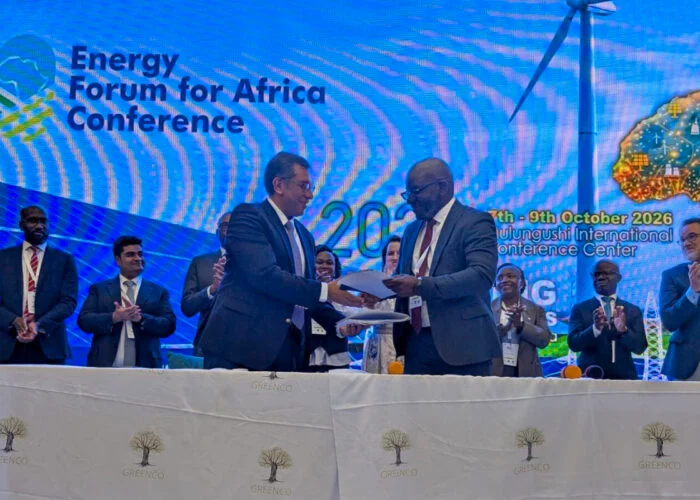
The project will be owned and operated by a combination of companies that are a part of the Botswanan and Omani governments. The Botswana government described the ownership structure as a “partnership” between itself and the Sultanate of Oman, where the project would be “executed” by the Botswana Power Corpoation, a state-owned utility. The project will then be operated by Okavango Solar, a subsidiary of renewable energy company O-Green, which is itself owned by the Sultanate of Oman.
Last week, local media reported that Naqaa Sustainable Energy would be the lead developer of the project; this company is also a part of the O-Green group.
The Botswana government also announced that it had signed a 30-year power purchase agreement (PPA) to sell electricity generated at the project, but did not name the offtaker.
According to David Kgoboko, Botswana Power Corporation CEO, the Maun project will play a key role in improving Botswana’s energy security. The most recent figures from the World Bank show that energy imports accounted for around 30% of Botswana’s total electricity usage in the year to the third quarter of 2024, and this trend has increased more recently. Figures from Statistics Botswana show a 40.8% year-on-year increase in electricity imports between the first quarter of 2024 and 2025.
The World Bank also described the country’s energy generation as “increasingly unreliable”, as, in 2024, coal accounted for 97% of the country’s electricity generation, with the majority coming from the 600MW Morupule B coal plant, which “continues to underperform”. Adding significant capacity of domestic electricity generation, through the form of a solar-plus-storage project, is therefore a priority for Botswana.
“The project will significantly enhance security of supply and will reduce our carbon footprint as a country, optimise the corporation’s generation costs through displacement of expensive power imports and will ultimately position Botswana as a net exporter of electricity in the region,” said Kgoboko.
Zambia launches largest solar-plus-storage project
Elsewhere in Africa, Zambia this week launched the largest solar-plus-storage project in the country, the 250MW Leopard’s Hill project. As covered by our colleagues at Energy-Storage.news, the project includes a 150MW/600MWh BESS, and developer Globaleq expects to reach financial close at the project by the end of this year.
As is the case in Botswana, delivering greater energy security, and building a supply of domestic and flexible clean energy generation, is a priority for Zambia.
“The Leopard’s Hill project strengthens Zambia’s energy system and expands the opportunities for private sector offtake in a rapidly growing market,” said Globeleq CEO Jonathan Hoffman.