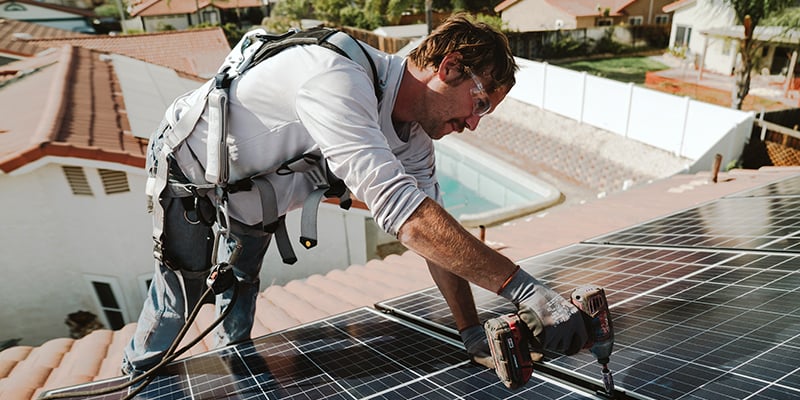
US residential solar installer Freedom Forever has filed for Chapter 11 bankruptcy amid a broad set of litigation claims.
The company announced the bankruptcy earlier this week in the US bankruptcy court for the district of Delaware. According to the company’s filings, it had over US$500 million in debt and total assets between US$100 million and US$500 million.
Try Premium for just $1
- Full premium access for the first month at only $1
- Converts to an annual rate after 30 days unless cancelled
- Cancel anytime during the trial period
Premium Benefits
- Expert industry analysis and interviews
- Digital access to PV Tech Power journal
- Exclusive event discounts
Or get the full Premium subscription right away
Or continue reading this article for free
It owes over US$100 million to solar financing firm Mosaic Funding IX and further tens of millions of dollars to companies including major solar manufacturers JA Solar, Trina Solar, Jinko Solar and US manufacturer Silfab Solar.
The company was the second largest residential solar installer in 2025 according to Wood Mackenzie, with a 6.1% market share, second only to SunRun. Wood Mackenzie’s data did show a sharp decline in Freedom Forever’s market share for the final quarter of 2025, when it compressed to 3.9%.
The bankruptcy filing follows an announcement last week that the Texas attorney general, Ken Paxton, would investigate the company alongside other residential installers—including SunRun—for “fraudulent and deceptive” sales practices.
The news sparked mixed reactions from the solar industry. Many posting on LinkedIn expressed concern and sympathy for the company’s employees searching for work, while others condemned the executive culture and practices at the top of Freedom Forever.
Times have been challenging for the broader US residential solar industry of late. A combination of federal and state policy changes and the high cost of borrowing has had a significant impact on the sector.
The current government has cut tax breaks for rooftop solar installations, which has driven more consumers towards third-party ownership (TPO) models offered by contractors like Freedom Forever. California, the leading state for distributed solar, has also changed its compensation scheme for excess power generation, which has lessened the incentive to install standalone residential solar.
A number of companies have filed for bankruptcy or become insolvent in recent years. Most notably, in 2024 SunPower filed for Chapter 11 bankruptcy, following in the footsteps of smaller players Titan Solar and Lumio. In June 2025, Sunnova and Mosaic also filed for bankruptcy.