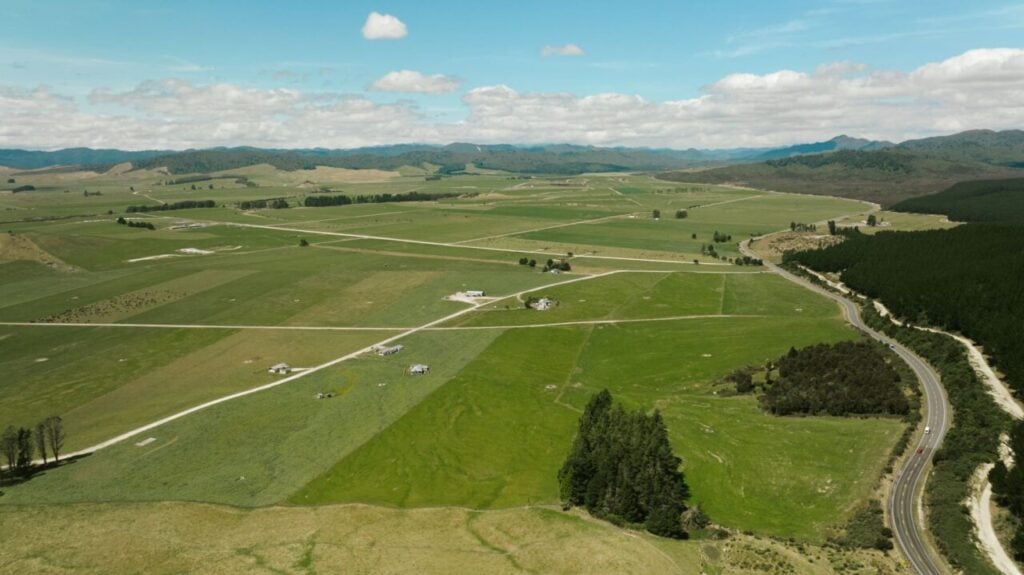
Meridian Energy and Nova Energy have completed agreements to establish a 50-50 joint venture (JV) to build and operate the 400MW Te Rahui solar PV power plant near Taupō, New Zealand.
The joint venture has also secured NZ$300 million (US$177 million) in project financing through the Australian and New Zealand bank ANZ for the first 200MW phase of the project.
Try Premium for just $1
- Full premium access for the first month at only $1
- Converts to an annual rate after 30 days unless cancelled
- Cancel anytime during the trial period
Premium Benefits
- Expert industry analysis and interviews
- Digital access to PV Tech Power journal
- Exclusive event discounts
Or get the full Premium subscription right away
Or continue reading this article for free
The Te Rahui solar PV plant, located at Rangitāiki approximately 35km east of Taupō on New Zealand’s North Island, will be developed in two phases. Construction on the first phase began in August 2025, with first power expected in mid-2026 and full power by mid-2027.
Nova Energy, a Wellington-headquartered subsidiary of conglomerate Todd Corporation, received resource consent for Te Rahui in April 2024.
Meridian Energy, a state-owned energy company, and Nova Energy confirmed they would collaborate on the 400MW solar PV power plant in December 2024. Once completed, they claim it will become the country’s largest solar generation site.
Under the agreement, project offtake will be shared between the partners through a power purchase agreement (PPA) with Meridian for 100% of the output and a Contract for Difference with Nova for 50%.
Meridian Energy chief executive Mike Roan described the joint venture as “a great example of how collaboration can move big projects forward for the benefit of electricity users.”
“Te Rahui is a big undertaking and sharing the investment and offtake makes strong commercial sense for both parties, while the project will also benefit home and business customers by further strengthening security of supply,” Roan said.
Te Rahui will include 900,000 solar PV modules spread across a 1,022-hectare site that was previously used as a dairy farm. The JV plans to incorporate sheep grazing under solar modules into the project design in a practice known as agrivoltaics.
New Zealand’s solar PV market sees increased activity
The Te Rahui project comes at a critical time for New Zealand’s energy sector. In 2024, PV Tech reported on the New Zealand energy crisis, which was triggered by wholesale pricing spikes due to gas shortages and low rainfall affecting the country’s hydroelectric resources.
This crisis highlighted the need for diversification in New Zealand’s energy mix, creating opportunities for solar PV expansion.
As a result, investment interest in New Zealand’s renewable energy sector has grown substantially. Last week, venture capital firm Pacific Channel launched Fund V, targeting a 10GW portfolio of solar, wind and energy storage projects nationwide.
New Zealand’s solar market has also seen increasing activity recently, with several notable developments.
In July 2025, Lodestone Energy began construction of a 28MW solar PV plant on the country’s South Island, expanding its portfolio of solar assets. The developer also demonstrated the resilience of its solar infrastructure when its 42MW Te Herenga o Te Rā solar PV power plant continued operations despite severe flooding in the region.