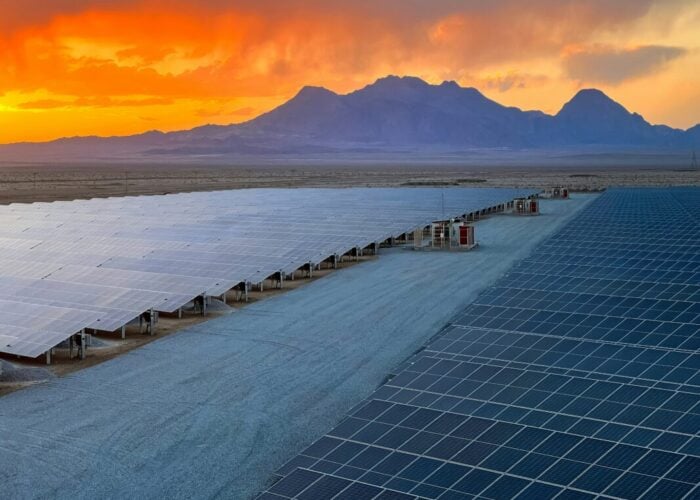
Maharashtra State Electricity Distribution Company (MSEDCL) has launched a tender to procure power from solar PV projects with a capacity of 5GW.
Successful bidders will enter a power purchase agreement (PPA) with MSEDCL. The power could be supplied from solar plants located in any part of India, and the PPA will be for 25 years. The projects will need to be commissioned within 24 months from the date of execution of the PPA.
Try Premium for just $1
- Full premium access for the first month at only $1
- Converts to an annual rate after 30 days unless cancelled
- Cancel anytime during the trial period
Premium Benefits
- Expert industry analysis and interviews
- Digital access to PV Tech Power journal
- Exclusive event discounts
Or get the full Premium subscription right away
Or continue reading this article for free
In a tender document, MSEDCL said only commercially proven and operational technologies could be used in solar projects to minimise technology risks and achieve the timely commissioning of the projects. Project developers can use different technologies, including crystalline silicon or thin-film, with or without trackers. The technologies should be in accordance with the Ministry of New and Renewable Energy’s Approved List of Models and Manufacturers (ALMM).
Projects under construction and uncommissioned will be considered. Moreover, projects already commissioned but do not have any long-term PPA with any agency and selling power on short-term or merchant plant basis will also be eligible, in case these projects are not already accepted under any other central or state Schemes and do not have any obligations towards existing buyers.
The minimum project capacity needs to be 100MW at a single location. The tender bidders must also identify all land required for the project and submit tentative locations at the time of submission.
Prior to this tender, PV Tech reported that India’s Central Electricity Regulatory Commission (CERC) released new draft regulations for the tendering process as a whole. These regulations, which will be in effect from April 2024 to March 2027, split power generation facilities into “generic tariff” and “project specific tariff” categories, with solar projects in the latter category.
As solar tariffs will not be subject to annual regulation by the CERC, and will instead be determined on a case-to-case basis, there is the prospect that Indian solar tariffs will continue to rise, as developers seek greater financial assurances from the government as they look to develop projects.