New solar manufacturing sites have higher defect rates – CEA

June 17, 2025
Facebook
Twitter
LinkedIn
Reddit
Email
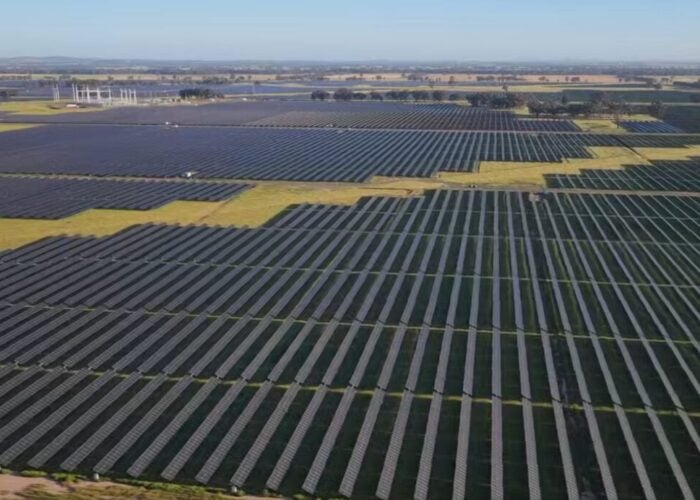
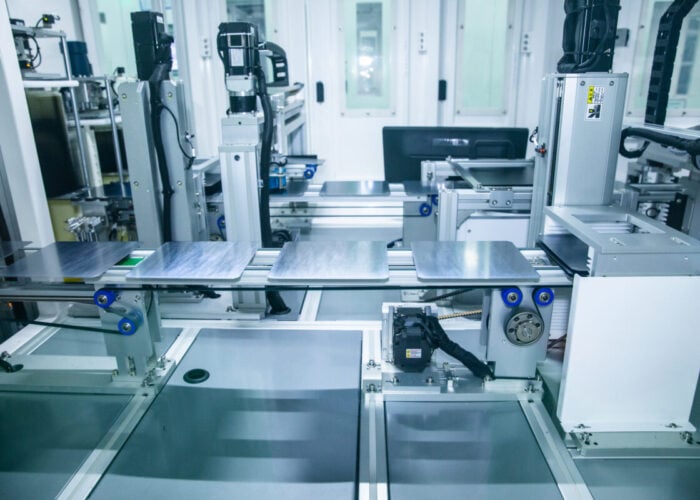
We heard that new facilities see “low output” and higher “defect rates” regardless of their geography. Image: Clean Energy Associates.

New solar manufacturing facilities show higher rates of product defects, PV Tech has heard.

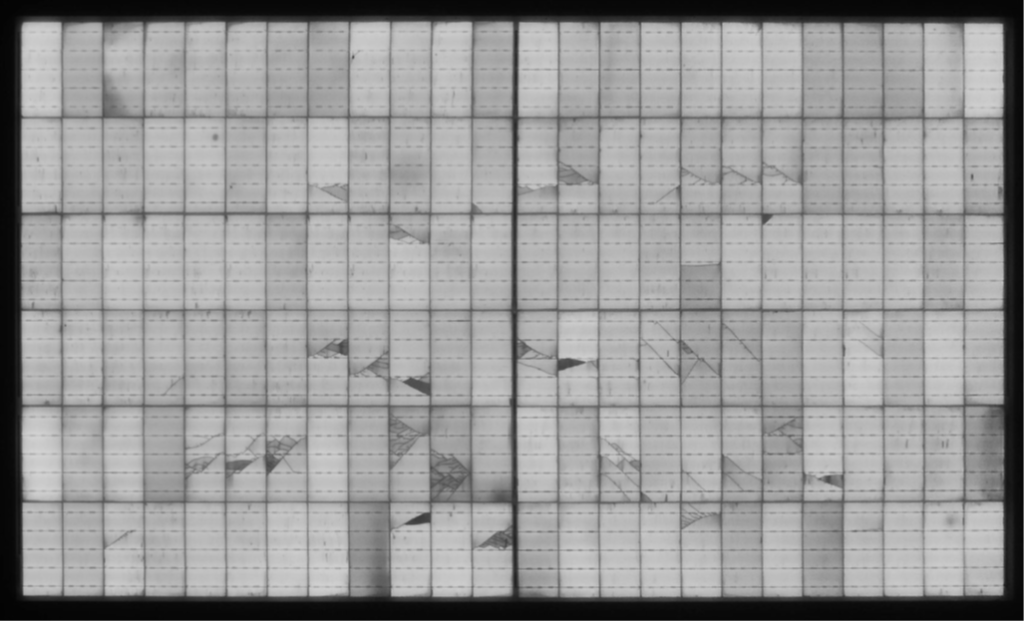
In an interview published today with Jeorg Althaus, director of engineering services and quality assurance at Clean Energy Associates (CEA), we heard that new facilities see “low output” and higher “defect rates” regardless of their geography.

This article requires Premium SubscriptionBasic (FREE) Subscription

Try Premium for just $1

  • Full premium access for the first month at only $1
  • Converts to an annual rate after 30 days unless cancelled
  • Cancel anytime during the trial period

Premium Benefits

  • Expert industry analysis and interviews
  • Digital access to PV Tech Power journal
  • Exclusive event discounts

Or get the full Premium subscription right away

Or continue reading this article for free

Lower output is to be expected as facilities ramp up and new personnel are trained on new machinery – albeit largely automated – but the defect issue is more concerning.

“Regardless of whether it’s in China or Southeast Asia or the US, when you buy from a new production line, there is a ramp-up phase; new machines, new people,” Althaus told us.

These insights come at a time when the solar PV supply chain is in the process of realigning.

Chinese producers are struggling amid low prices and tight margins, brought about largely by overinvestment and the subsequent overcapacity of PV production potential. Chinese-backed manufacturing bases in Southeast Asia are also shutting down in the wake of the US’ antidumping and countervailing duty (AD/CVD) tariffs and large new facilities are being built in the Middle East.

Simultaneously, the US, India and, latterly, the EU, are pushing to support new PV manufacturing capacity to reduce their reliance on Chinese producers for strategically important energy infrastructure.

Althaus’s comments suggest that these shifts – the latest twist on what has become known to some as the “solarcoaster” – expose the industry to more potential pitfalls in module reliability and quality.

Recent reports have borne this out. Research released by Kiwa PVEL showed that 83% of PV modules failed under stress testing, and Tristan Erion-Lorico, VP of sales and marketing at Kiwa PVEL, told PV Tech Premiumthat cost-cutting is affecting the quality of modules.

Moreover, recent data from kWh Analytics shows that hail, worsened by thin glass, accounts for over 70% of financial losses from US solar PV plants, despite accounting for just 6% of loss incidents.

As well as new locations introducing uncertainty, Althaus suggested that quality assurance at some facilities is less thorough on the night shift than in the daytime. Third parties tend to visit sites during working hours, which opens up some of the production at 24-hour manufacturing facilities to less-than-ideal scrutiny.

You can read our full, premium interview here.
16 June 2026
Napa, USA
PV Tech has been running PV ModuleTech Conferences since 2017. PV ModuleTech USA, on 16-17 June 2026, will be our fifth PV ModulelTech conference dedicated to the U.S. utility scale solar sector. The event will gather the key stakeholders from solar developers, solar asset owners and investors, PV manufacturing, policy-making and and all interested downstream channels and third-party entities. The goal is simple: to map out the PV module supply channels to the U.S. out to 2028 and beyond.
13 October 2026
San Francisco Bay Area, USA
PV Tech has been running an annual PV CellTech Conference since 2016. PV CellTech USA, on 13-14 October 2026 is our third PV CellTech conference dedicated to the U.S. manufacturing sector. The events in 2023, 2024 and 2025 were a sell out success and 2026 will once again gather the key stakeholders from PV manufacturing, equipment/materials, policy-making and strategy, capital equipment investment and all interested downstream channels and third-party entities. The goal is simple: to map out PV manufacturing in the U.S. out to 2030 and beyond.
9 March 2027
Location To Be Confirmed
PV CellTech Global will gather the key stakeholders from PV manufacturing, equipment/materials, policy-making and strategy, capital equipment investment and all interested downstream channels and third-party entities. Join us in Q1 of 2027

Read Next

April 17, 2026
US residential solar installer Freedom Forever has filed for Chapter 11 bankruptcy amid a broad set of litigation claims.
April 17, 2026
EBRD backs HAU Energy with US$65 million loan for 200MW solar PV and 120MWh storage project in Benban, Egypt.
April 16, 2026
Tech giant Amazon has announced nine new renewable energy power purchase agreements (PPAs) in Australia totalling 430MW, with eight projects featuring solar generation co-located with BESS.
April 16, 2026
JinkoSolar’s 2025 results have revealed declines in annual module shipments and revenues, as well as a sharp drop in profitability.
April 16, 2026
UK-based perovskite PV specialist Oxford PV has joined a British research project to develop electric vehicle-integrated solar technologies. 
April 15, 2026
Iberdrola is set to acquire a 42MW solar PV plant in Lazio, Italy, taking its total installed renewable capacity in the country to 400MW.

Upcoming Events

Solar Media Events
June 16, 2026
Napa, USA
Solar Media Events
October 13, 2026
San Francisco Bay Area, USA
Solar Media Events
November 3, 2026
Málaga, Spain
Solar Media Events
November 24, 2026
Warsaw, Poland
Solar Media Events
March 9, 2027
Location To Be Confirmed