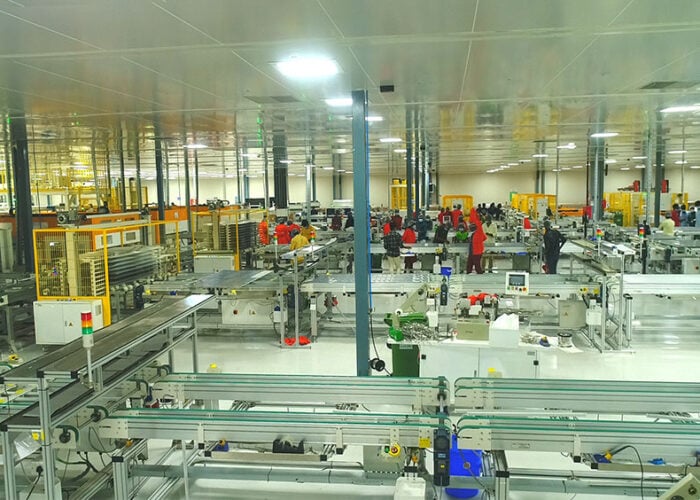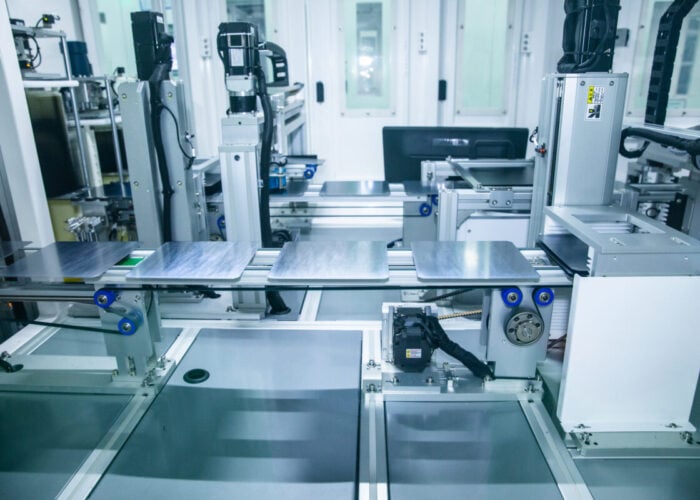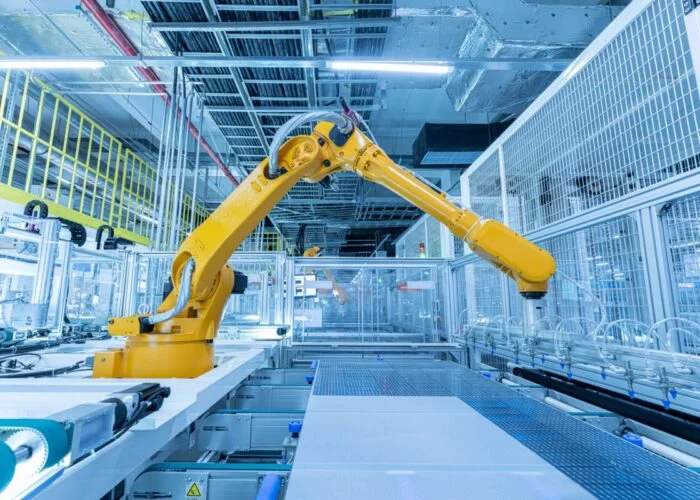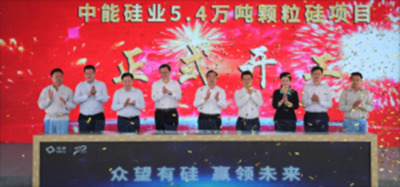
Polysilicon producer GCL-Poly has started construction on the first phase of a new 54,000 MT polysilicon production facility.
The project was officially launched earlier today (8 September 2020) and has a total planned capacity of 100,000 MT. Launched with a total investment of RMB4.7 billion (US$686.6 million), the facility is to be built in two phases. Phase 1 will establish a facility with an initial capacity of 30,000 MT by June 2021, to be expanded to 54,000 MT by the end of next year.
Try Premium for just $1
- Full premium access for the first month at only $1
- Converts to an annual rate after 30 days unless cancelled
- Cancel anytime during the trial period
Premium Benefits
- Expert industry analysis and interviews
- Digital access to PV Tech Power journal
- Exclusive event discounts
Or get the full Premium subscription right away
Or continue reading this article for free
GCL-Poly is to use its fluidised bed reactor (FBR) method for silicon mass production at the facility, used for continuous crystal pulling of monocrystalline silicon and priming of high-efficiency polycrystalline silicon ingots.
The company’s FBR method professes to have a shorter production process with fewer post-processing steps while also boasting a 30% cheaper investment cost. Power consumption is also nearly two-thirds (65%) less than more traditional methods and requires 30% less labour.
FBR technology has long since been held as a potential solution to delivering lowest-cost polysilicon at high purity levels, with GCL-Poly acquiring assets featuring FBR processes from defunct solar company SunEdison in 2016. In its most recent financial update issued earlier this month, GCL-Poly said it was to switch production at its Xuzhou base to granular silicon rods using FBR technology over the coming years, a transition which would reduce that facility’s nameplate capacity by almost half.
According to analysts, with the rapid expansion of monocrystalline silicon production capacity and the increase in the proportion of monocrystalline silicon re-injection materials, coupled with the advantage of no crushing requirement to avoid the introduction of impurities, the FBR silicon particle has the potential to replace rod-shaped silicon as an innovative alternative for the next generation of silicon material technology.
The expansion unveiled today, based on Jiangsu Zhongneng's existing annual silicon particle production capacity of 9,000 MT, will alleviate the increasing demand for re-injected materials in the monocrystalline silicon market and provide GCL smart manufacturing products with more high-tech, better process and lower-cost for China's PV industry grid parity.