Hevel sets path to higher heterojunction cell performance on larger n-type mono wafers

April 14, 2020
Facebook
Twitter
LinkedIn
Reddit
Email
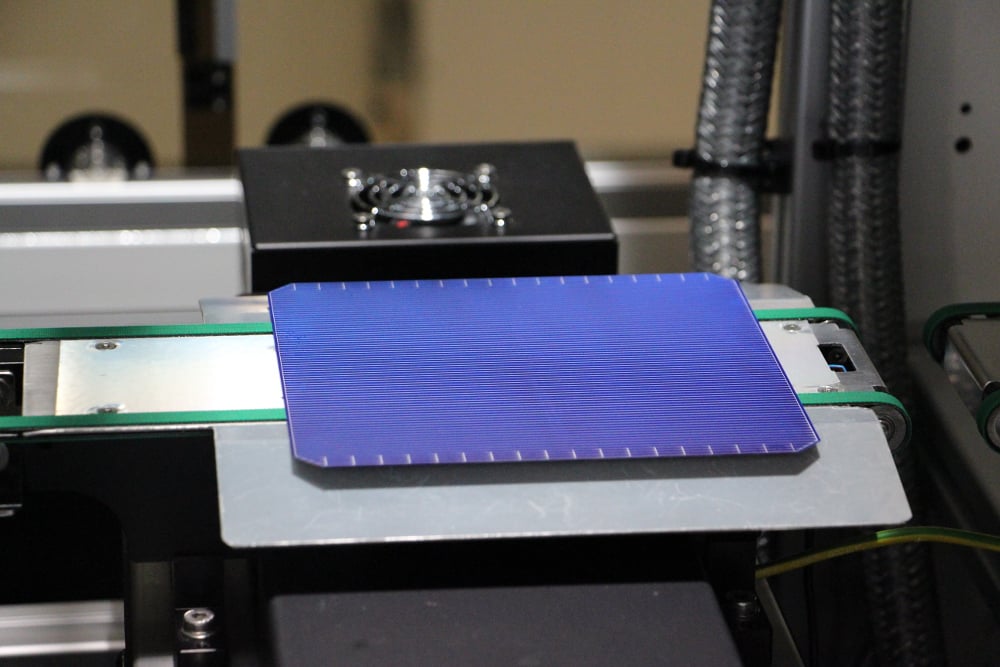
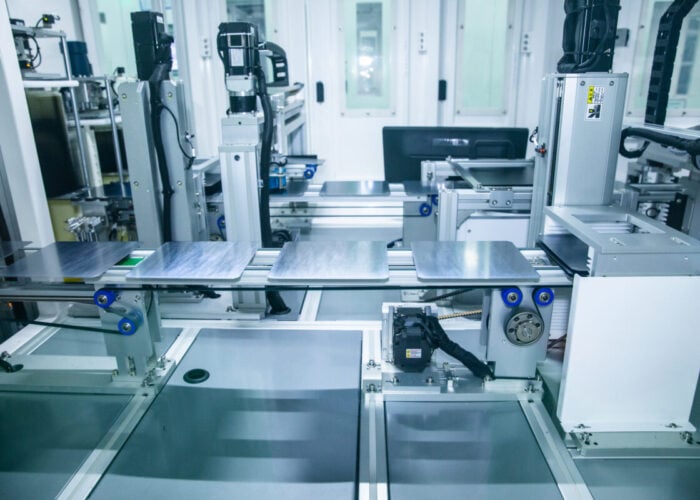
Hevel Group has started producing heterojunction solar cells using the M2+ (157.35 mm x 157.35 mm) n-type mono wafer, providing cell peak power up to 5.88Wp. Image: Hevel

Russia-based high-efficiency heterojunction solar module producer Hevel Group has started producing heterojunction solar cells using the M2+ (157.35 mm x 157.35 mm) n-type mono wafer, providing cell peak power up to 5.88Wp.

As a result of transitioning to the larger wafer size, Hevel said that its HJT power output was 330Wp for its 60-cell glass/backsheet modules and 390Wp for its glass/glass 72-cell modules. 

This article requires Premium SubscriptionBasic (FREE) Subscription

Try Premium for just $1

  • Full premium access for the first month at only $1
  • Converts to an annual rate after 30 days unless cancelled
  • Cancel anytime during the trial period

Premium Benefits

  • Expert industry analysis and interviews
  • Digital access to PV Tech Power journal
  • Exclusive event discounts

Or get the full Premium subscription right away

Or continue reading this article for free

The company also noted it had started testing M6 (166mm x 166mm) n-type mono wafer-based HJT solar cells that are designed for multi-busbar / multi-wire interconnection technology.

Hevel said that the 6%-larger-area M6 wafer-based cells were testing out at 6.71Wp. The M2-based cells were said to have maximum cell efficiency rates of 23.8%, while maintaining an average of 23.3%.

Recently, Hevel said it was set to expand solar cell and module assembly capacity to 340MW in 2020, up from 260MW. 
13 October 2026
San Francisco Bay Area, USA
PV Tech has been running an annual PV CellTech Conference since 2016. PV CellTech USA, on 13-14 October 2026 is our third PV CellTech conference dedicated to the U.S. manufacturing sector. The events in 2023, 2024 and 2025 were a sell out success and 2026 will once again gather the key stakeholders from PV manufacturing, equipment/materials, policy-making and strategy, capital equipment investment and all interested downstream channels and third-party entities. The goal is simple: to map out PV manufacturing in the U.S. out to 2030 and beyond.

Read Next

February 4, 2026
US authorities have hit back at a WTO ruling that subsidies for domestically produced solar and other clean energy components discriminate against Chinese firms.
February 3, 2026
The US and India have announced a trade deal under which Washington will cut reciprocal tariffs on Indian goods to 18% from 25%.
February 2, 2026
India’s Union Budget 2026-27 reinforces government support for renewables through duty exemptions and infrastructure spending.
Premium
January 30, 2026
In an interview with PV Tech Premium, two UNSW researchers emphasise the need for enhanced UV testing for TOPCon solar cells.
January 29, 2026
The cost of Chinese solar module manufacturing will rise in the first half of 2026, though prices may fall again before the end of the year.
January 29, 2026
PV module defects are increasing as manufacturers struggle to achieve consistent quality through robust bill-of-material and process controls.

Upcoming Events

Upcoming Webinars
February 18, 2026
9am PST / 5pm GMT
Solar Media Events
March 24, 2026
Dallas, Texas
Solar Media Events
April 15, 2026
Milan, Italy
Solar Media Events
June 16, 2026
Napa, USA
Solar Media Events
October 13, 2026
San Francisco Bay Area, USA