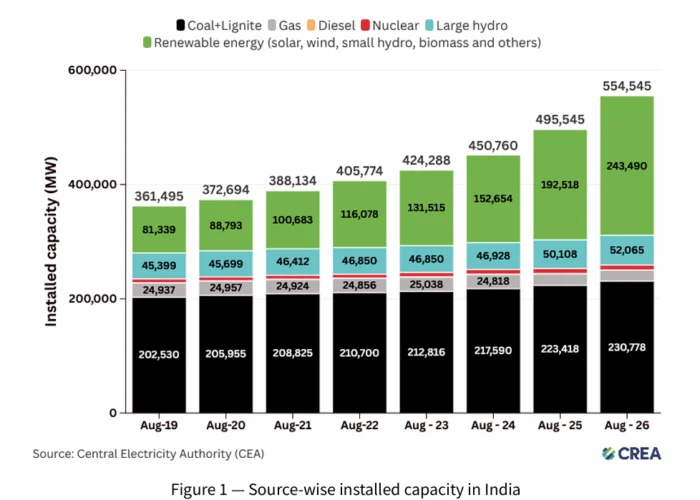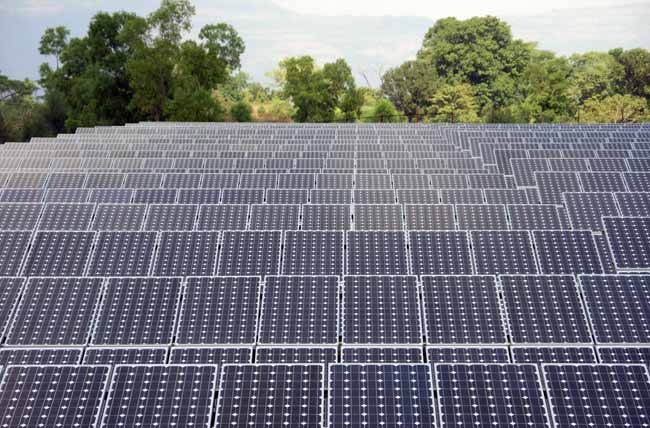
India will replace retiring coal power facilities with renewables as it looks to meet ambitious green energy targets and slash its carbon footprint.
Speaking at the virtual India PV Edge 2020 event, power minister R. K. Singh said 29 coal plants are set to be decommissioned, with the space to be occupied by renewable generation.
Try Premium for just $1
- Full premium access for the first month at only $1
- Converts to an annual rate after 30 days unless cancelled
- Cancel anytime during the trial period
Premium Benefits
- Expert industry analysis and interviews
- Digital access to PV Tech Power journal
- Exclusive event discounts
Or get the full Premium subscription right away
Or continue reading this article for free
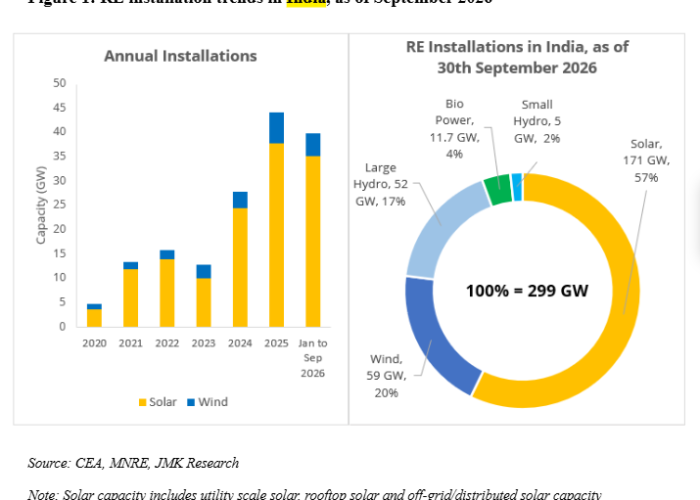
India has a target of installing 175GW of renewable capacity by 2022 and is aiming for 450GW by 2030. Despite a slowdown in solar installations earlier this year due to the pandemic, Singh said there is “no doubt” that the 2030 ambition will be achieved.
The announcement follows recent plans by Indian utilities to build out their solar generating capacity in support of government targets. Majority state-owned NTPC, which is India’s largest power company, is looking to add more than 5GW of solar in the next two years, while Damodar Valley Corporation has retired old thermal facilities as it turns to PV for additional capacity.
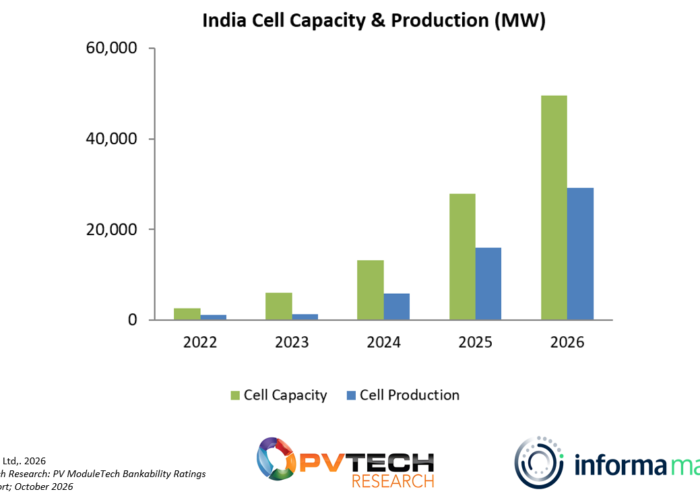
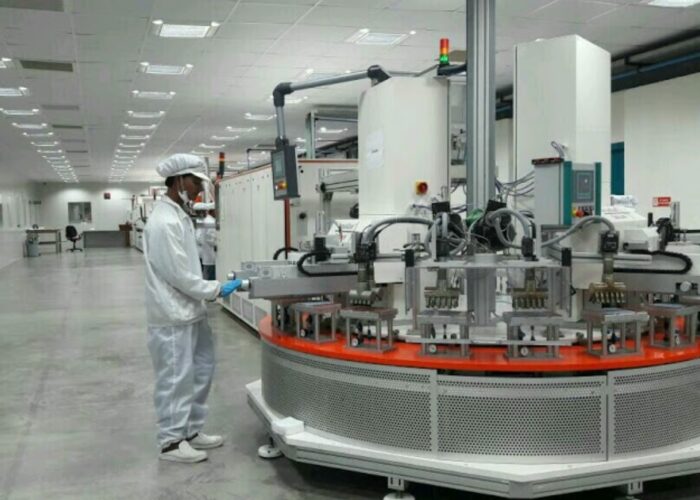
With India estimated to import 80% of the components used in solar developments from China, its government is now aiming to stimulate domestic solar equipment manufacturing through new production hubs near major ports, while reports this week suggested state-owned companies could be instructed to establish a polysilicon supply chain in the country.
The government has also extended safeguard duties against China on the import of solar cells and modules by an additional year and is considering a basic customs duty as high as 40% on certain components.
But with the risk of a double taxation on solar products looming, a new report from Fitch Solutions says that efforts to boost India’s domestic manufacturing base have “not been very successful”, with solar equipment from China remaining “much cheaper and of a higher quality”.
“We believe that if the government does not enact complementary supportive policies to boost local manufacturing, it will risk negatively affecting its domestic solar capacity growth,” the consultancy said.
Due to the ongoing impacts from COVID-19, tensions with China and policy uncertainty in the solar sector, Fitch expects India’s power capacity to grow by only 2.7% in 2020. Furthermore, it has revised its estimates for net generation capacity to be added between 2019 and 2029 to around 262GW, also warning that there are “increasing downside risks to this view”.