JinkoSolar touts new LeTID testing standards as its solar cells show minimal degradation

Facebook
Twitter
LinkedIn
Reddit
Email
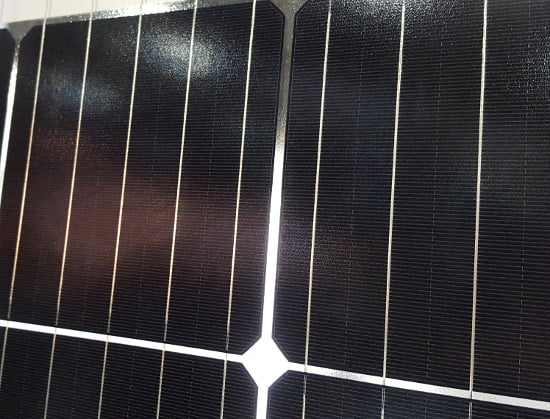
JinkoSolar said that it had focused on reducing the oxygen and metal contents in its P-type mono-PERC and N-type monocrystalline wafers to reduce the impact of LeTID, which resulted in its P-type mono-PERC cell efficiencies only degrading by around 1%, while its N-type monocrystalline cells efficiencies only degraded 0.2%.

Leading ‘Silicon Module Super League’ (SMSL) member JinkoSolar has highlighted success using new LeTID (Light elevated Temperature Induced Degradation) testing standards in minimising performance losses in its P-type mono-PERC and N-type monocrystalline solar cells.

JinkoSolar said that it had focused on reducing the oxygen and metal contents in its P-type mono-PERC and N-type monocrystalline wafers to reduce the impact of LeTID, which resulted in its P-type mono-PERC cell efficiencies only degrading by around 1%, while its N-type monocrystalline cells efficiencies only degraded 0.2%. 

This article requires Premium SubscriptionBasic (FREE) Subscription

Try Premium for just $1

  • Full premium access for the first month at only $1
  • Converts to an annual rate after 30 days unless cancelled
  • Cancel anytime during the trial period

Premium Benefits

  • Expert industry analysis and interviews
  • Digital access to PV Tech Power journal
  • Exclusive event discounts

Or get the full Premium subscription right away

Or continue reading this article for free

The tests were conducted using newly established methodologies that would be incorporated into the forthcoming IEC 63202-1 standard. This includes solar cells tested under conditions of 75°C, 1000W/m2 and 500h testing time.

Testing was undertaking by Wind Power Systems Quality Test Center, IEE, and CAS.

Dr. Jin Hao, Vice President of JinkoSolar commented: “The LeTID of modules is a result of the degradation of solar cells, including both LID and LeTID of cells. The testing method employed was conducted outdoors and is referenced in the Standard. The strong testing results of JinkoSolar's monocrystalline products were a result of the Company's sustained and large investment in R&D.”

Dr Hao has been the IEC 63202-1 standard chief editor and Chair of the IEC/TC82 Standards Workgroup. This Standard has also been verified by VDE and Intertek, two authoritative certification authorities, according to JinkoSolar.

PV Tech has been featuring the LeTID issues, which includes a detailed insight by Dr Radovan Kopecek, one of the founders of ISC Konstanz as well as a free technical paper overview of the issues from Meng Xiajie of LONGi Solar.
13 October 2026
San Francisco Bay Area, USA
PV Tech has been running an annual PV CellTech Conference since 2016. PV CellTech USA, on 13-14 October 2026 is our fourth PV CellTech conference dedicated to solar manufacturing in the USA. From polysilicon, wafers, ingots, cells and modules, to critical component suppliers including glass and frames, the event connects every stage of the value chain under one roof. PV CellTech USA also brings together investors, innovators, manufacturers and industry stakeholders to collaborate and strengthen domestic solar manufacturing across the United States.
20 April 2027
Istanbul, Türkiye
PV Tech has been running PV CellTech Conferences since 2016. PV CellTech Global, on 20-21 April 2027, is the meeting place for everyone invested in the growth of PV manufacturing and advancement in cell technologies, which will drive us towards the installed capacity required to power the planet by 2050. This is a gathering of key stakeholders driving capital expenditure and technologies for new PV manufacturing plants across the globe to harness the opportunities the growth of PV represents out to 2050 and beyond. The conference takes place in one conference room, where all senior peers have the same shared experience of learning and unique insight, unmatched anywhere else in the solar industry events calendar.

Read Next

August 28, 2026
Importing solar modules to the US will “no longer make any economic sense” under new Section 232 tariffs for polysilicon-based products, according to Intertek CEA.
Premium
August 27, 2026
Domestically produced solar glass is a key gap in the US PV manufacturing ecosystem. Tom Kenning reports on efforts to kick-start local production of this vital material
August 26, 2026
JinkoSolar shipped 15.9GW of modules in the second quarter of this year, which represents a 34.4% year-on-year decline.
August 24, 2026
Stronger downstream demand drove a surge in wafer prices last week, according to the latest figures from the Silicon Industry Branch of the China Nonferrous Metals Industry Association.
August 17, 2026
China’s polysilicon market saw no new transactions last week, with quoted prices remaining at the previous week’s baseline.
August 14, 2026
Foreign Entity of Concern rules create a multitude of new risks for US solar developers, some less visible than others. Intertek CEA’s Jordan Wilson explores the key steps towards minimising FEOC exposure in PV module purchase agreements.

Upcoming Events

Solar Media Events
October 13, 2026
San Francisco Bay Area, USA
Solar Media Events
November 3, 2026
Málaga, Spain
Solar Media Events
November 24, 2026
Warsaw, Poland
Solar Media Events
February 2, 2027
London, UK