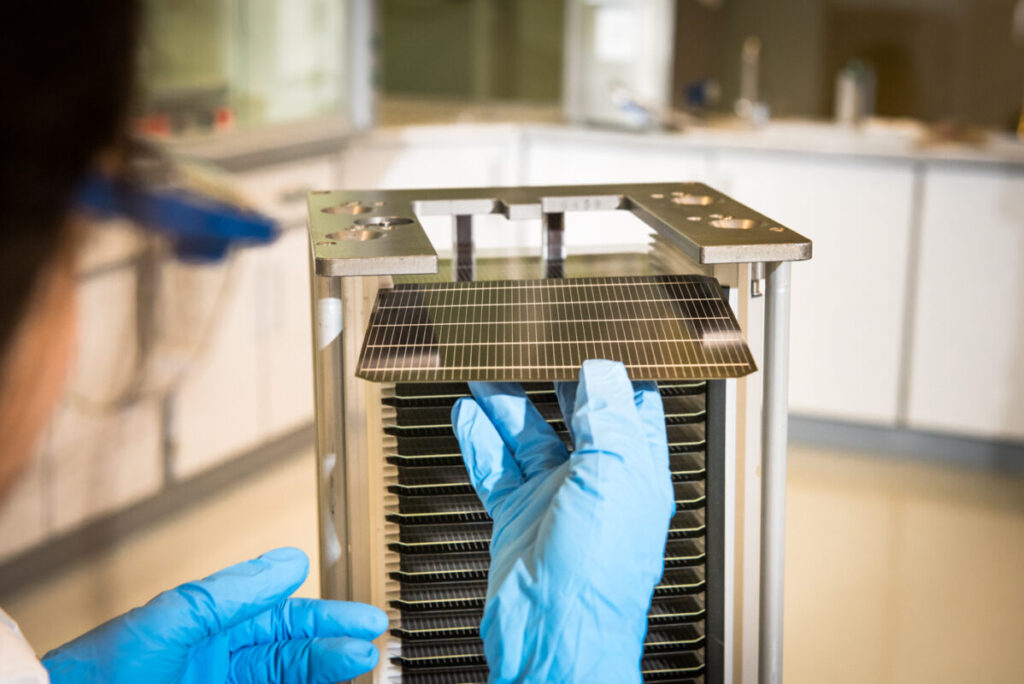
UK-based perovskite PV specialist Oxford PV has joined a British research project to develop electric vehicle-integrated solar technologies.
The Smart Use of Integrated Technology for EV (SUITE) project is a UK-led collaborative R&D initiative supported by the Advanced Propulsion Centre UK (APC) and funded by the UK government.
Try Premium for just $1
- Full premium access for the first month at only $1
- Converts to an annual rate after 30 days unless cancelled
- Cancel anytime during the trial period
Premium Benefits
- Expert industry analysis and interviews
- Digital access to PV Tech Power journal
- Exclusive event discounts
Or get the full Premium subscription right away
Or continue reading this article for free
The SUITE project is focused on developing next-generation vehicle-integrated solar technologies aimed at improving EV efficiency and extending driving range.
The consortium includes Nissan Technical Centre UK alongside engineering firms and UK-based universities, bringing together automotive and research expertise to accelerate the development and commercialisation of solar-enabled EVs.
In the SUITE programme, Oxford PV will apply its expertise in the research and industrialisation of perovskite-on-silicon tandem solar cells to vehicle-integrated photovoltaics. The focus will be on adapting its technology for automotive applications.
“Perovskite photovoltaics offer a step change in solar performance and open up new possibilities for vehicle-integrated solutions. This collaboration allows us to bring our technology leadership to a new class of applications that can deliver real-world benefits for electric mobility,” David Ward, CEO at Oxford PV, said.
According to the firm, vehicle-integrated solar can provide supplementary energy during operation, improving overall vehicle efficiency and extending driving range. High-efficiency perovskite-based cells offer strong power density in a lightweight format, making them well-suited to EV applications where output per unit area and weight are critical.
Oxford PV’s perovskite PV technology is among the closest to commercialisation. The company has partnerships with a number of big-name PV producers, including US cadmium telluride thin-film module manufacturer First Solar, with which it recently agreed a licensing deal.
Oxford PV operates its primary manufacturing facility in Brandenburg an der Havel, Germany. Acquired from Bosch in 2017, the plant produces perovskite-on-silicon tandem solar cells and began commercial shipments in 2024, targeting utility-scale solar applications.