Growing political headwinds threaten to derail US solar manufacturing and project deployment, despite a strong start to 2025.
The latest quarterly US Market Insight report from trade body the Solar Energy Industries Association (SEIA) and analysts Wood Mackenzie recorded positive figures across the industry in Q1 2025, with upticks in module and cell production and strong project deployment.
Try Premium for just $1
- Full premium access for the first month at only $1
- Converts to an annual rate after 30 days unless cancelled
- Cancel anytime during the trial period
Premium Benefits
- Expert industry analysis and interviews
- Digital access to PV Tech Power journal
- Exclusive event discounts
Or get the full Premium subscription right away
Or continue reading this article for free
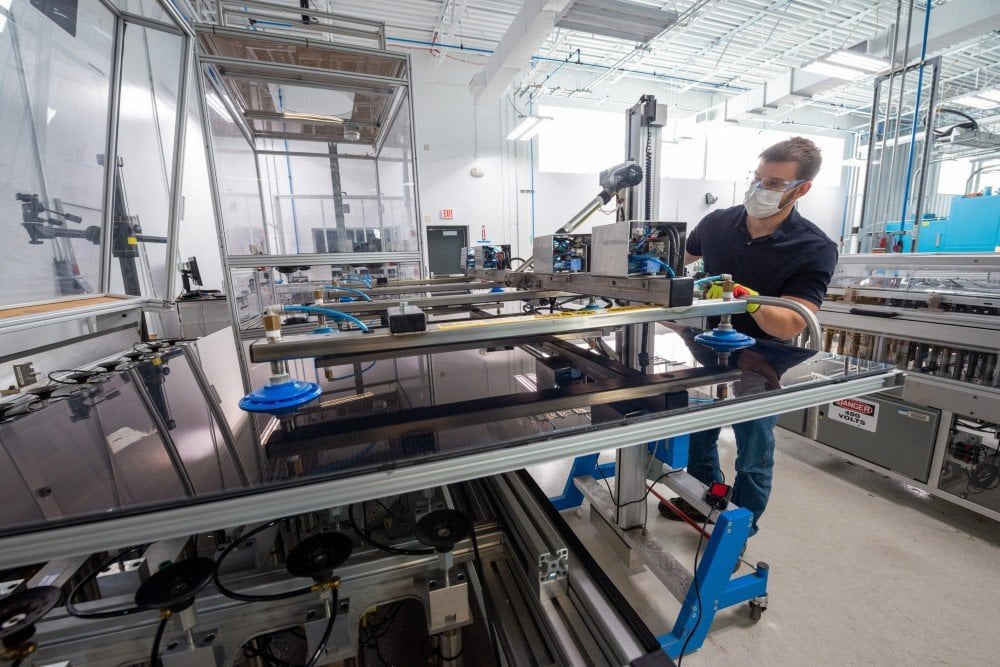
Highlights included module manufacturing, which saw 8.6GW of new capacity added across eight new or expanded factories in Texas, Ohio and Arizona. This was the third-largest quarter for new module capacity manufacturing.
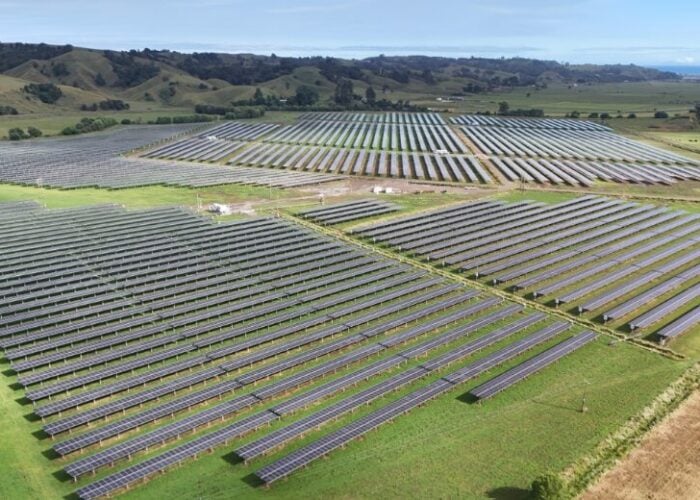
Cell production capacity in the US also fared well, doubling to 2GW with the opening of a new factory in South Carolina. In terms of project deployment, the US solar industry installed 10.8GW of new generating capacity to the grid in Q1 2025.
But in a statement to mark the report’s publication, SEIA CEO Abigail Ross Hopper warned that the many achievements of the US solar and storage industries so far this year risked being undermined by policy developments:
“Solar and storage continue to dominate America’s energy economy, adding more new capacity to the grid than any technology using increasingly American-made equipment. But our success is at risk. If Congress fails to fix the legislation passed by the House – which would render the energy tax incentives unusable – lawmakers will trigger a dangerous energy shortage that will raise our electric bills and stop America’s manufacturing boom in its tracks. The Senate still has time to get this right and secure President Trump’s vision for American energy dominance.”
The report highlighted US president Donald Trump’s general tariffs and new anti-dumping and countervailing duties (AD/CVD) on cells and modules from Southeast Asia as particular sources of uncertainty for the industry.
Separately, it said the ‘big, beautiful’ budget reconciliation bill working its way through Congress could threaten solar deployment and manufacturing in the US, risking energy shortages, job losses and factory closures. The SEIA has already estimated the likely fallout from the bill passing in its current form, with 330,000 jobs potentially at risk, many in areas that voted for the Republican president in last year’s election.
“The 10.8GW of solar capacity installed in Q1 2025 represents a significant portion of new US electricity generation, highlighting solar’s growing dominance in the energy mix,” said Zoë Gaston, principal analyst at Wood Mackenzie. “However, our analysis suggests that the US solar market has yet to reach its full potential. The proposed changes to federal tax incentives, along with ongoing tariff concerns, could significantly impact this growth trajectory and potentially lead to energy supply challenges. It’s important to consider the critical role of solar in America’s energy landscape.”
Based on tariffs being levied on the industry in the second quarter of this year, the SEIA and Wood Mackenzie five-year forecast projects deployment declining nationwide across all segments except community solar, which will remain flat. The expectation is for a 14% reduction in residential solar deployment and a 6% reduction in utility-scale deployment.
But these forecasts do not account for any possible rollback of federal tax credits; were such cuts to tax incentives to be made in addition to tariffs, the damage to the industry would “unequivocally worsen”, the organisations said.
Looking at the geographic spread of Q1 project deployments, Texas added more capacity than any other state, with Florida beating California to second place. Of the ten states with the most Q1 installations, eight were won by Trump in the 2024 elections: Texas, Florida, Ohio, Indiana, Arizona, Wisconsin, Idaho and Pennsylvania.