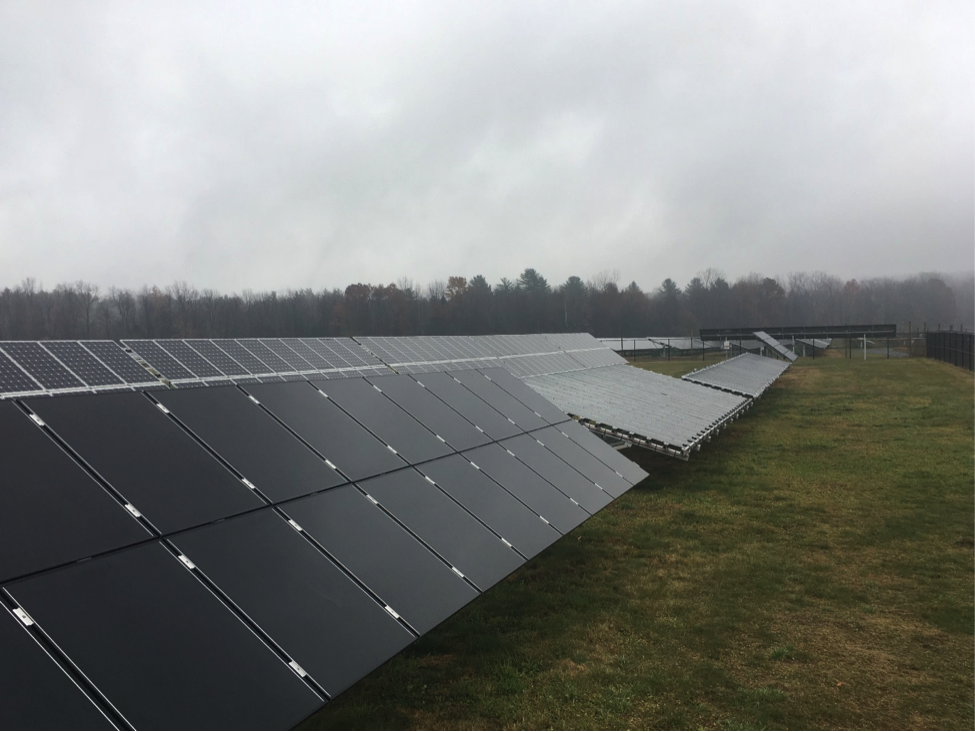
As part of the US Department Of Energy’s (DOE) Sunshot Initiative and led by SUNY Polytechnic Institute (SUNY Poly), the U.S. Photovoltaic Manufacturing Consortium have announced the launch of the Solar Energy Optimization Testkit, a new set of evaluation capabilities for photovoltaic systems, aimed at providing unparalleled real-time data to industrial and academic partners to analyze ways to optimize their PV power plant system capabilities and costs.
Problem
Try Premium for just $1
- Full premium access for the first month at only $1
- Converts to an annual rate after 30 days unless cancelled
- Cancel anytime during the trial period
Premium Benefits
- Expert industry analysis and interviews
- Digital access to PV Tech Power journal
- Exclusive event discounts
Or get the full Premium subscription right away
Or continue reading this article for free
Optimization of all types and sizes of PV power plants has been difficult to achieve without sufficient and accurate data across similar systems. Array owners and operators need to receive periodic performance reports that compare predicted versus actual performance to help identify where energy losses are occurring, embracing a data-driven approach to maximize cost effective operations and maintenance leads to higher system optimization and lower LCOE.
Solution
PVMC’s Solar Energy Optimization Testkit is able to obtain and provide actionable solar energy cost and PV performance information from PVMC test and consortium member sites to improve solar cells, components, modules, systems, and operations and maintenance protocols. The PVMC Testkit can be applied to any currently deployed PV system and allows the PVMC to collect and model data and perform key measurements at the sites to validate predictive models. Array owners receive periodic performance reports that compare predicted versus actual performance to help identify where energy losses are occurring, embracing a data-driven approach to maximize cost effective operations and maintenance. The service allows partners to avoid the costs associated with managing and maintaining their own individual test centers and instead leverage the consortium and SUNY Poly’s expertise. Concurrently, SUNY Poly students are able to gain experience learning about and using the Testkit as they prepare for a growing number of clean energy careers.
Applications
Performance optimization of all types and sizes of PV power plants.
Platform
The Testkit also allows users to better comprehend the impact of PV system variables, such as light conditions, tilt, and angle, through the use of unmatched hardware analysis and predictive software. This information is monitored in real-time and the results are then made available through the PVMC’s proprietary data dashboard where the data is time-stamped to the site weather stations, PV reference arrays, various sensors that monitor the solar radiation, the DC side of the inverters, and the module temperature. Additionally, partners can also benefit from aggregated data on pre-competitive technologies to promote the further effectiveness of technologies being developed by PVMC partners.
Availability
The testing kit is available to companies that partner with PVMC, and is already being utilized by leading PV developers and component manufacturers.