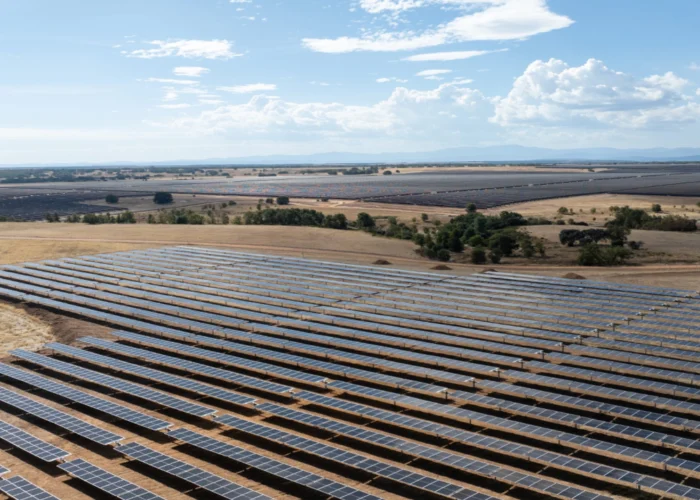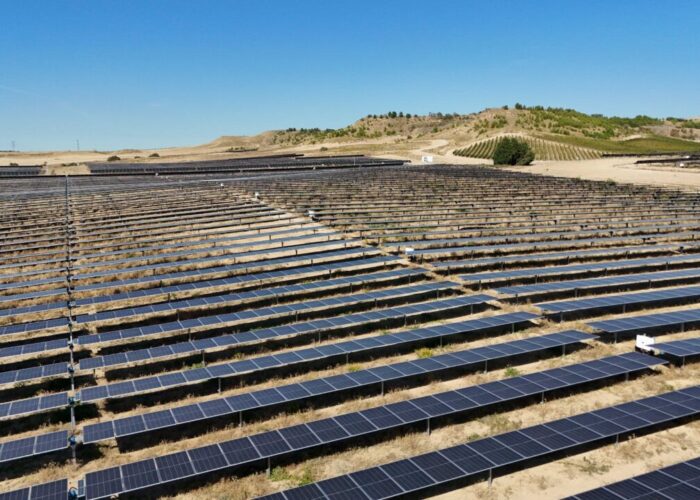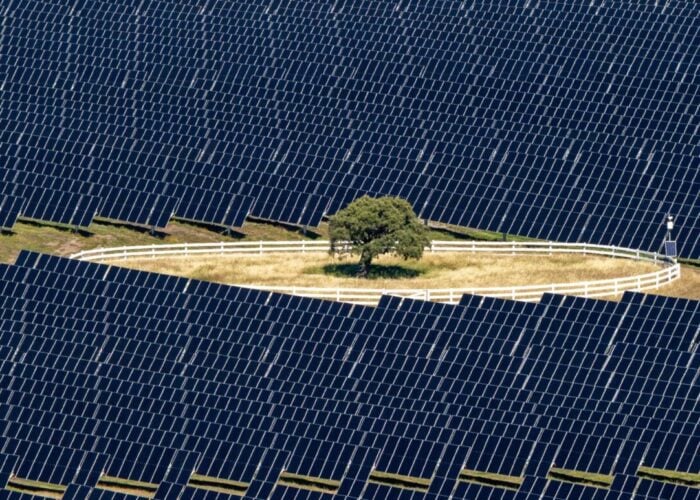
The so-called ‘king of electricity markets’ is rapidly approaching an inflexion point, wherein solar PV will become the most prolific source of new-build power this decade. However to pave the way, numerous hurdles in the technological, manufacturing, O&M and grid fields will need to be surpassed. Liam Stoker, Jules Scully and Sean Rai Roche discover solar’s 2030 blueprint.
Solar PV stands on the precipice of a nearly unprecedented surge in demand and deployment. By the end of this decade, the world’s operational solar generating capacity could increase by nearly six-fold, rising from the estimated capacity of 739GW it finished 2020 with to just shy of 5TW by 2030. This is to be driven by an effective and continued collapse in solar’s levelised cost of electricity (LCOE), causing demand for the world’s cheapest source of renewable power to grow significantly.
Try Premium for just $1
- Full premium access for the first month at only $1
- Converts to an annual rate after 30 days unless cancelled
- Cancel anytime during the trial period
Premium Benefits
- Expert industry analysis and interviews
- Digital access to PV Tech Power journal
- Exclusive event discounts
Or get the full Premium subscription right away
Or continue reading this article for free
The past year has seen countless studies published aiming to chart solar’s growth. In the US, the country’s Department of Energy’s Solar Futures Study found that the country could boast solar generation capacity of 1TW by 2035, by which point the asset class would be accommodating some 40% of its total power demand compared to just 3% today. That will require average annual installs of 30GW by 2025 and 60GW by 2030, with the US having installed around 16GW in 2020. Solar PV, therefore, holds the potential to double and then double again in the US this decade.
In Europe, policymakers are being urged to ramp up the European Union’s renewables target to 45% of total demand by 2030, an ambition which would trigger an additional 210GW of solar installations on top of what is already forecasted. That would leave the bloc with a total solar fleet of around 870GW.
Figures like this have become almost commonplace in the solar sector. In practically no time at all, the industry has gone from megawatts to gigawatts, to tens and hundreds of gigawatts. The world’s solar capacity will exceed 1TW at some point early next year and, if projections are to be believed, it will top 5TW not long after the decade is out.
It’s of little surprise then that with such an obvious and rapid growth trajectory, set to be in such a short amount of time, that the industry is experiencing growing pains.
Growing pains
With annual additions forecasted to rise to in excess of 440GW by the end of the decade, there is an obvious bottleneck in manufacturing capacity to overcome first and foremost. Supply chain constraints have been well documented this year and sufficient manufacturing capacities right the way through the value chain – from polysilicon and silver, aluminium, glass and other materials to wafer, cell and module assembly facilities – will be the limiting factor, at least in the short-term.
Having previously been considered perhaps an industry predominantly led by demand, it is now solely being led by supply. In effect, from today onward, global annual solar additions will only be limited by what emerges from factories.

More modules are being manufactured and these are evidently becoming more efficient too. Another inflexion point on the horizon for solar is a looming shift to n-type, triggered by a technology that’s more resistant to degradation and more efficient to boot. While other nascent technologies, especially tandem perovskite cells, may have to wait another decade, by the middle of the decade solar PV will very much have reverted to n-type.
The asset class will, however, face further bottlenecks when it comes to connecting to the grid. It’s a relationship that has been fraught previously and continues to be challenging, but in energy storage solar PV has an ideal working partner, while forecasting and grid management is also continuing to improve.
Financiers and developers are also forging new routes to market, consigning subsidies as much to the history books as coal. In the absence of feed-in tariffs, solar PV is finding new routes to deployment in the shape of corporate power purchase agreements. Solar PV is cheap – too cheap, in some cases, as you’ll read on – and that price point, coupled with a flourishing corporate social responsibility agenda, is leading more and more businesses to grow green.
But as more solar comes onstream, the asset management and operations and maintenance (O&M) industries must not just grow in tandem, but also develop new, more sophisticated ways of ensuring that what’s onstream stays on stream and operates as effectively as possible.
Ahead of a critical decade – not just for solar PV, but for the world’s climate – this is solar’s 2030 blueprint.
Over the course of the coming week, PV Tech will explore the inputs into solar’s 2030 blueprint from the angles of technology, scale, grid, routes to market and operations and maintenance. All five pieces will be available exclusively to PV Tech Power and PV Tech Premium subscribers.